US4965827A - Authenticator - Google Patents
Authenticator Download PDFInfo
- Publication number
- US4965827A US4965827A US07/195,323 US19532388A US4965827A US 4965827 A US4965827 A US 4965827A US 19532388 A US19532388 A US 19532388A US 4965827 A US4965827 A US 4965827A
- Authority
- US
- United States
- Prior art keywords
- message
- array
- authenticator
- authentication code
- host computer
- Prior art date
- Legal status (The legal status is an assumption and is not a legal conclusion. Google has not performed a legal analysis and makes no representation as to the accuracy of the status listed.)
- Expired - Fee Related
Links
Images



Classifications
-
- G—PHYSICS
- G07—CHECKING-DEVICES
- G07F—COIN-FREED OR LIKE APPARATUS
- G07F7/00—Mechanisms actuated by objects other than coins to free or to actuate vending, hiring, coin or paper currency dispensing or refunding apparatus
- G07F7/08—Mechanisms actuated by objects other than coins to free or to actuate vending, hiring, coin or paper currency dispensing or refunding apparatus by coded identity card or credit card or other personal identification means
- G07F7/10—Mechanisms actuated by objects other than coins to free or to actuate vending, hiring, coin or paper currency dispensing or refunding apparatus by coded identity card or credit card or other personal identification means together with a coded signal, e.g. in the form of personal identification information, like personal identification number [PIN] or biometric data
- G07F7/1008—Active credit-cards provided with means to personalise their use, e.g. with PIN-introduction/comparison system
-
- G—PHYSICS
- G06—COMPUTING; CALCULATING OR COUNTING
- G06Q—INFORMATION AND COMMUNICATION TECHNOLOGY [ICT] SPECIALLY ADAPTED FOR ADMINISTRATIVE, COMMERCIAL, FINANCIAL, MANAGERIAL OR SUPERVISORY PURPOSES; SYSTEMS OR METHODS SPECIALLY ADAPTED FOR ADMINISTRATIVE, COMMERCIAL, FINANCIAL, MANAGERIAL OR SUPERVISORY PURPOSES, NOT OTHERWISE PROVIDED FOR
- G06Q20/00—Payment architectures, schemes or protocols
- G06Q20/30—Payment architectures, schemes or protocols characterised by the use of specific devices or networks
- G06Q20/34—Payment architectures, schemes or protocols characterised by the use of specific devices or networks using cards, e.g. integrated circuit [IC] cards or magnetic cards
- G06Q20/341—Active cards, i.e. cards including their own processing means, e.g. including an IC or chip
-
- G—PHYSICS
- G06—COMPUTING; CALCULATING OR COUNTING
- G06Q—INFORMATION AND COMMUNICATION TECHNOLOGY [ICT] SPECIALLY ADAPTED FOR ADMINISTRATIVE, COMMERCIAL, FINANCIAL, MANAGERIAL OR SUPERVISORY PURPOSES; SYSTEMS OR METHODS SPECIALLY ADAPTED FOR ADMINISTRATIVE, COMMERCIAL, FINANCIAL, MANAGERIAL OR SUPERVISORY PURPOSES, NOT OTHERWISE PROVIDED FOR
- G06Q20/00—Payment architectures, schemes or protocols
- G06Q20/30—Payment architectures, schemes or protocols characterised by the use of specific devices or networks
- G06Q20/36—Payment architectures, schemes or protocols characterised by the use of specific devices or networks using electronic wallets or electronic money safes
- G06Q20/367—Payment architectures, schemes or protocols characterised by the use of specific devices or networks using electronic wallets or electronic money safes involving electronic purses or money safes
-
- G—PHYSICS
- G06—COMPUTING; CALCULATING OR COUNTING
- G06Q—INFORMATION AND COMMUNICATION TECHNOLOGY [ICT] SPECIALLY ADAPTED FOR ADMINISTRATIVE, COMMERCIAL, FINANCIAL, MANAGERIAL OR SUPERVISORY PURPOSES; SYSTEMS OR METHODS SPECIALLY ADAPTED FOR ADMINISTRATIVE, COMMERCIAL, FINANCIAL, MANAGERIAL OR SUPERVISORY PURPOSES, NOT OTHERWISE PROVIDED FOR
- G06Q20/00—Payment architectures, schemes or protocols
- G06Q20/38—Payment protocols; Details thereof
- G06Q20/40—Authorisation, e.g. identification of payer or payee, verification of customer or shop credentials; Review and approval of payers, e.g. check credit lines or negative lists
- G06Q20/409—Device specific authentication in transaction processing
- G06Q20/4097—Device specific authentication in transaction processing using mutual authentication between devices and transaction partners
- G06Q20/40975—Device specific authentication in transaction processing using mutual authentication between devices and transaction partners using encryption therefor
-
- H—ELECTRICITY
- H04—ELECTRIC COMMUNICATION TECHNIQUE
- H04L—TRANSMISSION OF DIGITAL INFORMATION, e.g. TELEGRAPHIC COMMUNICATION
- H04L9/00—Cryptographic mechanisms or cryptographic arrangements for secret or secure communications; Network security protocols
- H04L9/32—Cryptographic mechanisms or cryptographic arrangements for secret or secure communications; Network security protocols including means for verifying the identity or authority of a user of the system or for message authentication, e.g. authorization, entity authentication, data integrity or data verification, non-repudiation, key authentication or verification of credentials
- H04L9/3226—Cryptographic mechanisms or cryptographic arrangements for secret or secure communications; Network security protocols including means for verifying the identity or authority of a user of the system or for message authentication, e.g. authorization, entity authentication, data integrity or data verification, non-repudiation, key authentication or verification of credentials using a predetermined code, e.g. password, passphrase or PIN
Definitions
- This invention relates to an authenticator of the type which is used to check that a message received at one end of a system has not been corrupted or changed during transmission of the message and also to verify the senders authority to transmit the message.
- the authenticator may be applied to electronic transaction systems in which a user inserts a portable electronic token into a terminal which is connected to a central computer and in which messages concerning for instance the users bank account are transferred between the token and computer.
- an authenticator is a one way algorithm A which can transform a message M to produce an authenticator code A(M).
- the authenticator code A(M) is generally small in size compared with the message M it was derived from and is analogous to a signature since it derives a code which is unique for each different message and cannot be forged without knowledge of the secret one-way function which was used to produce it. It is a one way algorithm since the message itself cannot be derived from the authenticator.
- the authenticator code is added to the message before it is sent to a receiver. The receiver thus receives both the message and the appended authenticator code. He passes the message through the same authenticator to produce his own authenticator code for the message.
- the two authenticator codes are then compared and if they are identical the receiver can be reasonably sure that the message received has not been altered since leaving the sender.
- An authenticator thus ensures firstly that a message has not been altered during transmission and secondly that the sender is verified to use the system since he possesses the same authenticator as the receiver.
- An authenticator can be further modified by using a secret key system to select a particular way of implementing the authenticator algorithm.
- K an authenticator is produced A(K,M) which is a function of both the authenticator and the secret key.
- A(K,M) is a function of both the authenticator and the secret key.
- the present invention provides an improved system with a greater level of security.
- a method for authenticating digital data comprising generating a numerical array; using a secret key to controllably shift the relative positions of each element within the array and applying the scambled array to a message to provide an authentication code for that message.
- the array may be applied in any suitable manner to the message.
- the method and apparatus for generating the authenticator is particularly useful for an electronic token system of the ⁇ smart card ⁇ type as described in the applicants co-pending application No. G.B.2173623A which shows an inductively coupled system having memory storage capability and 8 bit microcontroller therein, in which for most uses it is essential that the sender and receiver of a message are clearly identified and authenticated as authorised, and in which the message must be accurate at both the transmission and reception stages.
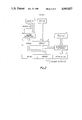
- FIG. 1 shows an authentication algorithm
- FIGS. 2 and 3 show a validation process.
- An authenticator algorithm according to the invention is in two stages; an initialisation stage and a general working stage.
- the initialisation stage involves an 8 byte secret key and a 256 byte 8 bit substitution cipher in the form of a numerical array. Firstly the array is initialised by the following routine:
- the 8 byte secret key is used 2 bytes at a time to produce the random seed as follows.
- the random seed is a 32 bit, i.e. 4 byte number and its top 2 bytes (most significant) are set to the first two chosen bytes of the key.
- the bottom 2 bytes (least significant) of the seed are set to the two most significant bytes of the last random number produced.
- the random number seed is always initialised to 0 at the very beginning of the algorithm.
- a suitable random number generator is applied to this seed, the exact details of which are not important to the invention but basically involve a numerical function of the random seed.
- the random number produced is applied to the mixing scheme above to mix two elements. This is repeated for each of the 256 values of J.
- the next two bytes of the secret key are used to produce another random seed and a further pass is made through the cipher. Similar passes are made with the third and fourth group of two bytes of the random key such that at the end of the process four passes have been made through the cipher serving to mix up the element values within the cipher in a manner which can only controllably be achieved by using the known secret key.
- the advantage of using the above method is that all the bytes of the key may be the same yet produce different initial random seeds during each pass in mixing all the elements of the cipher.
- the number of permutations possible with such a cipher is equal to the factorial of the number of elements. Hence in this example it is 256, which is a vastly bigger number than with the maximum 2 64 permutations of an 8 byte key. Thus a good cipher distribution is obtained.
- the initialisation described above is performed once by the transmitting or host processor when given the secret key. It can then destroy the secret key and hold the cipher in a secure part of its memory. At this stage the cipher is effectively the key and thus its security should be maintained.
- the receiving or slave processor for example an electronic token or smart card, is also, during the initialisation stage, sent the derived cipher by means of a secure communication link and stores the same cipher again in a secure part of its memory.
- the card or processor can be adapted to destroy the cipher if it is compromised.
- the secret key is an 8 byte key there are 2 64 possible unique keys, any one of which can be used.
- FIG. 1 shows an algorithm adapted to provide an authenticator for a message of n bytes.
- P is a pointer for working register W() and so has range 0-7
- A an 8 bit value used for storing results between operations.
- Mi ith Message byte from beginning of message.
- n message length
- the working of the algorithm is self explanatory from the figure and basically uses elements of the substitution cipher, previously mixed up by means of the chosen secret key, to derive each of the 8 bytes of the working register W(P).
- the 8 derived bytes are then combined in the following form to produce a 4 byte authenticator A(0)-A(3) where;
- the authenticator could be sent on its own without the message if, for instance, the message has been previously sent to the current transmitter in order to verify the transmitters identity.
- the receiving or slave processor uses an identical authenticator algorithm on the message received to produce his own authenticator. If the received and derived authenticators are the same then the user can be reasonably sure that security has not been compromised.
- the authenticator described above can protect messages between two users from 2 possible attacks: (1) Alteration of the message, and (2) A new message being created which is not derived from one of the users. However, two further types of attack may be made to a system, these being (3) Incorrect routing, either accidentally or deliberately, of a message to the wrong receiver, and (4) The replay of old messages as if they were new ones.
- An initialisation stage of the validation procedure involves three messages being interchanged. Firstly, user A sends to user B a header comprising the senders ID and the senders message number; and an authenticator for the header. User B checks the authentication is correct and user A's I.D. and, if so, stores the user A's I.D. and message number. User B then sends a return header comprising user A's I.D., user B's I.D., user A's message number (previously stored) and user B's message number, together with an authenticator based on this header. The authenticator, both I.D.'s and user A's message number are checked by the initial sender (user A) and the header information stored.
- a to B comprising both I.D. codes, B's message number and A's message number, the latter incremented by one in the monotonic or pseudo random sequence, together with a new authenticator based on this header.
- the receiver checks the authenticator and header and if all is well transferal of proper messages begins. If at any stage in the initialisation procedure an authenticator is not correct or an incorrect I.D. code is present or an incorrect message number is present the process is terminated.
Landscapes
- Engineering & Computer Science (AREA)
- Business, Economics & Management (AREA)
- Accounting & Taxation (AREA)
- General Physics & Mathematics (AREA)
- Physics & Mathematics (AREA)
- Finance (AREA)
- Computer Networks & Wireless Communication (AREA)
- Computer Security & Cryptography (AREA)
- Strategic Management (AREA)
- General Business, Economics & Management (AREA)
- Theoretical Computer Science (AREA)
- Signal Processing (AREA)
- Microelectronics & Electronic Packaging (AREA)
- Mobile Radio Communication Systems (AREA)
- Storage Device Security (AREA)
- Preparation Of Compounds By Using Micro-Organisms (AREA)
- Chemical And Physical Treatments For Wood And The Like (AREA)
- Electroluminescent Light Sources (AREA)
Abstract
An authenticator for digital data is derived by generating a numerical array, using a secret key to controllably shift the relative positions of the elements of the array, and applying the scrambled array to a message to create an authenticator for that message. The method allows a high level of security and minimizes the risk of a system, such as an intelligent portable token and reader system, being compromised.
Description
This invention relates to an authenticator of the type which is used to check that a message received at one end of a system has not been corrupted or changed during transmission of the message and also to verify the senders authority to transmit the message.
The authenticator may be applied to electronic transaction systems in which a user inserts a portable electronic token into a terminal which is connected to a central computer and in which messages concerning for instance the users bank account are transferred between the token and computer.
Typically, an authenticator is a one way algorithm A which can transform a message M to produce an authenticator code A(M). The authenticator code A(M) is generally small in size compared with the message M it was derived from and is analogous to a signature since it derives a code which is unique for each different message and cannot be forged without knowledge of the secret one-way function which was used to produce it. It is a one way algorithm since the message itself cannot be derived from the authenticator. When the message has been produced and an authenticator code calculated, the authenticator code is added to the message before it is sent to a receiver. The receiver thus receives both the message and the appended authenticator code. He passes the message through the same authenticator to produce his own authenticator code for the message. The two authenticator codes are then compared and if they are identical the receiver can be reasonably sure that the message received has not been altered since leaving the sender. An authenticator thus ensures firstly that a message has not been altered during transmission and secondly that the sender is verified to use the system since he possesses the same authenticator as the receiver.
An authenticator can be further modified by using a secret key system to select a particular way of implementing the authenticator algorithm. With the secret key K an authenticator is produced A(K,M) which is a function of both the authenticator and the secret key. Thus, even if the basic authenticator algorithm is known the secret keys can be witheld from public knowledge and the system remains secure. The keys can be varied at will, perhaps in a desired selected manner or maybe varied if one key has become compromised. Both sender and receiver must have the same secret key and authenticator for the receiver to be able to check the authenticator sent.
However, the number of different secret keys which can be used with an authenticator is limited by the size of the system and in an 8 byte key system a diligent cavesdropper could work through every possible secret key while attempting to break into the system. The present invention provides an improved system with a greater level of security.
According to the present invention there is provided a method for authenticating digital data comprising generating a numerical array; using a secret key to controllably shift the relative positions of each element within the array and applying the scambled array to a message to provide an authentication code for that message.
The array may be applied in any suitable manner to the message.
The method and apparatus for generating the authenticator is particularly useful for an electronic token system of the `smart card` type as described in the applicants co-pending application No. G.B.2173623A which shows an inductively coupled system having memory storage capability and 8 bit microcontroller therein, in which for most uses it is essential that the sender and receiver of a message are clearly identified and authenticated as authorised, and in which the message must be accurate at both the transmission and reception stages.
An embodiment of an authenticator according to the invention is now described by way of example only with reference to the accompanying drawings in which:
FIG. 1 shows an authentication algorithm, and;
FIGS. 2 and 3 show a validation process.
An authenticator algorithm according to the invention is in two stages; an initialisation stage and a general working stage.
The initialisation stage involves an 8 byte secret key and a 256 byte 8 bit substitution cipher in the form of a numerical array. Firstly the array is initialised by the following routine:
For i=0 to 255
cipher [i]=i
next
This ensures that all possible 8 bit numbers are present in the array in a monotonic increasing sequence. The elements of the array are now jumbled up by swapping pairs using the secret key to determine which pairs are swapped. Basically the following swapping scheme is used; ##EQU1## next Where a(j)-a(k) means swap contents of a(j) and a(k)
Where rnd(x,y) means generating any integer with equal probability in the range x-y
In one embodiment of the invention the 8 byte secret key is used 2 bytes at a time to produce the random seed as follows. The random seed is a 32 bit, i.e. 4 byte number and its top 2 bytes (most significant) are set to the first two chosen bytes of the key. The bottom 2 bytes (least significant) of the seed are set to the two most significant bytes of the last random number produced. The random number seed is always initialised to 0 at the very beginning of the algorithm. A suitable random number generator is applied to this seed, the exact details of which are not important to the invention but basically involve a numerical function of the random seed. The random number produced is applied to the mixing scheme above to mix two elements. This is repeated for each of the 256 values of J.
After one complete pass has been made through all elements of the cipher the next two bytes of the secret key are used to produce another random seed and a further pass is made through the cipher. Similar passes are made with the third and fourth group of two bytes of the random key such that at the end of the process four passes have been made through the cipher serving to mix up the element values within the cipher in a manner which can only controllably be achieved by using the known secret key. The advantage of using the above method is that all the bytes of the key may be the same yet produce different initial random seeds during each pass in mixing all the elements of the cipher. The number of permutations possible with such a cipher is equal to the factorial of the number of elements. Hence in this example it is 256, which is a vastly bigger number than with the maximum 264 permutations of an 8 byte key. Thus a good cipher distribution is obtained.
In use, the initialisation described above is performed once by the transmitting or host processor when given the secret key. It can then destroy the secret key and hold the cipher in a secure part of its memory. At this stage the cipher is effectively the key and thus its security should be maintained.
The receiving or slave processor, for example an electronic token or smart card, is also, during the initialisation stage, sent the derived cipher by means of a secure communication link and stores the same cipher again in a secure part of its memory. The card or processor can be adapted to destroy the cipher if it is compromised.
Since the secret key is an 8 byte key there are 264 possible unique keys, any one of which can be used.
The cipher derived as above is then used in a working stage to provide an authenticator for a message. One form of the algorithm produced is shown in FIG. 1 which shows an algorithm adapted to provide an authenticator for a message of n bytes.
The algorithm shown in FIG. 1 is designed for an 8 bit processing system and in general will operate on any message, although the preferred size range is from 12 to 256 bytes. A message length of less than 12 bytes could compromise the security of such a system and a message length of greater than 256 bytes is harder to achieve on an 8 bit processing system and requires a great deal of processing. If a message of greater than 256 bytes is required to be sent it is often preferable to split the message into 256 byte blocks and add an authenticator to each block. This also makes it easier to retransmit any block which is compromised, rather than having to retransmit the whole message.
The algorithm includes an 8 byte working register W(P) from which the final authenticator is derived. In order for it to work the whole message or block must be present and its length n known. The algorithm of FIG. 1 is then applied to the message. In the figure the following terms are used.
S [ ]=substitution cipher [ ]
P is a pointer for working register W() and so has range 0-7
A=an 8 bit value used for storing results between operations.
Mi=ith Message byte from beginning of message.
Mn+1-i=ith Message byte from end of message.
n=message length
+2 =Modulo 2 addition (Exclusive--Or)
+256 =Modulo 256 addition
C1 =Carry from 1st +256 operation in preceding line
C2 =Carry from 2nd +256 operation in preceding line
The working of the algorithm is self explanatory from the figure and basically uses elements of the substitution cipher, previously mixed up by means of the chosen secret key, to derive each of the 8 bytes of the working register W(P). The 8 derived bytes are then combined in the following form to produce a 4 byte authenticator A(0)-A(3) where;
A(0)=W(0)+.sub.2 W(2)
A(1)=W(1)+.sub.2 W(3)
A(2)=W(4)+.sub.2 W(6)
A(3)=W(5)+.sub.2 W(7)
A 4 byte authenticator means that there is a 1:232 chance of the same authenticator being derived by a different message or, by chance, by an unauthorised user.
The actual message is left intact after this processing and is subsequently transmitted together with the 4 bytes of the authenticator. Alternatively, the authenticator could be sent on its own without the message if, for instance, the message has been previously sent to the current transmitter in order to verify the transmitters identity. At the receiving end the receiving or slave processor uses an identical authenticator algorithm on the message received to produce his own authenticator. If the received and derived authenticators are the same then the user can be reasonably sure that security has not been compromised.
The authenticator described above can protect messages between two users from 2 possible attacks: (1) Alteration of the message, and (2) A new message being created which is not derived from one of the users. However, two further types of attack may be made to a system, these being (3) Incorrect routing, either accidentally or deliberately, of a message to the wrong receiver, and (4) The replay of old messages as if they were new ones.
In order to protect messages from the latter two types of attack the validation procedure shown in FIGS. two and three can be utilised, in which a header is added to a message, which header contains four elements - The receivers ID or identity code, the senders ID code, a senders message number and a receivers message number. The message number must be unique to that message and not repeated for a long time, Examples are a date and time code, a monotonic increasing number sequence or a pseudo random sequence. The former is difficult to implement on a smart card system so that one of the latter is usually chosen.
An initialisation stage of the validation procedure involves three messages being interchanged. Firstly, user A sends to user B a header comprising the senders ID and the senders message number; and an authenticator for the header. User B checks the authentication is correct and user A's I.D. and, if so, stores the user A's I.D. and message number. User B then sends a return header comprising user A's I.D., user B's I.D., user A's message number (previously stored) and user B's message number, together with an authenticator based on this header. The authenticator, both I.D.'s and user A's message number are checked by the initial sender (user A) and the header information stored. Lastly, another header is sent from A to B comprising both I.D. codes, B's message number and A's message number, the latter incremented by one in the monotonic or pseudo random sequence, together with a new authenticator based on this header. The receiver checks the authenticator and header and if all is well transferal of proper messages begins. If at any stage in the initialisation procedure an authenticator is not correct or an incorrect I.D. code is present or an incorrect message number is present the process is terminated.
Transferral of messages then takes place as shown in FIGS. two and three. A sender generates the four components of a header 1 (two device I.D.'s and two message numbers) and generates an authenticator based on the combined header and message 2, using a secret key 4. The receiver applies his secret key to the received message and derives a reference authenticator. The two authenticators can then be compared. If correct, he checks the senders and receivers I.D.'s and the message numbers. If all are correct then the message is read and acted on. If at any stage something is wrong then the process is terminated.
Claims (12)
1. In an electronic transaction system, comprising: a host computer including means for generating an authentication code for a digital signal message wherein the authentication code is to be appended to the message without altering the digital signal constituting the message; a reading device connected to the host computer; and a portable token having memory storage means, micro-controller means and means for data transmission and reception, the micro-controller also having means for generating the authentication code; the host computer and the micro-controller communicating so as to pass digital signal messages therebetween; wherein the authentication code is generated according to a method comprising:
generating, in at least the host computer, a numerical array; using in at least the host computer a key to controllably shift the relative positions of each element within the array to form a scrambled array; and applying the scrambled array to the message to provide an authentication code for that message, in the host computer and the micro-controller.
2. A method as claimed in claim 1, wherein said using step includes using the key to generate a first pseudo-random seed and using the seed to generate a number for each individual element of the numerical array which number determines the position of a second element of the array which is swapped with that element.
3. A method as claimed in claim 2, wherein said using step includes generating one number consecutively for each different array element in turn, each number being generated by applying a pseudo-random function to a previously generated number.
4. A method as claimed in claim 2, wherein said using step includes generating, after the first pseudo-random seed has been used to shift the relative positions of all the elements of the array, at least one further pseudo-random seed from the key and using the at least one further seed to further shift the relative positions of the array elements.
5. A method as claimed in any of claim 2, wherein the key comprises a plurality of bytes, and further including using chosen groups of these bytes to generate said pseudo-random seed.
6. A method as claimed in claim 1, including dividing the message into segments of a chosen length; and deriving a separate authentication code, considerably shorter than the segment, for each segment.
7. A method as claimed in claim 1 wherein said applying step includes applying the scrambled array to the message in a plurality of steps, each using chosen operators on chosen array elements and chosen message bytes to derive a value for each of a plurality of register elements of a working register; and combining the working register elements to form the authenticator.
8. A method as claimed in claim 7, including using sufficient steps so that every message byte is used at least once to derive the authenticator.
9. A method as claimed in claim 7, including using message bytes in each step in multiples of at least two.
10. A method as claimed in claim 7, including using operators which are any combination of +2 and +256 operation and carry operators.
11. A method for electronic transaction, comprising: generating an authentication code according to the method of claim 1; appending the code to a message; transmitting the message; separating, at a receiver, the message from the code; using said method on the received message to generate a second authentication code and comparing the received code with that generated at the receiver.
12. A method as defined in claim 1, including providing the reading device as an inductive reading device and providing the portable token with means for data transmission and reception by inductive coupling such that the micro-controller and the host computer communicate by inductive coupling.
Applications Claiming Priority (2)
| Application Number | Priority Date | Filing Date | Title |
|---|---|---|---|
| GB8711743A GB2204975B (en) | 1987-05-19 | 1987-05-19 | Authenticator |
| GB8711743 | 1987-05-19 |
Publications (1)
| Publication Number | Publication Date |
|---|---|
| US4965827A true US4965827A (en) | 1990-10-23 |
Family
ID=10617548
Family Applications (1)
| Application Number | Title | Priority Date | Filing Date |
|---|---|---|---|
| US07/195,323 Expired - Fee Related US4965827A (en) | 1987-05-19 | 1988-05-18 | Authenticator |
Country Status (8)
| Country | Link |
|---|---|
| US (1) | US4965827A (en) |
| EP (1) | EP0292247A3 (en) |
| JP (1) | JPS6471234A (en) |
| AU (1) | AU598372B2 (en) |
| GB (1) | GB2204975B (en) |
| NO (1) | NO882139L (en) |
| NZ (1) | NZ224647A (en) |
| ZA (1) | ZA883414B (en) |
Cited By (92)
| Publication number | Priority date | Publication date | Assignee | Title |
|---|---|---|---|---|
| WO1991013503A1 (en) * | 1990-02-27 | 1991-09-05 | Tseung Lawrence C N | Guaranteed reliable broadcast network |
| US5048085A (en) * | 1989-10-06 | 1991-09-10 | International Business Machines Corporation | Transaction system security method and apparatus |
| US5146499A (en) * | 1989-10-27 | 1992-09-08 | U.S. Philips Corporation | Data processing system comprising authentification means viz a viz a smart card, an electronic circuit for use in such system, and a procedure for implementing such authentification |
| US5283832A (en) * | 1991-10-22 | 1994-02-01 | Motorola, Inc. | Paging message encryption |
| US5311596A (en) * | 1992-08-31 | 1994-05-10 | At&T Bell Laboratories | Continuous authentication using an in-band or out-of-band side channel |
| WO1994016441A1 (en) * | 1993-01-05 | 1994-07-21 | Yuen Henry C | Enhancing operations of video tape cassette players |
| US5379344A (en) * | 1990-04-27 | 1995-01-03 | Scandic International Pty. Ltd. | Smart card validation device and method |
| US5434999A (en) * | 1988-11-09 | 1995-07-18 | Bull Cp8 | Safeguarded remote loading of service programs by authorizing loading in protected memory zones in a terminal |
| US5454038A (en) * | 1993-12-06 | 1995-09-26 | Pitney Bowes Inc. | Electronic data interchange postage evidencing system |
| US5479509A (en) * | 1993-04-06 | 1995-12-26 | Bull Cp8 | Method for signature of an information processing file, and apparatus for implementing it |
| US5511122A (en) * | 1994-06-03 | 1996-04-23 | The United States Of America As Represented By The Secretary Of The Navy | Intermediate network authentication |
| WO1996026494A1 (en) * | 1995-02-23 | 1996-08-29 | The Regents Of The University Of California | Data embedding |
| US5557678A (en) * | 1994-07-18 | 1996-09-17 | Bell Atlantic Network Services, Inc. | System and method for centralized session key distribution, privacy enhanced messaging and information distribution using a split private key public cryptosystem |
| US5606609A (en) * | 1994-09-19 | 1997-02-25 | Scientific-Atlanta | Electronic document verification system and method |
| US5631961A (en) * | 1995-09-15 | 1997-05-20 | The United States Of America As Represented By The Director Of The National Security Agency | Device for and method of cryptography that allows third party access |
| US5636292A (en) * | 1995-05-08 | 1997-06-03 | Digimarc Corporation | Steganography methods employing embedded calibration data |
| US5659726A (en) * | 1995-02-23 | 1997-08-19 | Sandford, Ii; Maxwell T. | Data embedding |
| US5710834A (en) * | 1995-05-08 | 1998-01-20 | Digimarc Corporation | Method and apparatus responsive to a code signal conveyed through a graphic image |
| US5745604A (en) * | 1993-11-18 | 1998-04-28 | Digimarc Corporation | Identification/authentication system using robust, distributed coding |
| US5748783A (en) * | 1995-05-08 | 1998-05-05 | Digimarc Corporation | Method and apparatus for robust information coding |
| US5748763A (en) * | 1993-11-18 | 1998-05-05 | Digimarc Corporation | Image steganography system featuring perceptually adaptive and globally scalable signal embedding |
| US5748735A (en) * | 1994-07-18 | 1998-05-05 | Bell Atlantic Network Services, Inc. | Securing E-mail communications and encrypted file storage using yaksha split private key asymmetric cryptography |
| EP0840194A2 (en) * | 1996-10-29 | 1998-05-06 | Matsushita Electric Industrial Co., Ltd. | System and method for controlling the use of a package of distributed application software |
| US5757913A (en) * | 1993-04-23 | 1998-05-26 | International Business Machines Corporation | Method and apparatus for data authentication in a data communication environment |
| US5809160A (en) * | 1992-07-31 | 1998-09-15 | Digimarc Corporation | Method for encoding auxiliary data within a source signal |
| US5822436A (en) * | 1996-04-25 | 1998-10-13 | Digimarc Corporation | Photographic products and methods employing embedded information |
| US5832119A (en) * | 1993-11-18 | 1998-11-03 | Digimarc Corporation | Methods for controlling systems using control signals embedded in empirical data |
| US5838792A (en) * | 1994-07-18 | 1998-11-17 | Bell Atlantic Network Services, Inc. | Computer system for centralized session key distribution, privacy enhanced messaging and information distribution using a split private key public cryptosystem |
| US5841886A (en) * | 1993-11-18 | 1998-11-24 | Digimarc Corporation | Security system for photographic identification |
| US5841978A (en) * | 1993-11-18 | 1998-11-24 | Digimarc Corporation | Network linking method using steganographically embedded data objects |
| US5850481A (en) * | 1993-11-18 | 1998-12-15 | Digimarc Corporation | Steganographic system |
| US5862260A (en) * | 1993-11-18 | 1999-01-19 | Digimarc Corporation | Methods for surveying dissemination of proprietary empirical data |
| WO1999023538A1 (en) * | 1997-10-28 | 1999-05-14 | Georgia Tech Research Corporation | Adaptive data security system and method |
| US6091884A (en) * | 1991-08-19 | 2000-07-18 | Index Systems, Inc. | Enhancing operations of video tape cassette players |
| US6122403A (en) * | 1995-07-27 | 2000-09-19 | Digimarc Corporation | Computer system linked by using information in data objects |
| US6122743A (en) * | 1998-03-31 | 2000-09-19 | Siemens Information And Communication Networks, Inc. | System for providing enhanced security for transactions transmitted through a distributed network |
| US6185682B1 (en) * | 1997-06-03 | 2001-02-06 | U.S. Philips Corporation | Authentication system |
| US20020004767A1 (en) * | 2000-07-06 | 2002-01-10 | Chikashi Okamoto | Identification code management method and management system |
| US6381341B1 (en) | 1996-05-16 | 2002-04-30 | Digimarc Corporation | Watermark encoding method exploiting biases inherent in original signal |
| US6408082B1 (en) | 1996-04-25 | 2002-06-18 | Digimarc Corporation | Watermark detection using a fourier mellin transform |
| US6411725B1 (en) | 1995-07-27 | 2002-06-25 | Digimarc Corporation | Watermark enabled video objects |
| US20020095604A1 (en) * | 2001-01-18 | 2002-07-18 | Hausler Jean-Philippe D. | Encryption system and method |
| US6424725B1 (en) | 1996-05-16 | 2002-07-23 | Digimarc Corporation | Determining transformations of media signals with embedded code signals |
| US6430302B2 (en) | 1993-11-18 | 2002-08-06 | Digimarc Corporation | Steganographically encoding a first image in accordance with a second image |
| US6487362B1 (en) | 1991-08-19 | 2002-11-26 | Index Systems, Inc. | Enhancing operations of video tape cassette players |
| US6560349B1 (en) | 1994-10-21 | 2003-05-06 | Digimarc Corporation | Audio monitoring using steganographic information |
| US6567533B1 (en) | 1993-11-18 | 2003-05-20 | Digimarc Corporation | Method and apparatus for discerning image distortion by reference to encoded marker signals |
| US20030102959A1 (en) * | 1996-12-16 | 2003-06-05 | Wolfgang Bitzer | Process for securing the privacy of data transmission |
| US6581203B1 (en) | 1997-08-21 | 2003-06-17 | International Business Machines Corporation | Technique for visually creating and adding members to a class |
| US6580819B1 (en) | 1993-11-18 | 2003-06-17 | Digimarc Corporation | Methods of producing security documents having digitally encoded data and documents employing same |
| US20030120924A1 (en) * | 2000-02-01 | 2003-06-26 | Olli Immonen | Method for checking the integrity of data, system and mobile terminal |
| DE19944595C2 (en) * | 1998-05-07 | 2003-08-14 | Sc Info & Inno Gmbh & Co | Procedure for verifying the integrity and authorship of texts |
| US6611607B1 (en) | 1993-11-18 | 2003-08-26 | Digimarc Corporation | Integrating digital watermarks in multimedia content |
| US6614914B1 (en) | 1995-05-08 | 2003-09-02 | Digimarc Corporation | Watermark embedder and reader |
| US6625297B1 (en) | 2000-02-10 | 2003-09-23 | Digimarc Corporation | Self-orienting watermarks |
| US20030188180A1 (en) * | 2002-03-28 | 2003-10-02 | Overney Gregor T. | Secure file verification station for ensuring data integrity |
| US20030204728A1 (en) * | 2002-04-30 | 2003-10-30 | Tippingpoint Technologies, Inc. | Steganographically authenticated packet traffic |
| US6694042B2 (en) | 1999-06-29 | 2004-02-17 | Digimarc Corporation | Methods for determining contents of media |
| US6721440B2 (en) | 1995-05-08 | 2004-04-13 | Digimarc Corporation | Low visibility watermarks using an out-of-phase color |
| US6728390B2 (en) | 1995-05-08 | 2004-04-27 | Digimarc Corporation | Methods and systems using multiple watermarks |
| US6760463B2 (en) | 1995-05-08 | 2004-07-06 | Digimarc Corporation | Watermarking methods and media |
| US6768809B2 (en) | 2000-02-14 | 2004-07-27 | Digimarc Corporation | Digital watermark screening and detection strategies |
| US6788800B1 (en) | 2000-07-25 | 2004-09-07 | Digimarc Corporation | Authenticating objects using embedded data |
| US6804376B2 (en) | 1998-01-20 | 2004-10-12 | Digimarc Corporation | Equipment employing watermark-based authentication function |
| US6804377B2 (en) | 2000-04-19 | 2004-10-12 | Digimarc Corporation | Detecting information hidden out-of-phase in color channels |
| US6829368B2 (en) | 2000-01-26 | 2004-12-07 | Digimarc Corporation | Establishing and interacting with on-line media collections using identifiers in media signals |
| US6869023B2 (en) | 2002-02-12 | 2005-03-22 | Digimarc Corporation | Linking documents through digital watermarking |
| US6917691B2 (en) | 1999-12-28 | 2005-07-12 | Digimarc Corporation | Substituting information based on watermark-enable linking |
| US6922480B2 (en) | 1995-05-08 | 2005-07-26 | Digimarc Corporation | Methods for encoding security documents |
| US6965682B1 (en) | 1999-05-19 | 2005-11-15 | Digimarc Corp | Data transmission by watermark proxy |
| US6968057B2 (en) | 1994-03-17 | 2005-11-22 | Digimarc Corporation | Emulsion products and imagery employing steganography |
| US7027614B2 (en) | 2000-04-19 | 2006-04-11 | Digimarc Corporation | Hiding information to reduce or offset perceptible artifacts |
| US7039214B2 (en) | 1999-11-05 | 2006-05-02 | Digimarc Corporation | Embedding watermark components during separate printing stages |
| US7044395B1 (en) | 1993-11-18 | 2006-05-16 | Digimarc Corporation | Embedding and reading imperceptible codes on objects |
| US7058697B2 (en) | 1995-07-27 | 2006-06-06 | Digimarc Corporation | Internet linking from image content |
| DE19946004B4 (en) * | 1999-09-03 | 2006-08-17 | Sc-Info+Inno Gmbh + Co. | Method for verifying the integrity and authorship of texts |
| US7181602B1 (en) * | 1999-01-25 | 2007-02-20 | Giesecke & Devrient Gmbh | Method for exchanging at least one secret initial value between a processing station and a chip card |
| US7337316B1 (en) * | 1999-09-16 | 2008-02-26 | British Telecommunications Public Limited Company | Packet authentication |
| US7436976B2 (en) | 1995-07-27 | 2008-10-14 | Digimarc Corporation | Digital watermarking systems and methods |
| USRE40919E1 (en) * | 1993-11-18 | 2009-09-22 | Digimarc Corporation | Methods for surveying dissemination of proprietary empirical data |
| US7694887B2 (en) | 2001-12-24 | 2010-04-13 | L-1 Secure Credentialing, Inc. | Optically variable personalized indicia for identification documents |
| US7712673B2 (en) | 2002-12-18 | 2010-05-11 | L-L Secure Credentialing, Inc. | Identification document with three dimensional image of bearer |
| US7728048B2 (en) | 2002-12-20 | 2010-06-01 | L-1 Secure Credentialing, Inc. | Increasing thermal conductivity of host polymer used with laser engraving methods and compositions |
| US7744002B2 (en) | 2004-03-11 | 2010-06-29 | L-1 Secure Credentialing, Inc. | Tamper evident adhesive and identification document including same |
| US7744001B2 (en) | 2001-12-18 | 2010-06-29 | L-1 Secure Credentialing, Inc. | Multiple image security features for identification documents and methods of making same |
| US7789311B2 (en) | 2003-04-16 | 2010-09-07 | L-1 Secure Credentialing, Inc. | Three dimensional data storage |
| US7793846B2 (en) | 2001-12-24 | 2010-09-14 | L-1 Secure Credentialing, Inc. | Systems, compositions, and methods for full color laser engraving of ID documents |
| US7798413B2 (en) | 2001-12-24 | 2010-09-21 | L-1 Secure Credentialing, Inc. | Covert variable information on ID documents and methods of making same |
| US7804982B2 (en) | 2002-11-26 | 2010-09-28 | L-1 Secure Credentialing, Inc. | Systems and methods for managing and detecting fraud in image databases used with identification documents |
| US7824029B2 (en) | 2002-05-10 | 2010-11-02 | L-1 Secure Credentialing, Inc. | Identification card printer-assembler for over the counter card issuing |
| US10230523B2 (en) * | 2016-02-22 | 2019-03-12 | Hob Gmbh & Co. Kg | Computer implemented method for generating a random seed with high entropy |
| US10434981B2 (en) * | 2016-06-20 | 2019-10-08 | Traffilog | Method and system for vehicle protection |
Families Citing this family (8)
| Publication number | Priority date | Publication date | Assignee | Title |
|---|---|---|---|---|
| US5227613A (en) * | 1989-01-24 | 1993-07-13 | Matsushita Electric Industrial Co., Ltd. | Secure encrypted data communication system having physically secure ic cards and session key generation based on card identifying information |
| FR2674053A1 (en) * | 1991-03-12 | 1992-09-18 | Dassault Electronique | Installation for safeguarding transport passes, in particular magnetic track passes |
| FR2674050B1 (en) * | 1991-03-12 | 1993-05-28 | Dassault Electronique | INSTALLATION FOR SECURING TRANSPORTATION TITLES, PARTICULARLY ON MAGNETIC TRACK. |
| IL107789A0 (en) * | 1993-11-29 | 1995-03-15 | Cortress U & T Ltd | Data verification system and method |
| FR2790854A1 (en) * | 1998-12-01 | 2000-09-15 | Philippe Baron D | Device for securing computer data exchanges of payment or remote payment has inaccessible area in secret memory in which primary codes of list may be used as preference for secure exchange |
| FR2788154A1 (en) * | 1998-12-01 | 2000-07-07 | Philippe Baron D | Secure data exchange for electronic or internet payments |
| KR20020009946A (en) * | 2000-07-28 | 2002-02-02 | 밍 루 | Drum brake |
| FR2872652B1 (en) * | 2004-07-02 | 2007-03-30 | Ccf Sa | METHOD FOR AUTHENTICATING A USER REMOTELY |
Citations (6)
| Publication number | Priority date | Publication date | Assignee | Title |
|---|---|---|---|---|
| US3798359A (en) * | 1971-06-30 | 1974-03-19 | Ibm | Block cipher cryptographic system |
| US3970790A (en) * | 1973-03-19 | 1976-07-20 | Patelhold Patentverwertungs & Elektro-Holding Ag | Method and device for the coded transmission of messages |
| US4004089A (en) * | 1975-02-28 | 1977-01-18 | Ncr Corporation | Programmable cryptic device for enciphering and deciphering data |
| US4443660A (en) * | 1980-02-04 | 1984-04-17 | Rockwell International Corporation | System and method for encrypting a voice signal |
| US4688250A (en) * | 1986-01-29 | 1987-08-18 | Rca Corporation | Apparatus and method for effecting a key change via a cryptographically protected link |
| US4776011A (en) * | 1983-10-24 | 1988-10-04 | Sony Corporation | Recursive key schedule cryptographic system |
Family Cites Families (4)
| Publication number | Priority date | Publication date | Assignee | Title |
|---|---|---|---|---|
| US4304961A (en) * | 1980-03-03 | 1981-12-08 | Burroughs Corporation | Authenticator code generator |
| US4317957A (en) * | 1980-03-10 | 1982-03-02 | Marvin Sendrow | System for authenticating users and devices in on-line transaction networks |
| FR2549989B1 (en) * | 1983-07-29 | 1985-09-13 | Philips Ind Commerciale | AUTHENTICATION SYSTEM BETWEEN A CARD READER AND A PAYMENT CARD EXCHANGING INFORMATION |
| GB2173623B (en) * | 1985-04-10 | 1989-06-21 | Gen Electric Plc | Transaction system |
-
1987
- 1987-05-19 GB GB8711743A patent/GB2204975B/en not_active Expired - Fee Related
-
1988
- 1988-05-13 ZA ZA883414A patent/ZA883414B/en unknown
- 1988-05-16 NO NO882139A patent/NO882139L/en unknown
- 1988-05-16 NZ NZ224647A patent/NZ224647A/en unknown
- 1988-05-18 EP EP88304474A patent/EP0292247A3/en not_active Withdrawn
- 1988-05-18 US US07/195,323 patent/US4965827A/en not_active Expired - Fee Related
- 1988-05-19 AU AU16435/88A patent/AU598372B2/en not_active Ceased
- 1988-05-19 JP JP63122978A patent/JPS6471234A/en active Pending
Patent Citations (6)
| Publication number | Priority date | Publication date | Assignee | Title |
|---|---|---|---|---|
| US3798359A (en) * | 1971-06-30 | 1974-03-19 | Ibm | Block cipher cryptographic system |
| US3970790A (en) * | 1973-03-19 | 1976-07-20 | Patelhold Patentverwertungs & Elektro-Holding Ag | Method and device for the coded transmission of messages |
| US4004089A (en) * | 1975-02-28 | 1977-01-18 | Ncr Corporation | Programmable cryptic device for enciphering and deciphering data |
| US4443660A (en) * | 1980-02-04 | 1984-04-17 | Rockwell International Corporation | System and method for encrypting a voice signal |
| US4776011A (en) * | 1983-10-24 | 1988-10-04 | Sony Corporation | Recursive key schedule cryptographic system |
| US4688250A (en) * | 1986-01-29 | 1987-08-18 | Rca Corporation | Apparatus and method for effecting a key change via a cryptographically protected link |
Cited By (150)
| Publication number | Priority date | Publication date | Assignee | Title |
|---|---|---|---|---|
| US5109384A (en) * | 1988-11-02 | 1992-04-28 | Tseung Lawrence C N | Guaranteed reliable broadcast network |
| US5434999A (en) * | 1988-11-09 | 1995-07-18 | Bull Cp8 | Safeguarded remote loading of service programs by authorizing loading in protected memory zones in a terminal |
| US5048085A (en) * | 1989-10-06 | 1991-09-10 | International Business Machines Corporation | Transaction system security method and apparatus |
| US5146499A (en) * | 1989-10-27 | 1992-09-08 | U.S. Philips Corporation | Data processing system comprising authentification means viz a viz a smart card, an electronic circuit for use in such system, and a procedure for implementing such authentification |
| WO1991013503A1 (en) * | 1990-02-27 | 1991-09-05 | Tseung Lawrence C N | Guaranteed reliable broadcast network |
| US5379344A (en) * | 1990-04-27 | 1995-01-03 | Scandic International Pty. Ltd. | Smart card validation device and method |
| US20030190138A1 (en) * | 1991-08-19 | 2003-10-09 | Index Systems, Inc. | Enhancing operations of video tape cassette players |
| US6091884A (en) * | 1991-08-19 | 2000-07-18 | Index Systems, Inc. | Enhancing operations of video tape cassette players |
| US7499628B2 (en) * | 1991-08-19 | 2009-03-03 | Index Systems Inc. | Enhancing operations of video tape cassette players |
| US6487362B1 (en) | 1991-08-19 | 2002-11-26 | Index Systems, Inc. | Enhancing operations of video tape cassette players |
| US6701060B2 (en) | 1991-08-19 | 2004-03-02 | Index System, Inc. | Enhancing operations of video tape cassette players |
| US5283832A (en) * | 1991-10-22 | 1994-02-01 | Motorola, Inc. | Paging message encryption |
| US6628801B2 (en) | 1992-07-31 | 2003-09-30 | Digimarc Corporation | Image marking with pixel modification |
| US5930377A (en) * | 1992-07-31 | 1999-07-27 | Digimarc Corporation | Method for image encoding |
| US7068811B2 (en) | 1992-07-31 | 2006-06-27 | Digimarc Corporation | Protecting images with image markings |
| US7978876B2 (en) | 1992-07-31 | 2011-07-12 | Digimarc Corporation | Hiding codes in input data |
| US6459803B1 (en) | 1992-07-31 | 2002-10-01 | Digimarc Corporation | Method for encoding auxiliary data within a source signal |
| US7412074B2 (en) | 1992-07-31 | 2008-08-12 | Digimarc Corporation | Hiding codes in input data |
| US5809160A (en) * | 1992-07-31 | 1998-09-15 | Digimarc Corporation | Method for encoding auxiliary data within a source signal |
| US5311596A (en) * | 1992-08-31 | 1994-05-10 | At&T Bell Laboratories | Continuous authentication using an in-band or out-of-band side channel |
| WO1994016441A1 (en) * | 1993-01-05 | 1994-07-21 | Yuen Henry C | Enhancing operations of video tape cassette players |
| US5479509A (en) * | 1993-04-06 | 1995-12-26 | Bull Cp8 | Method for signature of an information processing file, and apparatus for implementing it |
| US5757913A (en) * | 1993-04-23 | 1998-05-26 | International Business Machines Corporation | Method and apparatus for data authentication in a data communication environment |
| US6580819B1 (en) | 1993-11-18 | 2003-06-17 | Digimarc Corporation | Methods of producing security documents having digitally encoded data and documents employing same |
| US7044395B1 (en) | 1993-11-18 | 2006-05-16 | Digimarc Corporation | Embedding and reading imperceptible codes on objects |
| US5768426A (en) * | 1993-11-18 | 1998-06-16 | Digimarc Corporation | Graphics processing system employing embedded code signals |
| US6700990B1 (en) | 1993-11-18 | 2004-03-02 | Digimarc Corporation | Digital watermark decoding method |
| US6675146B2 (en) | 1993-11-18 | 2004-01-06 | Digimarc Corporation | Audio steganography |
| US6975746B2 (en) | 1993-11-18 | 2005-12-13 | Digimarc Corporation | Integrating digital watermarks in multimedia content |
| US6611607B1 (en) | 1993-11-18 | 2003-08-26 | Digimarc Corporation | Integrating digital watermarks in multimedia content |
| US5832119A (en) * | 1993-11-18 | 1998-11-03 | Digimarc Corporation | Methods for controlling systems using control signals embedded in empirical data |
| US6590998B2 (en) | 1993-11-18 | 2003-07-08 | Digimarc Corporation | Network linking method using information embedded in data objects that have inherent noise |
| US5841886A (en) * | 1993-11-18 | 1998-11-24 | Digimarc Corporation | Security system for photographic identification |
| US5841978A (en) * | 1993-11-18 | 1998-11-24 | Digimarc Corporation | Network linking method using steganographically embedded data objects |
| US5850481A (en) * | 1993-11-18 | 1998-12-15 | Digimarc Corporation | Steganographic system |
| US5862260A (en) * | 1993-11-18 | 1999-01-19 | Digimarc Corporation | Methods for surveying dissemination of proprietary empirical data |
| US5748763A (en) * | 1993-11-18 | 1998-05-05 | Digimarc Corporation | Image steganography system featuring perceptually adaptive and globally scalable signal embedding |
| US6587821B1 (en) | 1993-11-18 | 2003-07-01 | Digimarc Corp | Methods for decoding watermark data from audio, and controlling audio devices in accordance therewith |
| US6026193A (en) * | 1993-11-18 | 2000-02-15 | Digimarc Corporation | Video steganography |
| US5745604A (en) * | 1993-11-18 | 1998-04-28 | Digimarc Corporation | Identification/authentication system using robust, distributed coding |
| USRE40919E1 (en) * | 1993-11-18 | 2009-09-22 | Digimarc Corporation | Methods for surveying dissemination of proprietary empirical data |
| US6567780B2 (en) | 1993-11-18 | 2003-05-20 | Digimarc Corporation | Audio with hidden in-band digital data |
| US6122392A (en) * | 1993-11-18 | 2000-09-19 | Digimarc Corporation | Signal processing to hide plural-bit information in image, video, and audio data |
| US6567533B1 (en) | 1993-11-18 | 2003-05-20 | Digimarc Corporation | Method and apparatus for discerning image distortion by reference to encoded marker signals |
| US6542620B1 (en) | 1993-11-18 | 2003-04-01 | Digimarc Corporation | Signal processing to hide plural-bit information in image, video, and audio data |
| US7437430B2 (en) | 1993-11-18 | 2008-10-14 | Digimarc Corporation | Network linking using index modulated on data |
| US6324573B1 (en) | 1993-11-18 | 2001-11-27 | Digimarc Corporation | Linking of computers using information steganographically embedded in data objects |
| US6330335B1 (en) | 1993-11-18 | 2001-12-11 | Digimarc Corporation | Audio steganography |
| US7171016B1 (en) | 1993-11-18 | 2007-01-30 | Digimarc Corporation | Method for monitoring internet dissemination of image, video and/or audio files |
| US6363159B1 (en) | 1993-11-18 | 2002-03-26 | Digimarc Corporation | Consumer audio appliance responsive to watermark data |
| US6496591B1 (en) | 1993-11-18 | 2002-12-17 | Digimarc Corporation | Video copy-control with plural embedded signals |
| US6400827B1 (en) | 1993-11-18 | 2002-06-04 | Digimarc Corporation | Methods for hiding in-band digital data in images and video |
| US6404898B1 (en) | 1993-11-18 | 2002-06-11 | Digimarc Corporation | Method and system for encoding image and audio content |
| US6430302B2 (en) | 1993-11-18 | 2002-08-06 | Digimarc Corporation | Steganographically encoding a first image in accordance with a second image |
| US5781634A (en) * | 1993-12-06 | 1998-07-14 | Pitney Bowes Inc. | Electronic data interchange postage evidencing system |
| US5454038A (en) * | 1993-12-06 | 1995-09-26 | Pitney Bowes Inc. | Electronic data interchange postage evidencing system |
| US6111954A (en) * | 1994-03-17 | 2000-08-29 | Digimarc Corporation | Steganographic methods and media for photography |
| US6968057B2 (en) | 1994-03-17 | 2005-11-22 | Digimarc Corporation | Emulsion products and imagery employing steganography |
| US6438231B1 (en) | 1994-03-17 | 2002-08-20 | Digimarc Corporation | Emulsion film media employing steganography |
| US5511122A (en) * | 1994-06-03 | 1996-04-23 | The United States Of America As Represented By The Secretary Of The Navy | Intermediate network authentication |
| US5748735A (en) * | 1994-07-18 | 1998-05-05 | Bell Atlantic Network Services, Inc. | Securing E-mail communications and encrypted file storage using yaksha split private key asymmetric cryptography |
| US5838792A (en) * | 1994-07-18 | 1998-11-17 | Bell Atlantic Network Services, Inc. | Computer system for centralized session key distribution, privacy enhanced messaging and information distribution using a split private key public cryptosystem |
| US5557678A (en) * | 1994-07-18 | 1996-09-17 | Bell Atlantic Network Services, Inc. | System and method for centralized session key distribution, privacy enhanced messaging and information distribution using a split private key public cryptosystem |
| US5606609A (en) * | 1994-09-19 | 1997-02-25 | Scientific-Atlanta | Electronic document verification system and method |
| US6560349B1 (en) | 1994-10-21 | 2003-05-06 | Digimarc Corporation | Audio monitoring using steganographic information |
| US5659726A (en) * | 1995-02-23 | 1997-08-19 | Sandford, Ii; Maxwell T. | Data embedding |
| WO1996026494A1 (en) * | 1995-02-23 | 1996-08-29 | The Regents Of The University Of California | Data embedding |
| US5710834A (en) * | 1995-05-08 | 1998-01-20 | Digimarc Corporation | Method and apparatus responsive to a code signal conveyed through a graphic image |
| US5636292A (en) * | 1995-05-08 | 1997-06-03 | Digimarc Corporation | Steganography methods employing embedded calibration data |
| US6718047B2 (en) | 1995-05-08 | 2004-04-06 | Digimarc Corporation | Watermark embedder and reader |
| US6760463B2 (en) | 1995-05-08 | 2004-07-06 | Digimarc Corporation | Watermarking methods and media |
| US6728390B2 (en) | 1995-05-08 | 2004-04-27 | Digimarc Corporation | Methods and systems using multiple watermarks |
| US5748783A (en) * | 1995-05-08 | 1998-05-05 | Digimarc Corporation | Method and apparatus for robust information coding |
| US6721440B2 (en) | 1995-05-08 | 2004-04-13 | Digimarc Corporation | Low visibility watermarks using an out-of-phase color |
| US6922480B2 (en) | 1995-05-08 | 2005-07-26 | Digimarc Corporation | Methods for encoding security documents |
| US6744906B2 (en) | 1995-05-08 | 2004-06-01 | Digimarc Corporation | Methods and systems using multiple watermarks |
| US6614914B1 (en) | 1995-05-08 | 2003-09-02 | Digimarc Corporation | Watermark embedder and reader |
| US7436976B2 (en) | 1995-07-27 | 2008-10-14 | Digimarc Corporation | Digital watermarking systems and methods |
| US6122403A (en) * | 1995-07-27 | 2000-09-19 | Digimarc Corporation | Computer system linked by using information in data objects |
| US6411725B1 (en) | 1995-07-27 | 2002-06-25 | Digimarc Corporation | Watermark enabled video objects |
| US6553129B1 (en) | 1995-07-27 | 2003-04-22 | Digimarc Corporation | Computer system linked by using information in data objects |
| US6775392B1 (en) | 1995-07-27 | 2004-08-10 | Digimarc Corporation | Computer system linked by using information in data objects |
| US7050603B2 (en) | 1995-07-27 | 2006-05-23 | Digimarc Corporation | Watermark encoded video, and related methods |
| US7058697B2 (en) | 1995-07-27 | 2006-06-06 | Digimarc Corporation | Internet linking from image content |
| US5631961A (en) * | 1995-09-15 | 1997-05-20 | The United States Of America As Represented By The Director Of The National Security Agency | Device for and method of cryptography that allows third party access |
| US5822436A (en) * | 1996-04-25 | 1998-10-13 | Digimarc Corporation | Photographic products and methods employing embedded information |
| US6751320B2 (en) | 1996-04-25 | 2004-06-15 | Digimarc Corporation | Method and system for preventing reproduction of professional photographs |
| US6408082B1 (en) | 1996-04-25 | 2002-06-18 | Digimarc Corporation | Watermark detection using a fourier mellin transform |
| US6381341B1 (en) | 1996-05-16 | 2002-04-30 | Digimarc Corporation | Watermark encoding method exploiting biases inherent in original signal |
| US6424725B1 (en) | 1996-05-16 | 2002-07-23 | Digimarc Corporation | Determining transformations of media signals with embedded code signals |
| EP0840194A3 (en) * | 1996-10-29 | 1998-10-07 | Matsushita Electric Industrial Co., Ltd. | System and method for controlling the use of a package of distributed application software |
| EP0840194A2 (en) * | 1996-10-29 | 1998-05-06 | Matsushita Electric Industrial Co., Ltd. | System and method for controlling the use of a package of distributed application software |
| US6587030B2 (en) * | 1996-12-16 | 2003-07-01 | Robert Bosch Gmbh | Process for securing the privacy of data transmission |
| US20030102959A1 (en) * | 1996-12-16 | 2003-06-05 | Wolfgang Bitzer | Process for securing the privacy of data transmission |
| US6185682B1 (en) * | 1997-06-03 | 2001-02-06 | U.S. Philips Corporation | Authentication system |
| US6581203B1 (en) | 1997-08-21 | 2003-06-17 | International Business Machines Corporation | Technique for visually creating and adding members to a class |
| US6510349B1 (en) | 1997-10-28 | 2003-01-21 | Georgia Tech Research Corporation | Adaptive data security system and method |
| WO1999023538A1 (en) * | 1997-10-28 | 1999-05-14 | Georgia Tech Research Corporation | Adaptive data security system and method |
| US6108583A (en) * | 1997-10-28 | 2000-08-22 | Georgia Tech Research Corporation | Adaptive data security system and method |
| US6804376B2 (en) | 1998-01-20 | 2004-10-12 | Digimarc Corporation | Equipment employing watermark-based authentication function |
| US6850626B2 (en) | 1998-01-20 | 2005-02-01 | Digimarc Corporation | Methods employing multiple watermarks |
| US7054463B2 (en) | 1998-01-20 | 2006-05-30 | Digimarc Corporation | Data encoding using frail watermarks |
| US6122743A (en) * | 1998-03-31 | 2000-09-19 | Siemens Information And Communication Networks, Inc. | System for providing enhanced security for transactions transmitted through a distributed network |
| DE19944595C2 (en) * | 1998-05-07 | 2003-08-14 | Sc Info & Inno Gmbh & Co | Procedure for verifying the integrity and authorship of texts |
| US7181602B1 (en) * | 1999-01-25 | 2007-02-20 | Giesecke & Devrient Gmbh | Method for exchanging at least one secret initial value between a processing station and a chip card |
| US6965682B1 (en) | 1999-05-19 | 2005-11-15 | Digimarc Corp | Data transmission by watermark proxy |
| US6694042B2 (en) | 1999-06-29 | 2004-02-17 | Digimarc Corporation | Methods for determining contents of media |
| US6917724B2 (en) | 1999-06-29 | 2005-07-12 | Digimarc Corporation | Methods for opening file on computer via optical sensing |
| DE19946004B4 (en) * | 1999-09-03 | 2006-08-17 | Sc-Info+Inno Gmbh + Co. | Method for verifying the integrity and authorship of texts |
| US7337316B1 (en) * | 1999-09-16 | 2008-02-26 | British Telecommunications Public Limited Company | Packet authentication |
| US7039214B2 (en) | 1999-11-05 | 2006-05-02 | Digimarc Corporation | Embedding watermark components during separate printing stages |
| US6917691B2 (en) | 1999-12-28 | 2005-07-12 | Digimarc Corporation | Substituting information based on watermark-enable linking |
| US7362879B2 (en) | 1999-12-28 | 2008-04-22 | Digimarc Corporation | Substituting objects based on steganographic encoding |
| US7773770B2 (en) | 1999-12-28 | 2010-08-10 | Digimarc Corporation | Substituting or replacing components in media objects based on steganographic encoding |
| US6829368B2 (en) | 2000-01-26 | 2004-12-07 | Digimarc Corporation | Establishing and interacting with on-line media collections using identifiers in media signals |
| US20030120924A1 (en) * | 2000-02-01 | 2003-06-26 | Olli Immonen | Method for checking the integrity of data, system and mobile terminal |
| US8171291B2 (en) | 2000-02-01 | 2012-05-01 | Nokia Corporation | Method for checking the integrity of data, system and mobile terminal |
| US20100191966A1 (en) * | 2000-02-01 | 2010-07-29 | Nokia Corporation | Method for checking the integrity of data, system and mobile terminal |
| US7725714B2 (en) | 2000-02-01 | 2010-05-25 | Nokia Corporation | Method for checking the integrity of data, system and mobile terminal |
| US6993153B2 (en) | 2000-02-10 | 2006-01-31 | Digimarc Corporation | Self-orienting watermarks |
| US6625297B1 (en) | 2000-02-10 | 2003-09-23 | Digimarc Corporation | Self-orienting watermarks |
| US6768809B2 (en) | 2000-02-14 | 2004-07-27 | Digimarc Corporation | Digital watermark screening and detection strategies |
| US7027614B2 (en) | 2000-04-19 | 2006-04-11 | Digimarc Corporation | Hiding information to reduce or offset perceptible artifacts |
| US6804377B2 (en) | 2000-04-19 | 2004-10-12 | Digimarc Corporation | Detecting information hidden out-of-phase in color channels |
| US20050251678A1 (en) * | 2000-07-06 | 2005-11-10 | Chikashi Okamoto | Identification code management method and management system |
| US7178026B2 (en) | 2000-07-06 | 2007-02-13 | Hitachi, Ltd. | Identification code management method and management system |
| US20020004767A1 (en) * | 2000-07-06 | 2002-01-10 | Chikashi Okamoto | Identification code management method and management system |
| US6934842B2 (en) * | 2000-07-06 | 2005-08-23 | Hitachi, Ltd. | Identification code management method and management system |
| US6823075B2 (en) | 2000-07-25 | 2004-11-23 | Digimarc Corporation | Authentication watermarks for printed objects and related applications |
| US6788800B1 (en) | 2000-07-25 | 2004-09-07 | Digimarc Corporation | Authenticating objects using embedded data |
| US20020095604A1 (en) * | 2001-01-18 | 2002-07-18 | Hausler Jean-Philippe D. | Encryption system and method |
| US8025239B2 (en) | 2001-12-18 | 2011-09-27 | L-1 Secure Credentialing, Inc. | Multiple image security features for identification documents and methods of making same |
| US7744001B2 (en) | 2001-12-18 | 2010-06-29 | L-1 Secure Credentialing, Inc. | Multiple image security features for identification documents and methods of making same |
| US7798413B2 (en) | 2001-12-24 | 2010-09-21 | L-1 Secure Credentialing, Inc. | Covert variable information on ID documents and methods of making same |
| US7793846B2 (en) | 2001-12-24 | 2010-09-14 | L-1 Secure Credentialing, Inc. | Systems, compositions, and methods for full color laser engraving of ID documents |
| US7694887B2 (en) | 2001-12-24 | 2010-04-13 | L-1 Secure Credentialing, Inc. | Optically variable personalized indicia for identification documents |
| US7980596B2 (en) | 2001-12-24 | 2011-07-19 | L-1 Secure Credentialing, Inc. | Increasing thermal conductivity of host polymer used with laser engraving methods and compositions |
| US6869023B2 (en) | 2002-02-12 | 2005-03-22 | Digimarc Corporation | Linking documents through digital watermarking |
| US20030188180A1 (en) * | 2002-03-28 | 2003-10-02 | Overney Gregor T. | Secure file verification station for ensuring data integrity |
| US20030204728A1 (en) * | 2002-04-30 | 2003-10-30 | Tippingpoint Technologies, Inc. | Steganographically authenticated packet traffic |
| US7590855B2 (en) * | 2002-04-30 | 2009-09-15 | Tippingpoint Technologies, Inc. | Steganographically authenticated packet traffic |
| US7824029B2 (en) | 2002-05-10 | 2010-11-02 | L-1 Secure Credentialing, Inc. | Identification card printer-assembler for over the counter card issuing |
| US7804982B2 (en) | 2002-11-26 | 2010-09-28 | L-1 Secure Credentialing, Inc. | Systems and methods for managing and detecting fraud in image databases used with identification documents |
| US7712673B2 (en) | 2002-12-18 | 2010-05-11 | L-L Secure Credentialing, Inc. | Identification document with three dimensional image of bearer |
| US7728048B2 (en) | 2002-12-20 | 2010-06-01 | L-1 Secure Credentialing, Inc. | Increasing thermal conductivity of host polymer used with laser engraving methods and compositions |
| US7789311B2 (en) | 2003-04-16 | 2010-09-07 | L-1 Secure Credentialing, Inc. | Three dimensional data storage |
| US7963449B2 (en) | 2004-03-11 | 2011-06-21 | L-1 Secure Credentialing | Tamper evident adhesive and identification document including same |
| US7744002B2 (en) | 2004-03-11 | 2010-06-29 | L-1 Secure Credentialing, Inc. | Tamper evident adhesive and identification document including same |
| US10230523B2 (en) * | 2016-02-22 | 2019-03-12 | Hob Gmbh & Co. Kg | Computer implemented method for generating a random seed with high entropy |
| US10434981B2 (en) * | 2016-06-20 | 2019-10-08 | Traffilog | Method and system for vehicle protection |
Also Published As
| Publication number | Publication date |
|---|---|
| AU598372B2 (en) | 1990-06-21 |
| EP0292247A3 (en) | 1990-01-10 |
| NO882139D0 (en) | 1988-05-16 |
| EP0292247A2 (en) | 1988-11-23 |
| NZ224647A (en) | 1989-12-21 |
| ZA883414B (en) | 1988-11-16 |
| AU1643588A (en) | 1988-11-24 |
| GB2204975A (en) | 1988-11-23 |
| GB8711743D0 (en) | 1987-06-24 |
| GB2204975B (en) | 1990-11-21 |
| NO882139L (en) | 1988-11-21 |
| JPS6471234A (en) | 1989-03-16 |
Similar Documents
| Publication | Publication Date | Title |
|---|---|---|
| US4965827A (en) | Authenticator | |
| US5473689A (en) | Method for authentication between two electronic devices | |
| US6073236A (en) | Authentication method, communication method, and information processing apparatus | |
| US4309569A (en) | Method of providing digital signatures | |
| US5113444A (en) | Random choice cipher system and method | |
| US5581615A (en) | Scheme for authentication of at least one prover by a verifier | |
| US4206315A (en) | Digital signature system and apparatus | |
| Lubbe | Basic methods of cryptography | |
| US5196840A (en) | Secure communications system for remotely located computers | |
| US7187267B2 (en) | Secure data tagging systems | |
| US5475763A (en) | Method of deriving a per-message signature for a DSS or El Gamal encryption system | |
| EP0403656A1 (en) | Communication equipment | |
| US20090013190A1 (en) | Secure memory device for smart cards | |
| US5452357A (en) | Method and apparatus for access control and/or identification | |
| US20090225985A1 (en) | Method, apparatus and product for rfid authentication | |
| WO2000049764A1 (en) | Data authentication system employing encrypted integrity blocks | |
| US5870476A (en) | Process for pledging data for a secure data exchange protocol | |
| US4314097A (en) | Authenticator device for precluding compensating text modifications in transmitted messages | |
| US6889322B1 (en) | Identification protocols | |
| EP0118995A1 (en) | Generation of identification keys | |
| US7188361B1 (en) | Method of transmitting signals | |
| EP1440549B1 (en) | Authentication of a remote user to a host in a data communication system | |
| EP0140388B1 (en) | Pocket terminal, method and system for secured banking transactions | |
| RU2027311C1 (en) | Method of data transmission and reception provided with truth of message | |
| CN100514905C (en) | Method and devices for performing security control in electronic message exchanges |
Legal Events
| Date | Code | Title | Description |
|---|---|---|---|
| AS | Assignment |
Owner name: GENERAL ELECTRIC COMPANY THE, P.L.C., 1 STANHOPE G Free format text: ASSIGNMENT OF ASSIGNORS INTEREST.;ASSIGNOR:MC DONALD, NEIL A.;REEL/FRAME:004921/0575 Effective date: 19880803 |
|
| REMI | Maintenance fee reminder mailed | ||
| LAPS | Lapse for failure to pay maintenance fees | ||
| FP | Lapsed due to failure to pay maintenance fee |
Effective date: 19941026 |
|
| STCH | Information on status: patent discontinuation |
Free format text: PATENT EXPIRED DUE TO NONPAYMENT OF MAINTENANCE FEES UNDER 37 CFR 1.362 |