US5136697A - System for reducing delay for execution subsequent to correctly predicted branch instruction using fetch information stored with each block of instructions in cache - Google Patents
System for reducing delay for execution subsequent to correctly predicted branch instruction using fetch information stored with each block of instructions in cache Download PDFInfo
- Publication number
- US5136697A US5136697A US07/361,870 US36187089A US5136697A US 5136697 A US5136697 A US 5136697A US 36187089 A US36187089 A US 36187089A US 5136697 A US5136697 A US 5136697A
- Authority
- US
- United States
- Prior art keywords
- branch
- instruction
- address
- successor
- block
- Prior art date
- Legal status (The legal status is an assumption and is not a legal conclusion. Google has not performed a legal analysis and makes no representation as to the accuracy of the status listed.)
- Ceased
Links
- 238000012545 processing Methods 0.000 claims description 7
- 238000000034 method Methods 0.000 claims description 6
- 230000004044 response Effects 0.000 claims description 4
- 230000009471 action Effects 0.000 abstract description 2
- 238000010586 diagram Methods 0.000 description 5
- 230000001934 delay Effects 0.000 description 3
- 230000015556 catabolic process Effects 0.000 description 2
- 238000006731 degradation reaction Methods 0.000 description 2
- 230000009977 dual effect Effects 0.000 description 2
- 230000006399 behavior Effects 0.000 description 1
- 230000008859 change Effects 0.000 description 1
- 238000007796 conventional method Methods 0.000 description 1
- 230000001419 dependent effect Effects 0.000 description 1
- 238000013461 design Methods 0.000 description 1
- 238000012986 modification Methods 0.000 description 1
- 230000004048 modification Effects 0.000 description 1
- 230000008569 process Effects 0.000 description 1
- 238000012163 sequencing technique Methods 0.000 description 1
- 230000002459 sustained effect Effects 0.000 description 1
Images



Classifications
-
- G—PHYSICS
- G06—COMPUTING; CALCULATING OR COUNTING
- G06F—ELECTRIC DIGITAL DATA PROCESSING
- G06F9/00—Arrangements for program control, e.g. control units
- G06F9/06—Arrangements for program control, e.g. control units using stored programs, i.e. using an internal store of processing equipment to receive or retain programs
- G06F9/30—Arrangements for executing machine instructions, e.g. instruction decode
- G06F9/38—Concurrent instruction execution, e.g. pipeline, look ahead
- G06F9/3885—Concurrent instruction execution, e.g. pipeline, look ahead using a plurality of independent parallel functional units
-
- G—PHYSICS
- G06—COMPUTING; CALCULATING OR COUNTING
- G06F—ELECTRIC DIGITAL DATA PROCESSING
- G06F9/00—Arrangements for program control, e.g. control units
- G06F9/06—Arrangements for program control, e.g. control units using stored programs, i.e. using an internal store of processing equipment to receive or retain programs
- G06F9/30—Arrangements for executing machine instructions, e.g. instruction decode
- G06F9/38—Concurrent instruction execution, e.g. pipeline, look ahead
- G06F9/3802—Instruction prefetching
- G06F9/3804—Instruction prefetching for branches, e.g. hedging, branch folding
- G06F9/3806—Instruction prefetching for branches, e.g. hedging, branch folding using address prediction, e.g. return stack, branch history buffer
-
- G—PHYSICS
- G06—COMPUTING; CALCULATING OR COUNTING
- G06F—ELECTRIC DIGITAL DATA PROCESSING
- G06F9/00—Arrangements for program control, e.g. control units
- G06F9/06—Arrangements for program control, e.g. control units using stored programs, i.e. using an internal store of processing equipment to receive or retain programs
- G06F9/30—Arrangements for executing machine instructions, e.g. instruction decode
- G06F9/38—Concurrent instruction execution, e.g. pipeline, look ahead
- G06F9/3836—Instruction issuing, e.g. dynamic instruction scheduling or out of order instruction execution
-
- G—PHYSICS
- G06—COMPUTING; CALCULATING OR COUNTING
- G06F—ELECTRIC DIGITAL DATA PROCESSING
- G06F9/00—Arrangements for program control, e.g. control units
- G06F9/06—Arrangements for program control, e.g. control units using stored programs, i.e. using an internal store of processing equipment to receive or retain programs
- G06F9/30—Arrangements for executing machine instructions, e.g. instruction decode
- G06F9/38—Concurrent instruction execution, e.g. pipeline, look ahead
- G06F9/3854—Instruction completion, e.g. retiring, committing or graduating
- G06F9/3858—Result writeback, i.e. updating the architectural state or memory
Definitions
- the present invention relates to a method and apparatus for improving processor performance by reducing processing delays associated with branch instructions.
- the present invention provides an instruction cache for a super-scalar processor wherein branch-prediction information is provided within the instruction cache.
- the time taken by a computing system to perform a particular application is determined by three basic factors, namely, the processor cycle time, the number of processor instructions required to perform the application, and the average number of processor cycles required to execute an instruction.
- Overall system performance can be improved by reducing one or more of these factors.
- the average number of cycles required to perform an application can be significantly reduced by employing a multi-processor architecture, i.e., providing more than one processor to execute separate instructions concurrently.
- a super-scalar processor that executes more than one instruction per cycle can only be effective when instructions can be supplied at a sufficient rate. It is readily apparent that instruction fetching can be a limiting factor in overall system performance if the average rate of instruction fetching is less than the average rate of instruction execution. Providing the necessary instruction bandwidth for sequential instructions is relatively easy, as the instruction fetcher can simply fetch several instructions per cycle. It is much more difficult, however, to provide sufficient instruction bandwidth in the presence of non-sequential fetches caused by branches, as the branches make the instruction fetching dependent on the results of instruction execution. Thus, the instruction fetcher can either stall or fetch incorrect instructions when the outcome of a branch is not known.
- FIG. 1 illustrates two instruction runs consisting of a number of instructions occupying four instruction-cache blocks (assuming a four-word cache block) in an instruction cache memory.
- the first instruction run consists of instructions S1-S5 that contain a branch to a second instruction run T1-T4.
- FIG. 2 illustrates how these instruction runs are sequenced through a four-instruction decoder and a two-instruction decoder, assuming for purposes of illustration that two cycles are required to determine the outcome of a branch.
- the four-instruction decoder provides a higher instruction bandwidth than the two-instruction decoder, but neither provides sufficient instruction bandwidth for a super-scalar processor.
- the instruction bandwidth improves dramatically if the branch delays are reduced to zero.
- Branch prediction relies heavily on the fact that the outcome of a branch does not change frequently over a given period of time.
- the instruction fetcher can predict future branch executions using information collected on the outcome of the previous branch executions performed by the execution unit.
- a conventional method for hardware-branch prediction uses a branch target buffer to collect information about the most-recently executed branches. See, for example, "Branch Prediction Strategies and Branch Target Buffer Design", by J.K.F. Lee and A.J. Smith, IEEE Computer, Vol. 17, pp. 6-22, January, 1984.
- the branch target buffer is accessed using an instruction address, and indicates whether or not the instruction at that address is a branch instruction. If the instruction is a branch instruction, the branch target buffer indicates the predicted outcome and the target address.
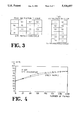
- FIG. 4 is a graph of the hit ratio for a target branch buffer for selected sample benchmark programs, and illustrates the necessity of a relatively large branch target buffer in order to obtain an acceptable prediction accuracy. Accordingly, it would be desirable to provide an improved hardware branch prediction architecture that would require less hardware support as compared with a conventional branch target buffer.
- the present invention provides a super-scalar processor wherein branch-prediction information is provided within an instruction cache memory.
- Each instruction cache block stored in the instruction cache memory includes branch-prediction information fields in addition to instruction fields, which indicate the address of the instruction block's successor and information indicating the location of a branch instruction within the instruction block.
- branch-prediction information fields in addition to instruction fields, which indicate the address of the instruction block's successor and information indicating the location of a branch instruction within the instruction block.
- branch predication is accomplished in accordance with the present invention by loading a plurality of instruction blocks into the instruction cache memory, wherein each of the instruction blocks includes a plurality of instructions and instruction fetch information.
- the instruction fetch information includes an address tag, a branch block index and a successor index that includes a successor valid bit.
- a fetch program counter is used to generate and supply a fetch program counter value to the instruction cache memory in order to prefetch one of the plurality of instruction blocks stored in the instruction cache memory.
- the processor determines whether the successor valid bit of the prefetched instruction block is set to a predetermined condition which indicates that a branch instruction within the prefetched instruction block is predicted as taken.
- the fetch program counter value is incremented and supplied to the instruction cache memory to prefetch a succeeding instruction block. If the successor valid bit is set to the predetermined condition, a predicted target branch address is generated by the instruction cache memory based on information contained in the instruction fetch information field associated with the instruction block. The predicted target branch address and the branch location of the branch instruction within the instruction cache memory is then stored in a branch prediction memory. The branch instruction is subsequently executed with a branch execution unit which generates an actual branch location address and a target branch address for the executed branch instruction. The actual branch location and the target branch address are then respectively compared with the branch location and predicted target branch address stored in the branch prediction memory. A misprediction signal is generated if the compared values are not equal, and the successor valid bit and instruction fetch information are updated for the instruction block in response to misprediction signal.
- FIG. 1 shows a sequence of two instruction runs to illustrate decoder behavior
- FIG. 2 illustrates the sequencing of the instruction runs shown in FIG. 1 through a two-instruction and four-instruction decoder
- FIG. 3 illustrates the improvements in instruction bandwidth for the instruction runs illustrated in FIG. 2 if branch delays are avoided;
- FIG. 4 is a graph of the hit ratio of a target branch buffer
- FIG. 5 illustrates a preferred layout for an instruction-cache entry in accordance with the present invention
- FIG. 6 an example of instruction-cache entries for the code sequence illustrated in FIG. 3;
- FIG. 7 is a block diagram of a super-scalar processor according to the present invention.
- FIG. 8 is a block diagram of an instruction cache employed in the super-scalar processor illustrated in FIG. 7;
- FIG. 9 is a block diagram of a branch prediction FIFO employed in the super-scalar processor illustrated in FIG. 7;
- FIG. 10 block diagram of a branch execution unit employed in the super-scalar processor illustrated in FIG. 7.
- FIG. 5 illustrates a preferred layout for an instruction-cache entry required by the super-scalar processor.
- the cache entry holds four instructions and instruction fetch information which is shown in expanded form to include a conventional address tag field and two additional fields: a successor index field which indicates both the next entry predicted to be fetched and the first instruction within the next entry predicted to be executed, and a branch block index field which indicates the location of a branch point within the instruction block.
- the successor index field does not specify a full instruction address, but is of sufficient size to select any instruction address within the instruction cache.
- the successor index field includes a successor valid bit that indicates a branch is predicted to be taken when set, and that a branch is not predicted to be taken when cleared.
- FIG. 6 illustrates instruction-cache entries for the code sequence shown in FIG. 3, assuming a 64 Kbyte direct-mapped cache and the indicated instruction address.
- the address tag is set and the successor valid bit is cleared. The default for a newly-loaded entry, therefore, is to predict that a branch is not taken and the next sequential instruction block is to be fetched.
- FIG. 6 also illustrates that a branch target program counter can be constructed at branch points by concatenating the successor index field of the instruction block where the branch occurs to the address tag of the successor instruction block.
- the validity of instructions at the beginning of a current instruction block are preferably determined by the low-order bits of the successor index field in the preceding instruction block.
- the successor index of the preceding instruction block may point to any instruction within the current instruction block, and instructions up to this point in the current instruction block are not executed by the processor.
- the validity of instructions at the end of the block are determined by the branch block index, which indicates the point where a branch is predicted to be taken.
- the branch block index is required by an instruction decoder to determine valid instructions, while cache entries are retrieved based on the successor index fields alone.
- the processor keeps a list of predicted branches, stored in the order in which the branches are predicted, in a branch prediction FIFO associated with the instruction cache.
- Each entry on the list indicates the location of the branch in the instruction cache, which is identified by concatenating the successor index of the entry preceding the branching entry with the branch location index field.
- Each entry also contains a complete program-counter value for the target of the branch.
- the processor executes all branches in their original program sequence with a branch execution unit, and compares information resulting from the execution of the branches with information at the head of the list of predicted branches.
- the following conditions must hold for a successful branch prediction. First, if the branch is taken, its location in the instruction cache must match the location of the next branch on the list contained in the branch prediction FIFO. This condition is required to detect a taken branch that was predicted to be not taken. Secondly, the predicted target address of the branch at the head of the list must match the next instruction address determined by executing the branch.
- the second comparison is relevant only if the locations match, and is required primarily to detect a branch which was not taken that was predicted to be taken. However, as the predicted target address is based on the address tag of the successor block, this comparison also detects that cache replacement during execution has removed the original target entry. In addition, comparing program-counter values checks that indirect branches were properly predicted.
- the branch is mispredicted if either or both of the above-described conditions does not hold.
- the appropriate cache entry must be fetched using the location of the branch determined by the execution unit.
- the successor valid bit and instruction fetch information for the incorrect instruction block must also be updated based on the misprediction to reflect the actual result of the execution of the branch. For example, the successor valid bit is cleared if a branch had been predicted as taken but was not taken, so that on the next fetch of the instruction block the branch will be predicted as not taken.
- the successor valid bit and instruction fetch information alway reflect the actual result of the previous execution of the branch instruction.
- FIG. 7 illustrates a block diagram of a super-scalar processor that includes a bus interface unit (BIU) 10, an instruction cache 12, a branch prediction FIFO 14, an instruction decoder 16, a register file 18, a reorder buffer 20, a branch execution unit 22, an arithmetic logic unit (ALU) 24, a shifter unit 30, a load unit 32 a store unit 33, and a data cache 34.
- BIU bus interface unit
- ALU arithmetic logic unit
- the reorder buffer 20 is managed as a FIFO.
- a corresponding entry is allocated in the reorder buffer 20.
- the result value of the decoded instruction is written into the allocated entry when the execution of the instruction is completed.
- the result value is then written into the register file 18 if there are no exceptions associated with the instruction. If the instruction is not complete when its associated entry reaches the head of the reorder buffer 20, the advancement of the reorder buffer 20 is halted until the instruction is completed, additional entries, however, can continue to be allocated. If there is an exception or branch misprediction, the entire contents of the reorder buffer 20 are discarded.
- the instruction cache 12 includes an instruction store array 36 which is a direct mapped instruction cache organized as 512 instruction blocks of four words each, a tag array 38 having 512 entries composed of a 19 bit tag and a single valid bit for the entire block, a dual ported successor array 40 having 512 entries composed of an 11 bit successor index and a successor valid bit which indicates when set that the successor index stored in the successor array 340 should be used to access the instruction store array 36, and indicates when cleared that no branch is predicted within the instruction block, a dual ported block status array 42 that contains a branch block indicator for each instruction block in the instruction cache 12 which indicates the last instruction predicted to be executed within a block, a fetch program counter (PC) 44 (including a PC latch 46, a MUX unit 48 and an incrementer (INC) 50) that generates a PC value that is used for prefetching the instruction stream from the instruction cache 12, an instruction fetch control unit 52 that controls the fetching of instructions from the instruction cache 12, the replacement of cache blocks on misses, and the reform
- PC fetch program
- the branch prediction FIFO 14 is used to maintain information related to every predicted branch within an instruction block. Specifically, the location in the cache where the branch is predicted to occur (i.e. the branch location) as well as the predicted branch target PC of the branch are stored within the branch prediction FIFO 14. As illustrated in FIG. 9, the branch prediction FIFO 14 is preferably implemented as a fixed array with a target PC FIFO and a branch location FIFO, incrementing read/write pointers 56 and 58, and also includes a target PC comparator 60 and a branch location comparator 62 which are respectively coupled to a branch location data bus (CPC) and a target PC data bus (TPC). The output signals generated by the target PC comparator 60 and the branch location PC comparator 62 are provided to a branch FIFO control circuit 63.
- the FIFO 14 could alternatively be implemented as a shiftable array or a circular FIFO.
- the branch execution unit 22 contains the hardware that actually executes the branch instructions and writes the branch results back to the reorder buffer 18 As shown in FIG. 10, the branch execution unit 22 includes a branch reservation station 62, a branch computation unit 64 and a result bus interface 66.
- the reservation station 62 is a FIFO array which receives decoded instructions from the instruction decoder 16 and operand information from the register file 18 and reorder buffer 20 and holds this information until the decoded instruction is free from dependencies and the branch computation unit 64 is free to execute the instruction.
- the result bus interface 66 couples the branch execution unit 22 to the CPC bus and TPC bus, which in turn are coupled to the branch location comparator 62 and the target PC comparator 60 of the branch predication FIFO 14 as illustrated in FIG. 9.
- the instruction cache 12 is loaded with instructions from an instruction memory via the BIU 10.
- the fetch PC 44 supplies a predicted fetch PC value to the instruction cache 12 in order to prefetch an instruction stream.
- the successor valid bit for each instruction block is cleared when the instruction block is first loaded into the instruction cache 12.
- the prefetched instruction block is supplied to the instruction decoder 16 via the instruction decode latch 54.
- the predicted fetch PC is then incremented via the incrementer 50 and loaded back into the fetch PC latch 46 via the MUX unit 48.
- the resulting fetch PC is then supplied to the instruction cache 12 in order to fetch the next sequential instruction block in the instruction store.
- the branch execution unit 22 processes any branch instruction contained in the first prefetched instruction block, and generates an actual PC value and target PC value for the executed branch instruction. Note, that if the branch is not taken on execution, the target PC value generated by the branch execution unit 22 will be the next sequential value after the actual PC value, i.e., the term "target PC" in this sense does not necessarily mean the target of an executed branch, but instead indicates the address of the next instruction block to be executed regardless of the branch results.
- the actual PC value and the target PC value are respectively supplied to the CPC bus and the TPC bus and loaded into the branch location comparator and the target PC comparator in the branch prediction FIFO.
- the comparison of the actual PC value supplied by the branch instruction unit 22 with the branch location value supplied from the branch location FIFO of the branch prediction FIFO 14 will fail.
- the branch prediction FIFO 14 resets and generates a branch misprediction signal which is supplied to the instruction fetch control unit of the instruction cache 12.
- the target PC from the branch execution unit 22 is then loaded into the fetch PC latch 46 via the MUX unit 48 and the successor array is updated to set the successor valid bit under control of the instruction fetch control circuit 52.
- the branch will be predicted as taken on subsequent fetches of the instruction block.
- the value of the fetch PC latch is loaded into the next available entry in the branch prediction FIFO.
- a reconstructed predicted fetch PC formed from the successor index and the tag field read out of the tag array is loaded via the MUX 48 into the fetch PC latch 46.
- This reconstructed fetch PC is supplied to the instruction store array 36 to fetch the next instruction and to the branch prediction FIFO.
- the branch prediction FIFO entry contains the branch location of the branch as well as the predicted target of the branch.
- the branch execution unit 22 subsequently executes the branch instruction and generates an actual PC value and a target PC value which are supplied to the branch location comparator and the target PC comparator in the branch prediction FIFO. If the branch was predicted to be taken, the PC value generated by the branch execution unit 22 will always match the branch location loaded from the branch location FIFO. Three possible conditions, however, will result in the target PC value generated by the branch execution unit 22 not matching the target PC stored in the branch prediction FIFO 14: the branch was predicted as taken but was not taken in which case the successor valid bit must be cleared, the branch executed a subroutine return to an address which did not match the predicted address thereby requiring the successor index be updated, or cache replacement occurred prior to the execution of the branch instruction requiring the reloading of the instruction cache.
- the principal hardware cost of the above-described branch prediction scheme is the increase in the cache size caused by the successor index and branch block index fields associated with each entry in the instruction cache. This increase is minimal when compared with other hardware prediction schemes, however, as the present invention saves storage space by predicting only one taken branch per cache block, and predicting non-taken branches by not storing any branch information associated with the instruction block into the successor index. For an 8 Kbyte direct mapped cache, the additional fields add about 8% to the cache storage required. The increase in overall system performance due to branch prediction, however, justifies the increased size requirement for the instruction cache.
- the requirement for updating the cache entry when a branch is mispredicted does conflict with the requirement to fetch the correct branch target, i.e., unless it is possible to read and write the fetch information for two different entries simultaneously, the updating of the fetch information on a mispredicted branch takes a cycle away from instruction fetching.
- the requirement for an additional cycle causes only a small degradation in performance, however, as mispredicted branches occur infrequently and the increase in performance associated with branch prediction easily outweigh any degradation in performance due to the additional cycles required mispredicted branches.
Abstract
Description
Claims (12)
Priority Applications (7)
| Application Number | Priority Date | Filing Date | Title |
|---|---|---|---|
| US07/361,870 US5136697A (en) | 1989-06-06 | 1989-06-06 | System for reducing delay for execution subsequent to correctly predicted branch instruction using fetch information stored with each block of instructions in cache |
| AT90305401T ATE162897T1 (en) | 1989-06-06 | 1990-05-18 | METHOD AND DEVICE FOR ACCELERATING BRANCH COMMANDS |
| DE69031991T DE69031991T2 (en) | 1989-06-06 | 1990-05-18 | Method and device for accelerating branch instructions |
| ES90305401T ES2111528T3 (en) | 1989-06-06 | 1990-05-18 | PROCEDURE AND APPARATUS TO ACCELERATE BRANCHING INSTRUCTIONS. |
| EP90305401A EP0401992B1 (en) | 1989-06-06 | 1990-05-18 | Method and apparatus for speeding branch instructions |
| JP2149718A JP2889955B2 (en) | 1989-06-06 | 1990-06-06 | Branch prediction method and apparatus therefor |
| US08/285,520 USRE35794E (en) | 1989-06-06 | 1994-08-04 | System for reducing delay for execution subsequent to correctly predicted branch instruction using fetch information stored with each block of instructions in cache |
Applications Claiming Priority (1)
| Application Number | Priority Date | Filing Date | Title |
|---|---|---|---|
| US07/361,870 US5136697A (en) | 1989-06-06 | 1989-06-06 | System for reducing delay for execution subsequent to correctly predicted branch instruction using fetch information stored with each block of instructions in cache |
Related Child Applications (1)
| Application Number | Title | Priority Date | Filing Date |
|---|---|---|---|
| US08/285,520 Reissue USRE35794E (en) | 1989-06-06 | 1994-08-04 | System for reducing delay for execution subsequent to correctly predicted branch instruction using fetch information stored with each block of instructions in cache |
Publications (1)
| Publication Number | Publication Date |
|---|---|
| US5136697A true US5136697A (en) | 1992-08-04 |
Family
ID=23423749
Family Applications (2)
| Application Number | Title | Priority Date | Filing Date |
|---|---|---|---|
| US07/361,870 Ceased US5136697A (en) | 1989-06-06 | 1989-06-06 | System for reducing delay for execution subsequent to correctly predicted branch instruction using fetch information stored with each block of instructions in cache |
| US08/285,520 Expired - Lifetime USRE35794E (en) | 1989-06-06 | 1994-08-04 | System for reducing delay for execution subsequent to correctly predicted branch instruction using fetch information stored with each block of instructions in cache |
Family Applications After (1)
| Application Number | Title | Priority Date | Filing Date |
|---|---|---|---|
| US08/285,520 Expired - Lifetime USRE35794E (en) | 1989-06-06 | 1994-08-04 | System for reducing delay for execution subsequent to correctly predicted branch instruction using fetch information stored with each block of instructions in cache |
Country Status (6)
| Country | Link |
|---|---|
| US (2) | US5136697A (en) |
| EP (1) | EP0401992B1 (en) |
| JP (1) | JP2889955B2 (en) |
| AT (1) | ATE162897T1 (en) |
| DE (1) | DE69031991T2 (en) |
| ES (1) | ES2111528T3 (en) |
Cited By (222)
| Publication number | Priority date | Publication date | Assignee | Title |
|---|---|---|---|---|
| US5230068A (en) * | 1990-02-26 | 1993-07-20 | Nexgen Microsystems | Cache memory system for dynamically altering single cache memory line as either branch target entry or pre-fetch instruction queue based upon instruction sequence |
| US5265213A (en) * | 1990-12-10 | 1993-11-23 | Intel Corporation | Pipeline system for executing predicted branch target instruction in a cycle concurrently with the execution of branch instruction |
| US5317718A (en) * | 1990-03-27 | 1994-05-31 | Digital Equipment Corporation | Data processing system and method with prefetch buffers |
| US5327547A (en) * | 1990-02-26 | 1994-07-05 | Nexgen Microsystems | Two-level branch prediction cache |
| US5337415A (en) * | 1992-12-04 | 1994-08-09 | Hewlett-Packard Company | Predecoding instructions for supercalar dependency indicating simultaneous execution for increased operating frequency |
| US5367703A (en) * | 1993-01-08 | 1994-11-22 | International Business Machines Corporation | Method and system for enhanced branch history prediction accuracy in a superscalar processor system |
| US5386519A (en) * | 1991-07-24 | 1995-01-31 | Nec Corporation | Information processing apparatus incorporating buffer storing a plurality of branch target instructions for branch instructions and interrupt requests |
| US5414822A (en) * | 1991-04-05 | 1995-05-09 | Kabushiki Kaisha Toshiba | Method and apparatus for branch prediction using branch prediction table with improved branch prediction effectiveness |
| US5446849A (en) * | 1990-11-30 | 1995-08-29 | Kabushiki Kaisha Toshiba | Electronic computer which executes squash branching |
| US5454089A (en) * | 1991-04-17 | 1995-09-26 | Intel Corporation | Branch look ahead adder for use in an instruction pipeline sequencer with multiple instruction decoding |
| US5467473A (en) * | 1993-01-08 | 1995-11-14 | International Business Machines Corporation | Out of order instruction load and store comparison |
| EP0685789A2 (en) | 1994-06-01 | 1995-12-06 | Advanced Micro Devices, Inc. | Floating point stack and exchange instruction |
| EP0686913A2 (en) | 1994-06-01 | 1995-12-13 | Advanced Micro Devices, Inc. | Superscaler microprocessor including flag operand renaming and forwarding apparatus |
| US5499355A (en) * | 1992-03-06 | 1996-03-12 | Rambus, Inc. | Prefetching into a cache to minimize main memory access time and cache size in a computer system |
| US5500943A (en) * | 1993-11-02 | 1996-03-19 | Motorola, Inc. | Data processor with rename buffer and FIFO buffer for in-order instruction completion |
| US5509130A (en) * | 1992-04-29 | 1996-04-16 | Sun Microsystems, Inc. | Method and apparatus for grouping multiple instructions, issuing grouped instructions simultaneously, and executing grouped instructions in a pipelined processor |
| US5511175A (en) * | 1990-02-26 | 1996-04-23 | Nexgen, Inc. | Method an apparatus for store-into-instruction-stream detection and maintaining branch prediction cache consistency |
| US5517651A (en) * | 1993-12-29 | 1996-05-14 | Intel Corporation | Method and apparatus for loading a segment register in a microprocessor capable of operating in multiple modes |
| US5522084A (en) * | 1990-10-17 | 1996-05-28 | Mitsubishi Denki Kabushiki Kaisha | Method and system for invalidating instructions utilizing validity and write delay flags in parallel processing apparatus |
| US5524224A (en) * | 1994-04-15 | 1996-06-04 | International Business Machines Corporation | System for speculatively executing instructions wherein mispredicted instruction is executed prior to completion of branch processing |
| US5530941A (en) * | 1990-08-06 | 1996-06-25 | Ncr Corporation | System and method for prefetching data from a main computer memory into a cache memory |
| US5535346A (en) * | 1994-07-05 | 1996-07-09 | Motorola, Inc. | Data processor with future file with parallel update and method of operation |
| US5537573A (en) * | 1993-05-28 | 1996-07-16 | Rambus, Inc. | Cache system and method for prefetching of data |
| US5546599A (en) * | 1994-03-31 | 1996-08-13 | International Business Machines Corporation | Processing system and method of operation for processing dispatched instructions with detected exceptions |
| US5548738A (en) * | 1994-03-31 | 1996-08-20 | International Business Machines Corporation | System and method for processing an instruction in a processing system |
| US5553256A (en) * | 1994-02-28 | 1996-09-03 | Intel Corporation | Apparatus for pipeline streamlining where resources are immediate or certainly retired |
| US5553255A (en) * | 1993-12-20 | 1996-09-03 | Motorola, Inc. | Data processor with programmable levels of speculative instruction fetching and method of operation |
| US5559975A (en) * | 1994-06-01 | 1996-09-24 | Advanced Micro Devices, Inc. | Program counter update mechanism |
| US5559976A (en) * | 1994-03-31 | 1996-09-24 | International Business Machines Corporation | System for instruction completion independent of result write-back responsive to both exception free completion of execution and completion of all logically prior instructions |
| US5561782A (en) * | 1994-06-30 | 1996-10-01 | Intel Corporation | Pipelined cache system having low effective latency for nonsequential accesses |
| US5574928A (en) * | 1993-10-29 | 1996-11-12 | Advanced Micro Devices, Inc. | Mixed integer/floating point processor core for a superscalar microprocessor with a plurality of operand buses for transferring operand segments |
| US5590352A (en) * | 1994-04-26 | 1996-12-31 | Advanced Micro Devices, Inc. | Dependency checking and forwarding of variable width operands |
| US5603045A (en) * | 1994-12-16 | 1997-02-11 | Vlsi Technology, Inc. | Microprocessor system having instruction cache with reserved branch target section |
| US5619730A (en) * | 1990-10-17 | 1997-04-08 | Mitsubishi Denki Kabushiki Kaisha | Pipelining device in a parallel processing apparatus and an instruction supplying method therefor |
| US5623615A (en) * | 1994-08-04 | 1997-04-22 | International Business Machines Corporation | Circuit and method for reducing prefetch cycles on microprocessors |
| US5623619A (en) * | 1993-10-29 | 1997-04-22 | Advanced Micro Devices, Inc. | Linearly addressable microprocessor cache |
| US5630157A (en) * | 1991-06-13 | 1997-05-13 | International Business Machines Corporation | Computer organization for multiple and out-of-order execution of condition code testing and setting instructions |
| US5630082A (en) * | 1993-10-29 | 1997-05-13 | Advanced Micro Devices, Inc. | Apparatus and method for instruction queue scanning |
| US5644779A (en) * | 1994-04-15 | 1997-07-01 | International Business Machines Corporation | Processing system and method of operation for concurrent processing of branch instructions with cancelling of processing of a branch instruction |
| US5649097A (en) * | 1991-10-25 | 1997-07-15 | International Business Machines Corporation | Synchronizing a prediction RAM |
| US5649225A (en) * | 1994-06-01 | 1997-07-15 | Advanced Micro Devices, Inc. | Resynchronization of a superscalar processor |
| US5651125A (en) * | 1993-10-29 | 1997-07-22 | Advanced Micro Devices, Inc. | High performance superscalar microprocessor including a common reorder buffer and common register file for both integer and floating point operations |
| US5680565A (en) * | 1993-12-30 | 1997-10-21 | Intel Corporation | Method and apparatus for performing page table walks in a microprocessor capable of processing speculative instructions |
| US5680569A (en) * | 1994-08-24 | 1997-10-21 | Advanced Micro Devices, Inc. | Cache column timing control |
| US5687338A (en) * | 1994-03-01 | 1997-11-11 | Intel Corporation | Method and apparatus for maintaining a macro instruction for refetching in a pipelined processor |
| US5689672A (en) * | 1993-10-29 | 1997-11-18 | Advanced Micro Devices, Inc. | Pre-decoded instruction cache and method therefor particularly suitable for variable byte-length instructions |
| US5689693A (en) * | 1994-04-26 | 1997-11-18 | Advanced Micro Devices, Inc. | Range finding circuit for selecting a consecutive sequence of reorder buffer entries using circular carry lookahead |
| US5696958A (en) * | 1993-01-11 | 1997-12-09 | Silicon Graphics, Inc. | Method and apparatus for reducing delays following the execution of a branch instruction in an instruction pipeline |
| US5708788A (en) * | 1995-03-03 | 1998-01-13 | Fujitsu, Ltd. | Method for adjusting fetch program counter in response to the number of instructions fetched and issued |
| US5713039A (en) * | 1995-12-05 | 1998-01-27 | Advanced Micro Devices, Inc. | Register file having multiple register storages for storing data from multiple data streams |
| US5715440A (en) * | 1989-06-20 | 1998-02-03 | Fujitsu Limited | Branch instruction executing device for tracing branch instruments based on instruction type |
| US5721857A (en) * | 1993-12-30 | 1998-02-24 | Intel Corporation | Method and apparatus for saving the effective address of floating point memory operations in an out-of-order microprocessor |
| US5721695A (en) * | 1994-10-17 | 1998-02-24 | Advanced Micro Devices, Inc. | Simulation by emulating level sensitive latches with edge trigger latches |
| US5732235A (en) * | 1996-01-25 | 1998-03-24 | International Business Machines Corporation | Method and system for minimizing the number of cycles required to execute semantic routines |
| US5737550A (en) * | 1995-03-28 | 1998-04-07 | Advanced Micro Devices, Inc. | Cache memory to processor bus interface and method thereof |
| US5740393A (en) * | 1993-10-15 | 1998-04-14 | Intel Corporation | Instruction pointer limits in processor that performs speculative out-of-order instruction execution |
| US5742805A (en) * | 1996-02-15 | 1998-04-21 | Fujitsu Ltd. | Method and apparatus for a single history register based branch predictor in a superscalar microprocessor |
| US5748976A (en) * | 1993-10-18 | 1998-05-05 | Amdahl Corporation | Mechanism for maintaining data coherency in a branch history instruction cache |
| US5761723A (en) * | 1994-02-04 | 1998-06-02 | Motorola, Inc. | Data processor with branch prediction and method of operation |
| US5761490A (en) * | 1996-05-28 | 1998-06-02 | Hewlett-Packard Company | Changing the meaning of a pre-decode bit in a cache memory depending on branch prediction mode |
| US5764946A (en) * | 1995-04-12 | 1998-06-09 | Advanced Micro Devices | Superscalar microprocessor employing a way prediction unit to predict the way of an instruction fetch address and to concurrently provide a branch prediction address corresponding to the fetch address |
| US5765016A (en) * | 1996-09-12 | 1998-06-09 | Advanced Micro Devices, Inc. | Reorder buffer configured to store both speculative and committed register states |
| US5768555A (en) * | 1997-02-20 | 1998-06-16 | Advanced Micro Devices, Inc. | Reorder buffer employing last in buffer and last in line bits |
| US5794028A (en) * | 1996-10-17 | 1998-08-11 | Advanced Micro Devices, Inc. | Shared branch prediction structure |
| US5796974A (en) * | 1995-11-07 | 1998-08-18 | Advanced Micro Devices, Inc. | Microcode patching apparatus and method |
| US5796973A (en) * | 1993-10-29 | 1998-08-18 | Advanced Micro Devices, Inc. | Method and apparatus for decoding one or more complex instructions into concurrently dispatched simple instructions |
| US5809294A (en) * | 1991-07-12 | 1998-09-15 | Mitsubishi Denki Kabushiki Kaisha | Parallel processing unit which processes branch instructions without decreased performance when a branch is taken |
| US5822575A (en) * | 1996-09-12 | 1998-10-13 | Advanced Micro Devices, Inc. | Branch prediction storage for storing branch prediction information such that a corresponding tag may be routed with the branch instruction |
| US5822574A (en) * | 1995-04-12 | 1998-10-13 | Advanced Micro Devices, Inc. | Functional unit with a pointer for mispredicted resolution, and a superscalar microprocessor employing the same |
| US5826094A (en) * | 1993-09-30 | 1998-10-20 | Intel Corporation | Register alias table update to indicate architecturally visible state |
| US5826069A (en) * | 1993-09-27 | 1998-10-20 | Intel Corporation | Having write merge and data override capability for a superscalar processing device |
| US5826053A (en) * | 1993-10-29 | 1998-10-20 | Advanced Micro Devices, Inc. | Speculative instruction queue and method therefor particularly suitable for variable byte-length instructions |
| US5828873A (en) * | 1997-03-19 | 1998-10-27 | Advanced Micro Devices, Inc. | Assembly queue for a floating point unit |
| US5828895A (en) * | 1995-09-20 | 1998-10-27 | International Business Machines Corporation | Methods and system for predecoding instructions in a superscalar data processing system |
| US5832259A (en) * | 1990-10-09 | 1998-11-03 | Advanced Micro Devices, Inc. | Apparatus for superscalar instruction pre-decoding using cached instruction lengths |
| US5835744A (en) * | 1995-11-20 | 1998-11-10 | Advanced Micro Devices, Inc. | Microprocessor configured to swap operands in order to minimize dependency checking logic |
| US5835511A (en) * | 1996-05-17 | 1998-11-10 | Advanced Micro Devices, Inc. | Method and mechanism for checking integrity of byte enable signals |
| US5845101A (en) * | 1997-05-13 | 1998-12-01 | Advanced Micro Devices, Inc. | Prefetch buffer for storing instructions prior to placing the instructions in an instruction cache |
| US5850532A (en) * | 1997-03-10 | 1998-12-15 | Advanced Micro Devices, Inc. | Invalid instruction scan unit for detecting invalid predecode data corresponding to instructions being fetched |
| US5850543A (en) * | 1996-10-30 | 1998-12-15 | Texas Instruments Incorporated | Microprocessor with speculative instruction pipelining storing a speculative register value within branch target buffer for use in speculatively executing instructions after a return |
| US5852727A (en) * | 1997-03-10 | 1998-12-22 | Advanced Micro Devices, Inc. | Instruction scanning unit for locating instructions via parallel scanning of start and end byte information |
| US5859998A (en) * | 1997-03-19 | 1999-01-12 | Advanced Micro Devices, Inc. | Hierarchical microcode implementation of floating point instructions for a microprocessor |
| US5859992A (en) * | 1997-03-12 | 1999-01-12 | Advanced Micro Devices, Inc. | Instruction alignment using a dispatch list and a latch list |
| US5862065A (en) * | 1997-02-13 | 1999-01-19 | Advanced Micro Devices, Inc. | Method and circuit for fast generation of zero flag condition code in a microprocessor-based computer |
| US5864707A (en) * | 1995-12-11 | 1999-01-26 | Advanced Micro Devices, Inc. | Superscalar microprocessor configured to predict return addresses from a return stack storage |
| US5867698A (en) * | 1995-10-26 | 1999-02-02 | Sgs-Thomas Microelectronics Limited | Apparatus and method for accessing a branch target buffer |
| US5870580A (en) * | 1996-12-13 | 1999-02-09 | Advanced Micro Devices, Inc. | Decoupled forwarding reorder buffer configured to allocate storage in chunks for instructions having unresolved dependencies |
| US5870578A (en) * | 1997-12-09 | 1999-02-09 | Advanced Micro Devices, Inc. | Workload balancing in a microprocessor for reduced instruction dispatch stalling |
| US5870579A (en) * | 1996-11-18 | 1999-02-09 | Advanced Micro Devices, Inc. | Reorder buffer including a circuit for selecting a designated mask corresponding to an instruction that results in an exception |
| US5872943A (en) * | 1996-07-26 | 1999-02-16 | Advanced Micro Devices, Inc. | Apparatus for aligning instructions using predecoded shift amounts |
| US5872951A (en) * | 1996-07-26 | 1999-02-16 | Advanced Micro Design, Inc. | Reorder buffer having a future file for storing speculative instruction execution results |
| US5872946A (en) * | 1997-06-11 | 1999-02-16 | Advanced Micro Devices, Inc. | Instruction alignment unit employing dual instruction queues for high frequency instruction dispatch |
| US5875324A (en) * | 1995-06-07 | 1999-02-23 | Advanced Micro Devices, Inc. | Superscalar microprocessor which delays update of branch prediction information in response to branch misprediction until a subsequent idle clock |
| US5878244A (en) * | 1995-01-25 | 1999-03-02 | Advanced Micro Devices, Inc. | Reorder buffer configured to allocate storage capable of storing results corresponding to a maximum number of concurrently receivable instructions regardless of a number of instructions received |
| US5878245A (en) * | 1993-10-29 | 1999-03-02 | Advanced Micro Devices, Inc. | High performance load/store functional unit and data cache |
| US5878255A (en) * | 1995-06-07 | 1999-03-02 | Advanced Micro Devices, Inc. | Update unit for providing a delayed update to a branch prediction array |
| US5881305A (en) * | 1996-12-13 | 1999-03-09 | Advanced Micro Devices, Inc. | Register rename stack for a microprocessor |
| US5881278A (en) * | 1995-10-30 | 1999-03-09 | Advanced Micro Devices, Inc. | Return address prediction system which adjusts the contents of return stack storage to enable continued prediction after a mispredicted branch |
| US5884059A (en) * | 1996-01-26 | 1999-03-16 | Advanced Micro Devices, Inc. | Unified multi-function operation scheduler for out-of-order execution in a superscalar processor |
| US5887185A (en) * | 1997-03-19 | 1999-03-23 | Advanced Micro Devices, Inc. | Interface for coupling a floating point unit to a reorder buffer |
| US5898882A (en) * | 1993-01-08 | 1999-04-27 | International Business Machines Corporation | Method and system for enhanced instruction dispatch in a superscalar processor system utilizing independently accessed intermediate storage |
| US5898865A (en) * | 1997-06-12 | 1999-04-27 | Advanced Micro Devices, Inc. | Apparatus and method for predicting an end of loop for string instructions |
| US5901076A (en) * | 1997-04-16 | 1999-05-04 | Advanced Micro Designs, Inc. | Ripple carry shifter in a floating point arithmetic unit of a microprocessor |
| US5901302A (en) * | 1995-01-25 | 1999-05-04 | Advanced Micro Devices, Inc. | Superscalar microprocessor having symmetrical, fixed issue positions each configured to execute a particular subset of instructions |
| US5900013A (en) * | 1996-07-26 | 1999-05-04 | Advanced Micro Devices, Inc. | Dual comparator scheme for detecting a wrap-around condition and generating a cancel signal for removing wrap-around buffer entries |
| US5903740A (en) * | 1996-07-24 | 1999-05-11 | Advanced Micro Devices, Inc. | Apparatus and method for retiring instructions in excess of the number of accessible write ports |
| US5903741A (en) * | 1995-01-25 | 1999-05-11 | Advanced Micro Devices, Inc. | Method of allocating a fixed reorder buffer storage line for execution results regardless of a number of concurrently dispatched instructions |
| US5915110A (en) * | 1996-07-26 | 1999-06-22 | Advanced Micro Devices, Inc. | Branch misprediction recovery in a reorder buffer having a future file |
| US5918056A (en) * | 1996-05-17 | 1999-06-29 | Advanced Micro Devices, Inc. | Segmentation suspend mode for real-time interrupt support |
| US5918044A (en) * | 1996-10-31 | 1999-06-29 | International Business Machines Corporation | Apparatus and method for instruction fetching using a multi-port instruction cache directory |
| US5920710A (en) * | 1996-11-18 | 1999-07-06 | Advanced Micro Devices, Inc. | Apparatus and method for modifying status bits in a reorder buffer with a large speculative state |
| US5928357A (en) * | 1994-09-15 | 1999-07-27 | Intel Corporation | Circuitry and method for performing branching without pipeline delay |
| US5930492A (en) * | 1997-03-19 | 1999-07-27 | Advanced Micro Devices, Inc. | Rapid pipeline control using a control word and a steering word |
| US5931943A (en) * | 1997-10-21 | 1999-08-03 | Advanced Micro Devices, Inc. | Floating point NaN comparison |
| US5933626A (en) * | 1997-06-12 | 1999-08-03 | Advanced Micro Devices, Inc. | Apparatus and method for tracing microprocessor instructions |
| US5933860A (en) * | 1995-02-10 | 1999-08-03 | Digital Equipment Corporation | Multiprobe instruction cache with instruction-based probe hint generation and training whereby the cache bank or way to be accessed next is predicted |
| US5933629A (en) * | 1997-06-12 | 1999-08-03 | Advanced Micro Devices, Inc. | Apparatus and method for detecting microbranches early |
| US5940602A (en) * | 1997-06-11 | 1999-08-17 | Advanced Micro Devices, Inc. | Method and apparatus for predecoding variable byte length instructions for scanning of a number of RISC operations |
| US5946468A (en) * | 1996-07-26 | 1999-08-31 | Advanced Micro Devices, Inc. | Reorder buffer having an improved future file for storing speculative instruction execution results |
| US5954815A (en) * | 1993-12-15 | 1999-09-21 | Silicon Graphics, Inc. | Invalidating instructions in fetched instruction blocks upon predicted two-step branch operations with second operation relative target address |
| US5954816A (en) * | 1996-11-19 | 1999-09-21 | Advanced Micro Devices, Inc. | Branch selector prediction |
| US5954814A (en) * | 1997-12-19 | 1999-09-21 | Intel Corporation | System for using a branch prediction unit to achieve serialization by forcing a branch misprediction to flush a pipeline |
| US5961638A (en) * | 1996-11-19 | 1999-10-05 | Advanced Micro Devices, Inc. | Branch prediction mechanism employing branch selectors to select a branch prediction |
| US5968163A (en) * | 1997-03-10 | 1999-10-19 | Advanced Micro Devices, Inc. | Microcode scan unit for scanning microcode instructions using predecode data |
| US5968169A (en) * | 1995-06-07 | 1999-10-19 | Advanced Micro Devices, Inc. | Superscalar microprocessor stack structure for judging validity of predicted subroutine return addresses |
| US5974542A (en) * | 1997-10-30 | 1999-10-26 | Advanced Micro Devices, Inc. | Branch prediction unit which approximates a larger number of branch predictions using a smaller number of branch predictions and an alternate target indication |
| US5974538A (en) * | 1997-02-21 | 1999-10-26 | Wilmot, Ii; Richard Byron | Method and apparatus for annotating operands in a computer system with source instruction identifiers |
| US5974432A (en) * | 1997-12-05 | 1999-10-26 | Advanced Micro Devices, Inc. | On-the-fly one-hot encoding of leading zero count |
| US5978906A (en) * | 1996-11-19 | 1999-11-02 | Advanced Micro Devices, Inc. | Branch selectors associated with byte ranges within an instruction cache for rapidly identifying branch predictions |
| US5978901A (en) * | 1997-08-21 | 1999-11-02 | Advanced Micro Devices, Inc. | Floating point and multimedia unit with data type reclassification capability |
| US5983321A (en) * | 1997-03-12 | 1999-11-09 | Advanced Micro Devices, Inc. | Cache holding register for receiving instruction packets and for providing the instruction packets to a predecode unit and instruction cache |
| US5983337A (en) * | 1997-06-12 | 1999-11-09 | Advanced Micro Devices, Inc. | Apparatus and method for patching an instruction by providing a substitute instruction or instructions from an external memory responsive to detecting an opcode of the instruction |
| US5987235A (en) * | 1997-04-04 | 1999-11-16 | Advanced Micro Devices, Inc. | Method and apparatus for predecoding variable byte length instructions for fast scanning of instructions |
| US5987599A (en) * | 1997-03-28 | 1999-11-16 | Intel Corporation | Target instructions prefetch cache |
| US6003128A (en) * | 1997-05-01 | 1999-12-14 | Advanced Micro Devices, Inc. | Number of pipeline stages and loop length related counter differential based end-loop prediction |
| US6009511A (en) * | 1997-06-11 | 1999-12-28 | Advanced Micro Devices, Inc. | Apparatus and method for tagging floating point operands and results for rapid detection of special floating point numbers |
| US6012125A (en) * | 1997-06-20 | 2000-01-04 | Advanced Micro Devices, Inc. | Superscalar microprocessor including a decoded instruction cache configured to receive partially decoded instructions |
| US6016533A (en) * | 1997-12-16 | 2000-01-18 | Advanced Micro Devices, Inc. | Way prediction logic for cache array |
| US6016543A (en) * | 1997-05-14 | 2000-01-18 | Mitsubishi Denki Kabushiki Kaisha | Microprocessor for controlling the conditional execution of instructions |
| US6016545A (en) * | 1997-12-16 | 2000-01-18 | Advanced Micro Devices, Inc. | Reduced size storage apparatus for storing cache-line-related data in a high frequency microprocessor |
| US6018798A (en) * | 1997-12-18 | 2000-01-25 | Advanced Micro Devices, Inc. | Floating point unit using a central window for storing instructions capable of executing multiple instructions in a single clock cycle |
| US6032252A (en) * | 1997-10-28 | 2000-02-29 | Advanced Micro Devices, Inc. | Apparatus and method for efficient loop control in a superscalar microprocessor |
| US6041167A (en) * | 1994-03-31 | 2000-03-21 | International Business Machines Corporation | Method and system for reordering instructions after dispatch in a processing system |
| US6049863A (en) * | 1996-07-24 | 2000-04-11 | Advanced Micro Devices, Inc. | Predecoding technique for indicating locations of opcode bytes in variable byte-length instructions within a superscalar microprocessor |
| US6073230A (en) * | 1997-06-11 | 2000-06-06 | Advanced Micro Devices, Inc. | Instruction fetch unit configured to provide sequential way prediction for sequential instruction fetches |
| US6079003A (en) * | 1997-11-20 | 2000-06-20 | Advanced Micro Devices, Inc. | Reverse TLB for providing branch target address in a microprocessor having a physically-tagged cache |
| US6079014A (en) * | 1993-12-02 | 2000-06-20 | Intel Corporation | Processor that redirects an instruction fetch pipeline immediately upon detection of a mispredicted branch while committing prior instructions to an architectural state |
| US6079005A (en) * | 1997-11-20 | 2000-06-20 | Advanced Micro Devices, Inc. | Microprocessor including virtual address branch prediction and current page register to provide page portion of virtual and physical fetch address |
| US6101577A (en) * | 1997-09-15 | 2000-08-08 | Advanced Micro Devices, Inc. | Pipelined instruction cache and branch prediction mechanism therefor |
| US6101597A (en) * | 1993-12-30 | 2000-08-08 | Intel Corporation | Method and apparatus for maximum throughput scheduling of dependent operations in a pipelined processor |
| US6108769A (en) * | 1996-05-17 | 2000-08-22 | Advanced Micro Devices, Inc. | Dependency table for reducing dependency checking hardware |
| US6112296A (en) * | 1997-12-18 | 2000-08-29 | Advanced Micro Devices, Inc. | Floating point stack manipulation using a register map and speculative top of stack values |
| US6112019A (en) * | 1995-06-12 | 2000-08-29 | Georgia Tech Research Corp. | Distributed instruction queue |
| US6112018A (en) * | 1997-12-18 | 2000-08-29 | Advanced Micro Devices, Inc. | Apparatus for exchanging two stack registers |
| US6119223A (en) * | 1998-07-31 | 2000-09-12 | Advanced Micro Devices, Inc. | Map unit having rapid misprediction recovery |
| US6122729A (en) * | 1997-05-13 | 2000-09-19 | Advanced Micro Devices, Inc. | Prefetch buffer which stores a pointer indicating an initial predecode position |
| US6122656A (en) * | 1998-07-31 | 2000-09-19 | Advanced Micro Devices, Inc. | Processor configured to map logical register numbers to physical register numbers using virtual register numbers |
| US6128721A (en) * | 1993-11-17 | 2000-10-03 | Sun Microsystems, Inc. | Temporary pipeline register file for a superpipelined superscalar processor |
| US6141740A (en) * | 1997-03-03 | 2000-10-31 | Advanced Micro Devices, Inc. | Apparatus and method for microcode patching for generating a next address |
| US6141745A (en) * | 1998-04-30 | 2000-10-31 | Advanced Micro Devices, Inc. | Functional bit identifying a prefix byte via a particular state regardless of type of instruction |
| US6154818A (en) * | 1997-11-20 | 2000-11-28 | Advanced Micro Devices, Inc. | System and method of controlling access to privilege partitioned address space for a model specific register file |
| US6157996A (en) * | 1997-11-13 | 2000-12-05 | Advanced Micro Devices, Inc. | Processor programably configurable to execute enhanced variable byte length instructions including predicated execution, three operand addressing, and increased register space |
| US6157986A (en) * | 1997-12-16 | 2000-12-05 | Advanced Micro Devices, Inc. | Fast linear tag validation unit for use in microprocessor |
| US6167510A (en) * | 1996-03-26 | 2000-12-26 | Advanced Micro Devices, Inc. | Instruction cache configured to provide instructions to a microprocessor having a clock cycle time less than a cache access time of said instruction cache |
| US6167509A (en) * | 1990-06-29 | 2000-12-26 | Compaq Computer Corporation | Branch performance in high speed processor |
| US6175906B1 (en) | 1996-12-06 | 2001-01-16 | Advanced Micro Devices, Inc. | Mechanism for fast revalidation of virtual tags |
| US6175908B1 (en) | 1998-04-30 | 2001-01-16 | Advanced Micro Devices, Inc. | Variable byte-length instructions using state of function bit of second byte of plurality of instructions bytes as indicative of whether first byte is a prefix byte |
| US6185676B1 (en) * | 1997-09-30 | 2001-02-06 | Intel Corporation | Method and apparatus for performing early branch prediction in a microprocessor |
| US6195744B1 (en) | 1995-10-06 | 2001-02-27 | Advanced Micro Devices, Inc. | Unified multi-function operation scheduler for out-of-order execution in a superscaler processor |
| US6199154B1 (en) | 1997-11-17 | 2001-03-06 | Advanced Micro Devices, Inc. | Selecting cache to fetch in multi-level cache system based on fetch address source and pre-fetching additional data to the cache for future access |
| DE19945940A1 (en) * | 1999-09-24 | 2001-04-12 | Infineon Technologies Ag | Method and device for processing conditional jump instructions in a processor with "pipelined" architecture |
| US6230262B1 (en) | 1998-07-31 | 2001-05-08 | Advanced Micro Devices, Inc. | Processor configured to selectively free physical registers upon retirement of instructions |
| US6230260B1 (en) | 1998-09-01 | 2001-05-08 | International Business Machines Corporation | Circuit arrangement and method of speculative instruction execution utilizing instruction history caching |
| US6230259B1 (en) | 1997-10-31 | 2001-05-08 | Advanced Micro Devices, Inc. | Transparent extended state save |
| US6233672B1 (en) | 1997-03-06 | 2001-05-15 | Advanced Micro Devices, Inc. | Piping rounding mode bits with floating point instructions to eliminate serialization |
| US6237082B1 (en) | 1995-01-25 | 2001-05-22 | Advanced Micro Devices, Inc. | Reorder buffer configured to allocate storage for instruction results corresponding to predefined maximum number of concurrently receivable instructions independent of a number of instructions received |
| US6247097B1 (en) * | 1999-01-22 | 2001-06-12 | International Business Machines Corporation | Aligned instruction cache handling of instruction fetches across multiple predicted branch instructions |
| US6256728B1 (en) | 1997-11-17 | 2001-07-03 | Advanced Micro Devices, Inc. | Processor configured to selectively cancel instructions from its pipeline responsive to a predicted-taken short forward branch instruction |
| US6279101B1 (en) * | 1992-08-12 | 2001-08-21 | Advanced Micro Devices, Inc. | Instruction decoder/dispatch |
| US6304961B1 (en) * | 1992-08-31 | 2001-10-16 | Sun Microsystems, Inc. | Computer system and method for fetching a next instruction |
| US20020016903A1 (en) * | 1991-07-08 | 2002-02-07 | Nguyen Le Trong | High-performance, superscalar-based computer system with out-of-order instruction execution and concurrent results distribution |
| US6393550B1 (en) * | 1993-12-30 | 2002-05-21 | Intel Corporation | Method and apparatus for pipeline streamlining where resources are immediate or certainly retired |
| US6438664B1 (en) | 1999-10-27 | 2002-08-20 | Advanced Micro Devices, Inc. | Microcode patch device and method for patching microcode using match registers and patch routines |
| US6442681B1 (en) * | 1998-12-28 | 2002-08-27 | Bull Hn Information Systems Inc. | Pipelined central processor managing the execution of instructions with proximate successive branches in a cache-based data processing system while performing block mode transfer predictions |
| US6442707B1 (en) | 1999-10-29 | 2002-08-27 | Advanced Micro Devices, Inc. | Alternate fault handler |
| US6516395B1 (en) | 1997-11-20 | 2003-02-04 | Advanced Micro Devices, Inc. | System and method for controlling access to a privilege-partitioned address space with a fixed set of attributes |
| US20030056086A1 (en) * | 1991-07-08 | 2003-03-20 | Le Trong Nguyen | High-performance, superscalar-based computer system with out-of-order instruction execution |
| KR100384213B1 (en) * | 1995-10-06 | 2003-08-19 | 어드밴스트 마이크로 디바이시즈 인코퍼레이티드 | A processing system, selection circuit and methods for identifying first or second objects of selected types in a sequential list |
| US6732253B1 (en) | 2000-11-13 | 2004-05-04 | Chipwrights Design, Inc. | Loop handling for single instruction multiple datapath processor architectures |
| US20050050278A1 (en) * | 2003-09-03 | 2005-03-03 | Advanced Micro Devices, Inc. | Low power way-predicted cache |
| US20050050277A1 (en) * | 2003-09-03 | 2005-03-03 | Advanced Micro Devices, Inc. | MicroTLB and micro TAG for reducing power in a processor |
| US6877084B1 (en) | 2000-08-09 | 2005-04-05 | Advanced Micro Devices, Inc. | Central processing unit (CPU) accessing an extended register set in an extended register mode |
| US6931518B1 (en) | 2000-11-28 | 2005-08-16 | Chipwrights Design, Inc. | Branching around conditional processing if states of all single instruction multiple datapaths are disabled and the computer program is non-deterministic |
| US20050223197A1 (en) * | 2004-03-31 | 2005-10-06 | Simon Knowles | Apparatus and method for dual data path processing |
| US20050223196A1 (en) * | 2004-03-31 | 2005-10-06 | Simon Knowles | Apparatus and method for asymmetric dual path processing |
| US6981132B2 (en) | 2000-08-09 | 2005-12-27 | Advanced Micro Devices, Inc. | Uniform register addressing using prefix byte |
| US20060026409A1 (en) * | 2004-07-27 | 2006-02-02 | Fujitsu Limited | Branch instruction control apparatus and control method |
| US20080046702A1 (en) * | 2006-08-16 | 2008-02-21 | Michael William Morrow | Methods and Apparatus for Reducing Lookups in a Branch Target Address Cache |
| US7516305B2 (en) | 1992-05-01 | 2009-04-07 | Seiko Epson Corporation | System and method for retiring approximately simultaneously a group of instructions in a superscalar microprocessor |
| US7558945B2 (en) | 1992-12-31 | 2009-07-07 | Seiko Epson Corporation | System and method for register renaming |
| US20090187245A1 (en) * | 2006-12-22 | 2009-07-23 | Musculoskeletal Transplant Foundation | Interbody fusion hybrid graft |
| US20100064123A1 (en) * | 2008-09-05 | 2010-03-11 | Zuraski Jr Gerald D | Hybrid branch prediction device with sparse and dense prediction caches |
| US7685402B2 (en) | 1991-07-08 | 2010-03-23 | Sanjiv Garg | RISC microprocessor architecture implementing multiple typed register sets |
| US7802074B2 (en) | 1992-03-31 | 2010-09-21 | Sanjiv Garg | Superscalar RISC instruction scheduling |
| US20100332759A1 (en) * | 2008-02-11 | 2010-12-30 | Nxp B.V. | Method of program obfuscation and processing device for executing obfuscated programs |
| US20110078416A1 (en) * | 2004-03-31 | 2011-03-31 | Icera Inc. | Apparatus and method for control processing in dual path processor |
| US20110093658A1 (en) * | 2009-10-19 | 2011-04-21 | Zuraski Jr Gerald D | Classifying and segregating branch targets |
| US7996671B2 (en) | 2003-11-17 | 2011-08-09 | Bluerisc Inc. | Security of program executables and microprocessors based on compiler-architecture interaction |
| US8074052B2 (en) | 1992-12-31 | 2011-12-06 | Seiko Epson Corporation | System and method for assigning tags to control instruction processing in a superscalar processor |
| US8161252B1 (en) * | 2005-08-01 | 2012-04-17 | Nvidia Corporation | Memory interface with dynamic selection among mirrored storage locations |
| US8578134B1 (en) * | 2005-04-04 | 2013-11-05 | Globalfoundries Inc. | System and method for aligning change-of-flow instructions in an instruction buffer |
| US8607209B2 (en) | 2004-02-04 | 2013-12-10 | Bluerisc Inc. | Energy-focused compiler-assisted branch prediction |
| US9069938B2 (en) | 2006-11-03 | 2015-06-30 | Bluerisc, Inc. | Securing microprocessors against information leakage and physical tampering |
| US9235393B2 (en) | 2002-07-09 | 2016-01-12 | Iii Holdings 2, Llc | Statically speculative compilation and execution |
| US9569186B2 (en) | 2003-10-29 | 2017-02-14 | Iii Holdings 2, Llc | Energy-focused re-compilation of executables and hardware mechanisms based on compiler-architecture interaction and compiler-inserted control |
| US9916252B2 (en) | 2015-05-19 | 2018-03-13 | Linear Algebra Technologies Limited | Systems and methods for addressing a cache with split-indexes |
| US20180210734A1 (en) * | 2017-01-26 | 2018-07-26 | Alibaba Group Holding Limited | Methods and apparatus for processing self-modifying codes |
| US20190227804A1 (en) * | 2018-01-19 | 2019-07-25 | Cavium, Inc. | Managing predictor selection for branch prediction |
| US10599437B2 (en) | 2018-01-19 | 2020-03-24 | Marvell World Trade Ltd. | Managing obscured branch prediction information |
| US10719321B2 (en) | 2015-09-19 | 2020-07-21 | Microsoft Technology Licensing, Llc | Prefetching instruction blocks |
| US11170463B2 (en) | 2017-05-19 | 2021-11-09 | Movidius Limited | Methods, systems and apparatus to reduce memory latency when fetching pixel kernels |
| US20220342672A1 (en) * | 2021-04-27 | 2022-10-27 | Red Hat, Inc. | Rescheduling a load instruction based on past replays |
Families Citing this family (6)
| Publication number | Priority date | Publication date | Assignee | Title |
|---|---|---|---|---|
| US6205544B1 (en) * | 1998-12-21 | 2001-03-20 | Intel Corporation | Decomposition of instructions into branch and sequential code sections |
| US6957327B1 (en) * | 1998-12-31 | 2005-10-18 | Stmicroelectronics, Inc. | Block-based branch target buffer |
| US6516462B1 (en) * | 1999-02-17 | 2003-02-04 | Elbrus International | Cache miss saving for speculation load operation |
| DE602005017657D1 (en) | 2004-08-30 | 2009-12-24 | Texas Instruments Inc | METHOD AND DEVICES FOR BRIBERY FORECASTING AND PROCESSING OF MICROPROCESSOR INSTRUCTIONS AND THE SAME |
| US7447883B2 (en) * | 2006-08-10 | 2008-11-04 | Arm Limited | Allocation of branch target cache resources in dependence upon program instructions within an instruction queue |
| CN111221579B (en) * | 2018-11-27 | 2022-04-26 | 展讯通信(上海)有限公司 | Method and system for predicting Load instruction execution delay |
Citations (11)
| Publication number | Priority date | Publication date | Assignee | Title |
|---|---|---|---|---|
| US4200927A (en) * | 1978-01-03 | 1980-04-29 | International Business Machines Corporation | Multi-instruction stream branch processing mechanism |
| US4295193A (en) * | 1979-06-29 | 1981-10-13 | International Business Machines Corporation | Machine for multiple instruction execution |
| US4430706A (en) * | 1980-10-27 | 1984-02-07 | Burroughs Corporation | Branch prediction apparatus and method for a data processing system |
| US4477872A (en) * | 1982-01-15 | 1984-10-16 | International Business Machines Corporation | Decode history table for conditional branch instructions |
| US4604691A (en) * | 1982-09-07 | 1986-08-05 | Nippon Electric Co., Ltd. | Data processing system having branch instruction prefetching performance |
| US4755966A (en) * | 1985-06-28 | 1988-07-05 | Hewlett-Packard Company | Bidirectional branch prediction and optimization |
| US4764861A (en) * | 1984-02-08 | 1988-08-16 | Nec Corporation | Instruction fpefetching device with prediction of a branch destination for each branch count instruction |
| US4807115A (en) * | 1983-10-07 | 1989-02-21 | Cornell Research Foundation, Inc. | Instruction issuing mechanism for processors with multiple functional units |
| US4858104A (en) * | 1987-01-16 | 1989-08-15 | Mitsubishi Denki Kabushiki Kaisha | Preceding instruction address based branch prediction in a pipelined processor |
| US4860197A (en) * | 1987-07-31 | 1989-08-22 | Prime Computer, Inc. | Branch cache system with instruction boundary determination independent of parcel boundary |
| US4894772A (en) * | 1987-07-31 | 1990-01-16 | Prime Computer, Inc. | Method and apparatus for qualifying branch cache entries |
Family Cites Families (2)
| Publication number | Priority date | Publication date | Assignee | Title |
|---|---|---|---|---|
| DE3382350D1 (en) * | 1982-11-17 | 1991-08-29 | Nec Corp | ARRANGEMENT FOR RETRIEVING COMMANDS PREDICTING A BRANCH TARGET ADDRESS. |
| US4943908A (en) * | 1987-12-02 | 1990-07-24 | International Business Machines Corporation | Multiple branch analyzer for prefetching cache lines |
-
1989
- 1989-06-06 US US07/361,870 patent/US5136697A/en not_active Ceased
-
1990
- 1990-05-18 AT AT90305401T patent/ATE162897T1/en active
- 1990-05-18 ES ES90305401T patent/ES2111528T3/en not_active Expired - Lifetime
- 1990-05-18 EP EP90305401A patent/EP0401992B1/en not_active Expired - Lifetime
- 1990-05-18 DE DE69031991T patent/DE69031991T2/en not_active Expired - Lifetime
- 1990-06-06 JP JP2149718A patent/JP2889955B2/en not_active Expired - Lifetime
-
1994
- 1994-08-04 US US08/285,520 patent/USRE35794E/en not_active Expired - Lifetime
Patent Citations (11)
| Publication number | Priority date | Publication date | Assignee | Title |
|---|---|---|---|---|
| US4200927A (en) * | 1978-01-03 | 1980-04-29 | International Business Machines Corporation | Multi-instruction stream branch processing mechanism |
| US4295193A (en) * | 1979-06-29 | 1981-10-13 | International Business Machines Corporation | Machine for multiple instruction execution |
| US4430706A (en) * | 1980-10-27 | 1984-02-07 | Burroughs Corporation | Branch prediction apparatus and method for a data processing system |
| US4477872A (en) * | 1982-01-15 | 1984-10-16 | International Business Machines Corporation | Decode history table for conditional branch instructions |
| US4604691A (en) * | 1982-09-07 | 1986-08-05 | Nippon Electric Co., Ltd. | Data processing system having branch instruction prefetching performance |
| US4807115A (en) * | 1983-10-07 | 1989-02-21 | Cornell Research Foundation, Inc. | Instruction issuing mechanism for processors with multiple functional units |
| US4764861A (en) * | 1984-02-08 | 1988-08-16 | Nec Corporation | Instruction fpefetching device with prediction of a branch destination for each branch count instruction |
| US4755966A (en) * | 1985-06-28 | 1988-07-05 | Hewlett-Packard Company | Bidirectional branch prediction and optimization |
| US4858104A (en) * | 1987-01-16 | 1989-08-15 | Mitsubishi Denki Kabushiki Kaisha | Preceding instruction address based branch prediction in a pipelined processor |
| US4860197A (en) * | 1987-07-31 | 1989-08-22 | Prime Computer, Inc. | Branch cache system with instruction boundary determination independent of parcel boundary |
| US4894772A (en) * | 1987-07-31 | 1990-01-16 | Prime Computer, Inc. | Method and apparatus for qualifying branch cache entries |
Cited By (325)
| Publication number | Priority date | Publication date | Assignee | Title |
|---|---|---|---|---|
| US5715440A (en) * | 1989-06-20 | 1998-02-03 | Fujitsu Limited | Branch instruction executing device for tracing branch instruments based on instruction type |
| US5327547A (en) * | 1990-02-26 | 1994-07-05 | Nexgen Microsystems | Two-level branch prediction cache |
| US5515518A (en) * | 1990-02-26 | 1996-05-07 | Nexgen, Inc. | Two-level branch prediction cache |
| US5230068A (en) * | 1990-02-26 | 1993-07-20 | Nexgen Microsystems | Cache memory system for dynamically altering single cache memory line as either branch target entry or pre-fetch instruction queue based upon instruction sequence |
| US5748932A (en) * | 1990-02-26 | 1998-05-05 | Advanced Micro Devices, Inc. | Cache memory system for dynamically altering single cache memory line as either branch target entry or prefetch instruction queue based upon instruction sequence |
| US5511175A (en) * | 1990-02-26 | 1996-04-23 | Nexgen, Inc. | Method an apparatus for store-into-instruction-stream detection and maintaining branch prediction cache consistency |
| US6067616A (en) * | 1990-02-26 | 2000-05-23 | Advanced Micro Devices, Inc. | Branch prediction device with two levels of branch prediction cache |
| US5317718A (en) * | 1990-03-27 | 1994-05-31 | Digital Equipment Corporation | Data processing system and method with prefetch buffers |
| US6167509A (en) * | 1990-06-29 | 2000-12-26 | Compaq Computer Corporation | Branch performance in high speed processor |
| US5530941A (en) * | 1990-08-06 | 1996-06-25 | Ncr Corporation | System and method for prefetching data from a main computer memory into a cache memory |
| US5832259A (en) * | 1990-10-09 | 1998-11-03 | Advanced Micro Devices, Inc. | Apparatus for superscalar instruction pre-decoding using cached instruction lengths |
| US5619730A (en) * | 1990-10-17 | 1997-04-08 | Mitsubishi Denki Kabushiki Kaisha | Pipelining device in a parallel processing apparatus and an instruction supplying method therefor |
| US5930520A (en) * | 1990-10-17 | 1999-07-27 | Mitsubishi Denki Kabushiki Kaisha | Pipelining device in a parallel processing apparatus and an instruction supplying method therefor |
| US5522084A (en) * | 1990-10-17 | 1996-05-28 | Mitsubishi Denki Kabushiki Kaisha | Method and system for invalidating instructions utilizing validity and write delay flags in parallel processing apparatus |
| US5446849A (en) * | 1990-11-30 | 1995-08-29 | Kabushiki Kaisha Toshiba | Electronic computer which executes squash branching |
| US5265213A (en) * | 1990-12-10 | 1993-11-23 | Intel Corporation | Pipeline system for executing predicted branch target instruction in a cycle concurrently with the execution of branch instruction |
| US5414822A (en) * | 1991-04-05 | 1995-05-09 | Kabushiki Kaisha Toshiba | Method and apparatus for branch prediction using branch prediction table with improved branch prediction effectiveness |
| US5454089A (en) * | 1991-04-17 | 1995-09-26 | Intel Corporation | Branch look ahead adder for use in an instruction pipeline sequencer with multiple instruction decoding |
| US5630157A (en) * | 1991-06-13 | 1997-05-13 | International Business Machines Corporation | Computer organization for multiple and out-of-order execution of condition code testing and setting instructions |
| US7162610B2 (en) | 1991-07-08 | 2007-01-09 | Seiko Epson Corporation | High-performance, superscalar-based computer system with out-of-order instruction execution |
| US20020016903A1 (en) * | 1991-07-08 | 2002-02-07 | Nguyen Le Trong | High-performance, superscalar-based computer system with out-of-order instruction execution and concurrent results distribution |
| US6959375B2 (en) * | 1991-07-08 | 2005-10-25 | Seiko Epson Corporation | High-performance, superscalar-based computer system with out-of-order instruction execution |
| US6948052B2 (en) | 1991-07-08 | 2005-09-20 | Seiko Epson Corporation | High-performance, superscalar-based computer system with out-of-order instruction execution |
| US7028161B2 (en) | 1991-07-08 | 2006-04-11 | Seiko Epson Corporation | High-performance, superscalar-based computer system with out-of-order instruction execution and concurrent results distribution |
| US20040093483A1 (en) * | 1991-07-08 | 2004-05-13 | Seiko Epson Corporation | High performance, superscalar-based computer system with out-of-order instruction execution |
| US7685402B2 (en) | 1991-07-08 | 2010-03-23 | Sanjiv Garg | RISC microprocessor architecture implementing multiple typed register sets |
| US7555632B2 (en) | 1991-07-08 | 2009-06-30 | Seiko Epson Corporation | High-performance superscalar-based computer system with out-of-order instruction execution and concurrent results distribution |
| US6941447B2 (en) | 1991-07-08 | 2005-09-06 | Seiko Epson Corporation | High-performance, superscalar-based computer system with out-of-order instruction execution |
| US7721070B2 (en) | 1991-07-08 | 2010-05-18 | Le Trong Nguyen | High-performance, superscalar-based computer system with out-of-order instruction execution |
| US6934829B2 (en) | 1991-07-08 | 2005-08-23 | Seiko Epson Corporation | High-performance, superscalar-based computer system with out-of-order instruction execution |
| US7941635B2 (en) | 1991-07-08 | 2011-05-10 | Seiko-Epson Corporation | High-performance superscalar-based computer system with out-of order instruction execution and concurrent results distribution |
| US20030070060A1 (en) * | 1991-07-08 | 2003-04-10 | Nguyen Le Trong | High-performance, superscalar-based computer system with out-of-order instruction execution |
| US20040093482A1 (en) * | 1991-07-08 | 2004-05-13 | Seiko Epson Corporation | High-performance, superscalar-based computer system with out-of-order instruction execution |
| US7941636B2 (en) | 1991-07-08 | 2011-05-10 | Intellectual Venture Funding Llc | RISC microprocessor architecture implementing multiple typed register sets |
| US20070101103A1 (en) * | 1991-07-08 | 2007-05-03 | Nguyen Le T | High-performance superscalar-based computer system with out-of order instruction execution and concurrent results distribution |
| US20030056086A1 (en) * | 1991-07-08 | 2003-03-20 | Le Trong Nguyen | High-performance, superscalar-based computer system with out-of-order instruction execution |
| US7487333B2 (en) | 1991-07-08 | 2009-02-03 | Seiko Epson Corporation | High-performance, superscalar-based computer system with out-of-order instruction execution |
| US7739482B2 (en) | 1991-07-08 | 2010-06-15 | Seiko Epson Corporation | High-performance, superscalar-based computer system with out-of-order instruction execution |
| US6986024B2 (en) | 1991-07-08 | 2006-01-10 | Seiko Epson Corporation | High-performance, superscalar-based computer system with out-of-order instruction execution |
| US5809294A (en) * | 1991-07-12 | 1998-09-15 | Mitsubishi Denki Kabushiki Kaisha | Parallel processing unit which processes branch instructions without decreased performance when a branch is taken |
| US5386519A (en) * | 1991-07-24 | 1995-01-31 | Nec Corporation | Information processing apparatus incorporating buffer storing a plurality of branch target instructions for branch instructions and interrupt requests |
| US5649097A (en) * | 1991-10-25 | 1997-07-15 | International Business Machines Corporation | Synchronizing a prediction RAM |
| US5499355A (en) * | 1992-03-06 | 1996-03-12 | Rambus, Inc. | Prefetching into a cache to minimize main memory access time and cache size in a computer system |
| US7802074B2 (en) | 1992-03-31 | 2010-09-21 | Sanjiv Garg | Superscalar RISC instruction scheduling |
| US5509130A (en) * | 1992-04-29 | 1996-04-16 | Sun Microsystems, Inc. | Method and apparatus for grouping multiple instructions, issuing grouped instructions simultaneously, and executing grouped instructions in a pipelined processor |
| US7516305B2 (en) | 1992-05-01 | 2009-04-07 | Seiko Epson Corporation | System and method for retiring approximately simultaneously a group of instructions in a superscalar microprocessor |
| US7523296B2 (en) | 1992-05-01 | 2009-04-21 | Seiko Epson Corporation | System and method for handling exceptions and branch mispredictions in a superscalar microprocessor |
| US7934078B2 (en) | 1992-05-01 | 2011-04-26 | Seiko Epson Corporation | System and method for retiring approximately simultaneously a group of instructions in a superscalar microprocessor |
| US7958337B2 (en) | 1992-05-01 | 2011-06-07 | Seiko Epson Corporation | System and method for retiring approximately simultaneously a group of instructions in a superscalar microprocessor |
| US6279101B1 (en) * | 1992-08-12 | 2001-08-21 | Advanced Micro Devices, Inc. | Instruction decoder/dispatch |
| US6304961B1 (en) * | 1992-08-31 | 2001-10-16 | Sun Microsystems, Inc. | Computer system and method for fetching a next instruction |
| US5337415A (en) * | 1992-12-04 | 1994-08-09 | Hewlett-Packard Company | Predecoding instructions for supercalar dependency indicating simultaneous execution for increased operating frequency |
| US8074052B2 (en) | 1992-12-31 | 2011-12-06 | Seiko Epson Corporation | System and method for assigning tags to control instruction processing in a superscalar processor |
| US7558945B2 (en) | 1992-12-31 | 2009-07-07 | Seiko Epson Corporation | System and method for register renaming |
| US7979678B2 (en) | 1992-12-31 | 2011-07-12 | Seiko Epson Corporation | System and method for register renaming |
| US5367703A (en) * | 1993-01-08 | 1994-11-22 | International Business Machines Corporation | Method and system for enhanced branch history prediction accuracy in a superscalar processor system |
| US5467473A (en) * | 1993-01-08 | 1995-11-14 | International Business Machines Corporation | Out of order instruction load and store comparison |
| US5898882A (en) * | 1993-01-08 | 1999-04-27 | International Business Machines Corporation | Method and system for enhanced instruction dispatch in a superscalar processor system utilizing independently accessed intermediate storage |
| US5696958A (en) * | 1993-01-11 | 1997-12-09 | Silicon Graphics, Inc. | Method and apparatus for reducing delays following the execution of a branch instruction in an instruction pipeline |
| US5537573A (en) * | 1993-05-28 | 1996-07-16 | Rambus, Inc. | Cache system and method for prefetching of data |
| US5826069A (en) * | 1993-09-27 | 1998-10-20 | Intel Corporation | Having write merge and data override capability for a superscalar processing device |
| US5826094A (en) * | 1993-09-30 | 1998-10-20 | Intel Corporation | Register alias table update to indicate architecturally visible state |
| US5740393A (en) * | 1993-10-15 | 1998-04-14 | Intel Corporation | Instruction pointer limits in processor that performs speculative out-of-order instruction execution |
| US5748976A (en) * | 1993-10-18 | 1998-05-05 | Amdahl Corporation | Mechanism for maintaining data coherency in a branch history instruction cache |
| US5664136A (en) * | 1993-10-29 | 1997-09-02 | Advanced Micro Devices, Inc. | High performance superscalar microprocessor including a dual-pathway circuit for converting cisc instructions to risc operations |
| US5896518A (en) * | 1993-10-29 | 1999-04-20 | Advanced Micro Devices, Inc. | Instruction queue scanning using opcode identification |
| US5655098A (en) * | 1993-10-29 | 1997-08-05 | Advanced Micro Devices, Inc. | High performance superscalar microprocessor including a circuit for byte-aligning cisc instructions stored in a variable byte-length format |
| US5651125A (en) * | 1993-10-29 | 1997-07-22 | Advanced Micro Devices, Inc. | High performance superscalar microprocessor including a common reorder buffer and common register file for both integer and floating point operations |
| US5878245A (en) * | 1993-10-29 | 1999-03-02 | Advanced Micro Devices, Inc. | High performance load/store functional unit and data cache |
| US5630082A (en) * | 1993-10-29 | 1997-05-13 | Advanced Micro Devices, Inc. | Apparatus and method for instruction queue scanning |
| US5970235A (en) * | 1993-10-29 | 1999-10-19 | Advanced Micro Devices, Inc. | Pre-decoded instruction cache and method therefor particularly suitable for variable byte-length instructions |
| US5796973A (en) * | 1993-10-29 | 1998-08-18 | Advanced Micro Devices, Inc. | Method and apparatus for decoding one or more complex instructions into concurrently dispatched simple instructions |
| US5623619A (en) * | 1993-10-29 | 1997-04-22 | Advanced Micro Devices, Inc. | Linearly addressable microprocessor cache |
| US5867683A (en) * | 1993-10-29 | 1999-02-02 | Advanced Micro Devices, Inc. | Method of operating a high performance superscalar microprocessor including a common reorder buffer and common register file for both integer and floating point operations |
| US5574928A (en) * | 1993-10-29 | 1996-11-12 | Advanced Micro Devices, Inc. | Mixed integer/floating point processor core for a superscalar microprocessor with a plurality of operand buses for transferring operand segments |
| US6298423B1 (en) | 1993-10-29 | 2001-10-02 | Advanced Micro Devices, Inc. | High performance load/store functional unit and data cache |
| US6240484B1 (en) | 1993-10-29 | 2001-05-29 | Advanced Micro Devices, Inc. | Linearly addressable microprocessor cache |
| US5689672A (en) * | 1993-10-29 | 1997-11-18 | Advanced Micro Devices, Inc. | Pre-decoded instruction cache and method therefor particularly suitable for variable byte-length instructions |
| US5867682A (en) * | 1993-10-29 | 1999-02-02 | Advanced Micro Devices, Inc. | High performance superscalar microprocessor including a circuit for converting CISC instructions to RISC operations |
| US5826053A (en) * | 1993-10-29 | 1998-10-20 | Advanced Micro Devices, Inc. | Speculative instruction queue and method therefor particularly suitable for variable byte-length instructions |
| US6189087B1 (en) | 1993-10-29 | 2001-02-13 | Advanced Micro Devices, Inc. | Superscalar instruction decoder including an instruction queue |
| US5500943A (en) * | 1993-11-02 | 1996-03-19 | Motorola, Inc. | Data processor with rename buffer and FIFO buffer for in-order instruction completion |
| US6128721A (en) * | 1993-11-17 | 2000-10-03 | Sun Microsystems, Inc. | Temporary pipeline register file for a superpipelined superscalar processor |
| US6079014A (en) * | 1993-12-02 | 2000-06-20 | Intel Corporation | Processor that redirects an instruction fetch pipeline immediately upon detection of a mispredicted branch while committing prior instructions to an architectural state |
| US6691221B2 (en) | 1993-12-15 | 2004-02-10 | Mips Technologies, Inc. | Loading previously dispatched slots in multiple instruction dispatch buffer before dispatching remaining slots for parallel execution |
| US5954815A (en) * | 1993-12-15 | 1999-09-21 | Silicon Graphics, Inc. | Invalidating instructions in fetched instruction blocks upon predicted two-step branch operations with second operation relative target address |
| US6247124B1 (en) | 1993-12-15 | 2001-06-12 | Mips Technologies, Inc. | Branch prediction entry with target line index calculated using relative position of second operation of two step branch operation in a line of instructions |
| US5553255A (en) * | 1993-12-20 | 1996-09-03 | Motorola, Inc. | Data processor with programmable levels of speculative instruction fetching and method of operation |
| US5517651A (en) * | 1993-12-29 | 1996-05-14 | Intel Corporation | Method and apparatus for loading a segment register in a microprocessor capable of operating in multiple modes |
| US5721857A (en) * | 1993-12-30 | 1998-02-24 | Intel Corporation | Method and apparatus for saving the effective address of floating point memory operations in an out-of-order microprocessor |
| US6393550B1 (en) * | 1993-12-30 | 2002-05-21 | Intel Corporation | Method and apparatus for pipeline streamlining where resources are immediate or certainly retired |
| US6101597A (en) * | 1993-12-30 | 2000-08-08 | Intel Corporation | Method and apparatus for maximum throughput scheduling of dependent operations in a pipelined processor |
| US5680565A (en) * | 1993-12-30 | 1997-10-21 | Intel Corporation | Method and apparatus for performing page table walks in a microprocessor capable of processing speculative instructions |
| US5761723A (en) * | 1994-02-04 | 1998-06-02 | Motorola, Inc. | Data processor with branch prediction and method of operation |
| US5553256A (en) * | 1994-02-28 | 1996-09-03 | Intel Corporation | Apparatus for pipeline streamlining where resources are immediate or certainly retired |
| US5687338A (en) * | 1994-03-01 | 1997-11-11 | Intel Corporation | Method and apparatus for maintaining a macro instruction for refetching in a pipelined processor |
| US5546599A (en) * | 1994-03-31 | 1996-08-13 | International Business Machines Corporation | Processing system and method of operation for processing dispatched instructions with detected exceptions |
| US5548738A (en) * | 1994-03-31 | 1996-08-20 | International Business Machines Corporation | System and method for processing an instruction in a processing system |
| US6041167A (en) * | 1994-03-31 | 2000-03-21 | International Business Machines Corporation | Method and system for reordering instructions after dispatch in a processing system |
| US5559976A (en) * | 1994-03-31 | 1996-09-24 | International Business Machines Corporation | System for instruction completion independent of result write-back responsive to both exception free completion of execution and completion of all logically prior instructions |
| US5524224A (en) * | 1994-04-15 | 1996-06-04 | International Business Machines Corporation | System for speculatively executing instructions wherein mispredicted instruction is executed prior to completion of branch processing |
| US5644779A (en) * | 1994-04-15 | 1997-07-01 | International Business Machines Corporation | Processing system and method of operation for concurrent processing of branch instructions with cancelling of processing of a branch instruction |
| US5689693A (en) * | 1994-04-26 | 1997-11-18 | Advanced Micro Devices, Inc. | Range finding circuit for selecting a consecutive sequence of reorder buffer entries using circular carry lookahead |
| US5737629A (en) * | 1994-04-26 | 1998-04-07 | Advanced Micro Devices, Inc. | Dependency checking and forwarding of variable width operands |
| US5996067A (en) * | 1994-04-26 | 1999-11-30 | Advanced Micro Devices, Inc. | Range finding circuit for selecting a consecutive sequence of reorder buffer entries using circular carry lookahead |
| US5590352A (en) * | 1994-04-26 | 1996-12-31 | Advanced Micro Devices, Inc. | Dependency checking and forwarding of variable width operands |
| US6351801B1 (en) | 1994-06-01 | 2002-02-26 | Advanced Micro Devices, Inc. | Program counter update mechanism |
| US5559975A (en) * | 1994-06-01 | 1996-09-24 | Advanced Micro Devices, Inc. | Program counter update mechanism |
| EP0685789A2 (en) | 1994-06-01 | 1995-12-06 | Advanced Micro Devices, Inc. | Floating point stack and exchange instruction |
| US5805853A (en) * | 1994-06-01 | 1998-09-08 | Advanced Micro Devices, Inc. | Superscalar microprocessor including flag operand renaming and forwarding apparatus |
| US5799162A (en) * | 1994-06-01 | 1998-08-25 | Advanced Micro Devices, Inc. | Program counter update mechanism |
| US5649225A (en) * | 1994-06-01 | 1997-07-15 | Advanced Micro Devices, Inc. | Resynchronization of a superscalar processor |
| US5632023A (en) * | 1994-06-01 | 1997-05-20 | Advanced Micro Devices, Inc. | Superscalar microprocessor including flag operand renaming and forwarding apparatus |
| US5857089A (en) * | 1994-06-01 | 1999-01-05 | Advanced Micro Devices, Inc. | Floating point stack and exchange instruction |
| US6035386A (en) * | 1994-06-01 | 2000-03-07 | Advanced Micro Devices, Inc. | Program counter update mechanism |
| EP0686913A2 (en) | 1994-06-01 | 1995-12-13 | Advanced Micro Devices, Inc. | Superscaler microprocessor including flag operand renaming and forwarding apparatus |
| US5561782A (en) * | 1994-06-30 | 1996-10-01 | Intel Corporation | Pipelined cache system having low effective latency for nonsequential accesses |
| US5535346A (en) * | 1994-07-05 | 1996-07-09 | Motorola, Inc. | Data processor with future file with parallel update and method of operation |
| US5623615A (en) * | 1994-08-04 | 1997-04-22 | International Business Machines Corporation | Circuit and method for reducing prefetch cycles on microprocessors |
| US5680569A (en) * | 1994-08-24 | 1997-10-21 | Advanced Micro Devices, Inc. | Cache column timing control |
| US5928357A (en) * | 1994-09-15 | 1999-07-27 | Intel Corporation | Circuitry and method for performing branching without pipeline delay |
| US5721695A (en) * | 1994-10-17 | 1998-02-24 | Advanced Micro Devices, Inc. | Simulation by emulating level sensitive latches with edge trigger latches |
| US5603045A (en) * | 1994-12-16 | 1997-02-11 | Vlsi Technology, Inc. | Microprocessor system having instruction cache with reserved branch target section |
| US5901302A (en) * | 1995-01-25 | 1999-05-04 | Advanced Micro Devices, Inc. | Superscalar microprocessor having symmetrical, fixed issue positions each configured to execute a particular subset of instructions |
| US6134651A (en) * | 1995-01-25 | 2000-10-17 | Advanced Micro Devices, Inc. | Reorder buffer employed in a microprocessor to store instruction results having a plurality of entries predetermined to correspond to a plurality of functional units |
| US6237082B1 (en) | 1995-01-25 | 2001-05-22 | Advanced Micro Devices, Inc. | Reorder buffer configured to allocate storage for instruction results corresponding to predefined maximum number of concurrently receivable instructions independent of a number of instructions received |
| US6381689B2 (en) | 1995-01-25 | 2002-04-30 | Advanced Micro Devices, Inc. | Line-oriented reorder buffer configured to selectively store a memory operation result in one of the plurality of reorder buffer storage locations corresponding to the executed instruction |
| US6026482A (en) * | 1995-01-25 | 2000-02-15 | Advanced Micro Devices, Inc. | Recorder buffer and a method for allocating a fixed amount of storage for instruction results independent of a number of concurrently dispatched instructions |
| US5903741A (en) * | 1995-01-25 | 1999-05-11 | Advanced Micro Devices, Inc. | Method of allocating a fixed reorder buffer storage line for execution results regardless of a number of concurrently dispatched instructions |
| US5878244A (en) * | 1995-01-25 | 1999-03-02 | Advanced Micro Devices, Inc. | Reorder buffer configured to allocate storage capable of storing results corresponding to a maximum number of concurrently receivable instructions regardless of a number of instructions received |
| US5933860A (en) * | 1995-02-10 | 1999-08-03 | Digital Equipment Corporation | Multiprobe instruction cache with instruction-based probe hint generation and training whereby the cache bank or way to be accessed next is predicted |
| US5708788A (en) * | 1995-03-03 | 1998-01-13 | Fujitsu, Ltd. | Method for adjusting fetch program counter in response to the number of instructions fetched and issued |
| US5737550A (en) * | 1995-03-28 | 1998-04-07 | Advanced Micro Devices, Inc. | Cache memory to processor bus interface and method thereof |
| US5764946A (en) * | 1995-04-12 | 1998-06-09 | Advanced Micro Devices | Superscalar microprocessor employing a way prediction unit to predict the way of an instruction fetch address and to concurrently provide a branch prediction address corresponding to the fetch address |
| US5822574A (en) * | 1995-04-12 | 1998-10-13 | Advanced Micro Devices, Inc. | Functional unit with a pointer for mispredicted resolution, and a superscalar microprocessor employing the same |
| US5875324A (en) * | 1995-06-07 | 1999-02-23 | Advanced Micro Devices, Inc. | Superscalar microprocessor which delays update of branch prediction information in response to branch misprediction until a subsequent idle clock |
| US5968169A (en) * | 1995-06-07 | 1999-10-19 | Advanced Micro Devices, Inc. | Superscalar microprocessor stack structure for judging validity of predicted subroutine return addresses |
| US5878255A (en) * | 1995-06-07 | 1999-03-02 | Advanced Micro Devices, Inc. | Update unit for providing a delayed update to a branch prediction array |
| US6112019A (en) * | 1995-06-12 | 2000-08-29 | Georgia Tech Research Corp. | Distributed instruction queue |
| US5828895A (en) * | 1995-09-20 | 1998-10-27 | International Business Machines Corporation | Methods and system for predecoding instructions in a superscalar data processing system |
| US6195744B1 (en) | 1995-10-06 | 2001-02-27 | Advanced Micro Devices, Inc. | Unified multi-function operation scheduler for out-of-order execution in a superscaler processor |
| KR100384213B1 (en) * | 1995-10-06 | 2003-08-19 | 어드밴스트 마이크로 디바이시즈 인코퍼레이티드 | A processing system, selection circuit and methods for identifying first or second objects of selected types in a sequential list |
| US5867698A (en) * | 1995-10-26 | 1999-02-02 | Sgs-Thomas Microelectronics Limited | Apparatus and method for accessing a branch target buffer |
| US5881278A (en) * | 1995-10-30 | 1999-03-09 | Advanced Micro Devices, Inc. | Return address prediction system which adjusts the contents of return stack storage to enable continued prediction after a mispredicted branch |
| US5796974A (en) * | 1995-11-07 | 1998-08-18 | Advanced Micro Devices, Inc. | Microcode patching apparatus and method |
| US5835744A (en) * | 1995-11-20 | 1998-11-10 | Advanced Micro Devices, Inc. | Microprocessor configured to swap operands in order to minimize dependency checking logic |
| US5713039A (en) * | 1995-12-05 | 1998-01-27 | Advanced Micro Devices, Inc. | Register file having multiple register storages for storing data from multiple data streams |
| US6269436B1 (en) | 1995-12-11 | 2001-07-31 | Advanced Micro Devices, Inc. | Superscalar microprocessor configured to predict return addresses from a return stack storage |
| US6014734A (en) * | 1995-12-11 | 2000-01-11 | Advanced Micro Devices, Inc. | Superscalar microprocessor configured to predict return addresses from a return stack storage |
| US5864707A (en) * | 1995-12-11 | 1999-01-26 | Advanced Micro Devices, Inc. | Superscalar microprocessor configured to predict return addresses from a return stack storage |
| US5732235A (en) * | 1996-01-25 | 1998-03-24 | International Business Machines Corporation | Method and system for minimizing the number of cycles required to execute semantic routines |
| US5884059A (en) * | 1996-01-26 | 1999-03-16 | Advanced Micro Devices, Inc. | Unified multi-function operation scheduler for out-of-order execution in a superscalar processor |
| US5742805A (en) * | 1996-02-15 | 1998-04-21 | Fujitsu Ltd. | Method and apparatus for a single history register based branch predictor in a superscalar microprocessor |
| US6167510A (en) * | 1996-03-26 | 2000-12-26 | Advanced Micro Devices, Inc. | Instruction cache configured to provide instructions to a microprocessor having a clock cycle time less than a cache access time of said instruction cache |
| US5835511A (en) * | 1996-05-17 | 1998-11-10 | Advanced Micro Devices, Inc. | Method and mechanism for checking integrity of byte enable signals |
| US5918056A (en) * | 1996-05-17 | 1999-06-29 | Advanced Micro Devices, Inc. | Segmentation suspend mode for real-time interrupt support |
| US6249862B1 (en) | 1996-05-17 | 2001-06-19 | Advanced Micro Devices, Inc. | Dependency table for reducing dependency checking hardware |
| US6209084B1 (en) | 1996-05-17 | 2001-03-27 | Advanced Micro Devices, Inc. | Dependency table for reducing dependency checking hardware |
| US6108769A (en) * | 1996-05-17 | 2000-08-22 | Advanced Micro Devices, Inc. | Dependency table for reducing dependency checking hardware |
| US5761490A (en) * | 1996-05-28 | 1998-06-02 | Hewlett-Packard Company | Changing the meaning of a pre-decode bit in a cache memory depending on branch prediction mode |
| US6049863A (en) * | 1996-07-24 | 2000-04-11 | Advanced Micro Devices, Inc. | Predecoding technique for indicating locations of opcode bytes in variable byte-length instructions within a superscalar microprocessor |
| US6189089B1 (en) | 1996-07-24 | 2001-02-13 | Advanced Micro Devices, Inc. | Apparatus and method for retiring instructions in excess of the number of accessible write ports |
| US5903740A (en) * | 1996-07-24 | 1999-05-11 | Advanced Micro Devices, Inc. | Apparatus and method for retiring instructions in excess of the number of accessible write ports |
| US5872951A (en) * | 1996-07-26 | 1999-02-16 | Advanced Micro Design, Inc. | Reorder buffer having a future file for storing speculative instruction execution results |
| US5961634A (en) * | 1996-07-26 | 1999-10-05 | Advanced Micro Devices, Inc. | Reorder buffer having a future file for storing speculative instruction execution results |
| US5900013A (en) * | 1996-07-26 | 1999-05-04 | Advanced Micro Devices, Inc. | Dual comparator scheme for detecting a wrap-around condition and generating a cancel signal for removing wrap-around buffer entries |
| US5872943A (en) * | 1996-07-26 | 1999-02-16 | Advanced Micro Devices, Inc. | Apparatus for aligning instructions using predecoded shift amounts |
| US5946468A (en) * | 1996-07-26 | 1999-08-31 | Advanced Micro Devices, Inc. | Reorder buffer having an improved future file for storing speculative instruction execution results |
| US5915110A (en) * | 1996-07-26 | 1999-06-22 | Advanced Micro Devices, Inc. | Branch misprediction recovery in a reorder buffer having a future file |
| US5765016A (en) * | 1996-09-12 | 1998-06-09 | Advanced Micro Devices, Inc. | Reorder buffer configured to store both speculative and committed register states |
| US5822575A (en) * | 1996-09-12 | 1998-10-13 | Advanced Micro Devices, Inc. | Branch prediction storage for storing branch prediction information such that a corresponding tag may be routed with the branch instruction |
| US5794028A (en) * | 1996-10-17 | 1998-08-11 | Advanced Micro Devices, Inc. | Shared branch prediction structure |
| US5850543A (en) * | 1996-10-30 | 1998-12-15 | Texas Instruments Incorporated | Microprocessor with speculative instruction pipelining storing a speculative register value within branch target buffer for use in speculatively executing instructions after a return |
| US5918044A (en) * | 1996-10-31 | 1999-06-29 | International Business Machines Corporation | Apparatus and method for instruction fetching using a multi-port instruction cache directory |
| US5920710A (en) * | 1996-11-18 | 1999-07-06 | Advanced Micro Devices, Inc. | Apparatus and method for modifying status bits in a reorder buffer with a large speculative state |
| US5870579A (en) * | 1996-11-18 | 1999-02-09 | Advanced Micro Devices, Inc. | Reorder buffer including a circuit for selecting a designated mask corresponding to an instruction that results in an exception |
| US5978906A (en) * | 1996-11-19 | 1999-11-02 | Advanced Micro Devices, Inc. | Branch selectors associated with byte ranges within an instruction cache for rapidly identifying branch predictions |
| US6279107B1 (en) | 1996-11-19 | 2001-08-21 | Advanced Micro Devices, Inc. | Branch selectors associated with byte ranges within an instruction cache for rapidly identifying branch predictions |
| US6247123B1 (en) | 1996-11-19 | 2001-06-12 | Advanced Micro Devices, Inc. | Branch prediction mechanism employing branch selectors to select a branch prediction |
| US5995749A (en) * | 1996-11-19 | 1999-11-30 | Advanced Micro Devices, Inc. | Branch prediction mechanism employing branch selectors to select a branch prediction |
| US6141748A (en) * | 1996-11-19 | 2000-10-31 | Advanced Micro Devices, Inc. | Branch selectors associated with byte ranges within an instruction cache for rapidly identifying branch predictions |
| US5961638A (en) * | 1996-11-19 | 1999-10-05 | Advanced Micro Devices, Inc. | Branch prediction mechanism employing branch selectors to select a branch prediction |
| US5954816A (en) * | 1996-11-19 | 1999-09-21 | Advanced Micro Devices, Inc. | Branch selector prediction |
| US6175906B1 (en) | 1996-12-06 | 2001-01-16 | Advanced Micro Devices, Inc. | Mechanism for fast revalidation of virtual tags |
| US5944812A (en) * | 1996-12-13 | 1999-08-31 | Advanced Micro Devices, Inc. | Register rename stack for a microprocessor |
| US5881305A (en) * | 1996-12-13 | 1999-03-09 | Advanced Micro Devices, Inc. | Register rename stack for a microprocessor |
| US5922069A (en) * | 1996-12-13 | 1999-07-13 | Advanced Micro Devices, Inc. | Reorder buffer which forwards operands independent of storing destination specifiers therein |
| US5870580A (en) * | 1996-12-13 | 1999-02-09 | Advanced Micro Devices, Inc. | Decoupled forwarding reorder buffer configured to allocate storage in chunks for instructions having unresolved dependencies |
| US5987596A (en) * | 1996-12-13 | 1999-11-16 | Advanced Micro Devices, Inc. | Register rename stack for a microprocessor |
| US5862065A (en) * | 1997-02-13 | 1999-01-19 | Advanced Micro Devices, Inc. | Method and circuit for fast generation of zero flag condition code in a microprocessor-based computer |
| US6032251A (en) * | 1997-02-20 | 2000-02-29 | Advanced Micro Devices, Inc. | Computer system including a microprocessor having a reorder buffer employing last in buffer and last in line indications |
| US6292884B1 (en) | 1997-02-20 | 2001-09-18 | Advanced Micro Devices, Inc. | Reorder buffer employing last in line indication |
| US5768555A (en) * | 1997-02-20 | 1998-06-16 | Advanced Micro Devices, Inc. | Reorder buffer employing last in buffer and last in line bits |
| US5974538A (en) * | 1997-02-21 | 1999-10-26 | Wilmot, Ii; Richard Byron | Method and apparatus for annotating operands in a computer system with source instruction identifiers |
| US6141740A (en) * | 1997-03-03 | 2000-10-31 | Advanced Micro Devices, Inc. | Apparatus and method for microcode patching for generating a next address |
| US6233672B1 (en) | 1997-03-06 | 2001-05-15 | Advanced Micro Devices, Inc. | Piping rounding mode bits with floating point instructions to eliminate serialization |
| US5852727A (en) * | 1997-03-10 | 1998-12-22 | Advanced Micro Devices, Inc. | Instruction scanning unit for locating instructions via parallel scanning of start and end byte information |
| US5968163A (en) * | 1997-03-10 | 1999-10-19 | Advanced Micro Devices, Inc. | Microcode scan unit for scanning microcode instructions using predecode data |
| US5850532A (en) * | 1997-03-10 | 1998-12-15 | Advanced Micro Devices, Inc. | Invalid instruction scan unit for detecting invalid predecode data corresponding to instructions being fetched |
| US6202142B1 (en) | 1997-03-10 | 2001-03-13 | Advanced Micro Devices, Inc. | Microcode scan unit for scanning microcode instructions using predecode data |
| US5983321A (en) * | 1997-03-12 | 1999-11-09 | Advanced Micro Devices, Inc. | Cache holding register for receiving instruction packets and for providing the instruction packets to a predecode unit and instruction cache |
| US6076146A (en) * | 1997-03-12 | 2000-06-13 | Advanced Micro Devices, Inc. | Cache holding register for delayed update of a cache line into an instruction cache |
| US5859992A (en) * | 1997-03-12 | 1999-01-12 | Advanced Micro Devices, Inc. | Instruction alignment using a dispatch list and a latch list |
| US5930492A (en) * | 1997-03-19 | 1999-07-27 | Advanced Micro Devices, Inc. | Rapid pipeline control using a control word and a steering word |
| US5828873A (en) * | 1997-03-19 | 1998-10-27 | Advanced Micro Devices, Inc. | Assembly queue for a floating point unit |
| US5859998A (en) * | 1997-03-19 | 1999-01-12 | Advanced Micro Devices, Inc. | Hierarchical microcode implementation of floating point instructions for a microprocessor |
| US5887185A (en) * | 1997-03-19 | 1999-03-23 | Advanced Micro Devices, Inc. | Interface for coupling a floating point unit to a reorder buffer |
| US5987599A (en) * | 1997-03-28 | 1999-11-16 | Intel Corporation | Target instructions prefetch cache |
| US5987235A (en) * | 1997-04-04 | 1999-11-16 | Advanced Micro Devices, Inc. | Method and apparatus for predecoding variable byte length instructions for fast scanning of instructions |
| US5901076A (en) * | 1997-04-16 | 1999-05-04 | Advanced Micro Designs, Inc. | Ripple carry shifter in a floating point arithmetic unit of a microprocessor |
| US6003128A (en) * | 1997-05-01 | 1999-12-14 | Advanced Micro Devices, Inc. | Number of pipeline stages and loop length related counter differential based end-loop prediction |
| US6367006B1 (en) | 1997-05-13 | 2002-04-02 | Advanced Micro Devices, Inc. | Predecode buffer including buffer pointer indicating another buffer for predecoding |
| US5845101A (en) * | 1997-05-13 | 1998-12-01 | Advanced Micro Devices, Inc. | Prefetch buffer for storing instructions prior to placing the instructions in an instruction cache |
| US6122729A (en) * | 1997-05-13 | 2000-09-19 | Advanced Micro Devices, Inc. | Prefetch buffer which stores a pointer indicating an initial predecode position |
| US6016543A (en) * | 1997-05-14 | 2000-01-18 | Mitsubishi Denki Kabushiki Kaisha | Microprocessor for controlling the conditional execution of instructions |
| US6009511A (en) * | 1997-06-11 | 1999-12-28 | Advanced Micro Devices, Inc. | Apparatus and method for tagging floating point operands and results for rapid detection of special floating point numbers |
| US5951675A (en) * | 1997-06-11 | 1999-09-14 | Advanced Micro Devices, Inc. | Instruction alignment unit employing dual instruction queues for high frequency instruction dispatch |
| US6073230A (en) * | 1997-06-11 | 2000-06-06 | Advanced Micro Devices, Inc. | Instruction fetch unit configured to provide sequential way prediction for sequential instruction fetches |
| US5872946A (en) * | 1997-06-11 | 1999-02-16 | Advanced Micro Devices, Inc. | Instruction alignment unit employing dual instruction queues for high frequency instruction dispatch |
| US5940602A (en) * | 1997-06-11 | 1999-08-17 | Advanced Micro Devices, Inc. | Method and apparatus for predecoding variable byte length instructions for scanning of a number of RISC operations |
| US6085311A (en) * | 1997-06-11 | 2000-07-04 | Advanced Micro Devices, Inc. | Instruction alignment unit employing dual instruction queues for high frequency instruction dispatch |
| US6101595A (en) * | 1997-06-11 | 2000-08-08 | Advanced Micro Devices, Inc. | Fetching instructions from an instruction cache using sequential way prediction |
| US5898865A (en) * | 1997-06-12 | 1999-04-27 | Advanced Micro Devices, Inc. | Apparatus and method for predicting an end of loop for string instructions |
| US6192468B1 (en) | 1997-06-12 | 2001-02-20 | Advanced Micro Devices, Inc. | Apparatus and method for detecting microbranches early |
| US5933626A (en) * | 1997-06-12 | 1999-08-03 | Advanced Micro Devices, Inc. | Apparatus and method for tracing microprocessor instructions |
| US5933629A (en) * | 1997-06-12 | 1999-08-03 | Advanced Micro Devices, Inc. | Apparatus and method for detecting microbranches early |
| US5983337A (en) * | 1997-06-12 | 1999-11-09 | Advanced Micro Devices, Inc. | Apparatus and method for patching an instruction by providing a substitute instruction or instructions from an external memory responsive to detecting an opcode of the instruction |
| US6014741A (en) * | 1997-06-12 | 2000-01-11 | Advanced Micro Devices, Inc. | Apparatus and method for predicting an end of a microcode loop |
| US6009513A (en) * | 1997-06-12 | 1999-12-28 | Advanced Micro Devices, Inc. | Apparatus and method for detecting microbranches early |
| US6012125A (en) * | 1997-06-20 | 2000-01-04 | Advanced Micro Devices, Inc. | Superscalar microprocessor including a decoded instruction cache configured to receive partially decoded instructions |
| US5978901A (en) * | 1997-08-21 | 1999-11-02 | Advanced Micro Devices, Inc. | Floating point and multimedia unit with data type reclassification capability |
| US6101577A (en) * | 1997-09-15 | 2000-08-08 | Advanced Micro Devices, Inc. | Pipelined instruction cache and branch prediction mechanism therefor |
| US6185676B1 (en) * | 1997-09-30 | 2001-02-06 | Intel Corporation | Method and apparatus for performing early branch prediction in a microprocessor |
| US5931943A (en) * | 1997-10-21 | 1999-08-03 | Advanced Micro Devices, Inc. | Floating point NaN comparison |
| US6032252A (en) * | 1997-10-28 | 2000-02-29 | Advanced Micro Devices, Inc. | Apparatus and method for efficient loop control in a superscalar microprocessor |
| US5974542A (en) * | 1997-10-30 | 1999-10-26 | Advanced Micro Devices, Inc. | Branch prediction unit which approximates a larger number of branch predictions using a smaller number of branch predictions and an alternate target indication |
| US6230259B1 (en) | 1997-10-31 | 2001-05-08 | Advanced Micro Devices, Inc. | Transparent extended state save |
| US6157996A (en) * | 1997-11-13 | 2000-12-05 | Advanced Micro Devices, Inc. | Processor programably configurable to execute enhanced variable byte length instructions including predicated execution, three operand addressing, and increased register space |
| US6367001B1 (en) | 1997-11-17 | 2002-04-02 | Advanced Micro Devices, Inc. | Processor including efficient fetch mechanism for L0 and L1 caches |
| US6256728B1 (en) | 1997-11-17 | 2001-07-03 | Advanced Micro Devices, Inc. | Processor configured to selectively cancel instructions from its pipeline responsive to a predicted-taken short forward branch instruction |
| US6199154B1 (en) | 1997-11-17 | 2001-03-06 | Advanced Micro Devices, Inc. | Selecting cache to fetch in multi-level cache system based on fetch address source and pre-fetching additional data to the cache for future access |
| US6505292B1 (en) | 1997-11-17 | 2003-01-07 | Advanced Micro Devices, Inc. | Processor including efficient fetch mechanism for L0 and L1 caches |
| US6079003A (en) * | 1997-11-20 | 2000-06-20 | Advanced Micro Devices, Inc. | Reverse TLB for providing branch target address in a microprocessor having a physically-tagged cache |
| US6266752B1 (en) | 1997-11-20 | 2001-07-24 | Advanced Micro Devices, Inc. | Reverse TLB for providing branch target address in a microprocessor having a physically-tagged cache |
| US6079005A (en) * | 1997-11-20 | 2000-06-20 | Advanced Micro Devices, Inc. | Microprocessor including virtual address branch prediction and current page register to provide page portion of virtual and physical fetch address |
| US6516395B1 (en) | 1997-11-20 | 2003-02-04 | Advanced Micro Devices, Inc. | System and method for controlling access to a privilege-partitioned address space with a fixed set of attributes |
| US6154818A (en) * | 1997-11-20 | 2000-11-28 | Advanced Micro Devices, Inc. | System and method of controlling access to privilege partitioned address space for a model specific register file |
| US5974432A (en) * | 1997-12-05 | 1999-10-26 | Advanced Micro Devices, Inc. | On-the-fly one-hot encoding of leading zero count |
| US5870578A (en) * | 1997-12-09 | 1999-02-09 | Advanced Micro Devices, Inc. | Workload balancing in a microprocessor for reduced instruction dispatch stalling |
| US6115792A (en) * | 1997-12-16 | 2000-09-05 | Advanced Micro Devices, Inc. | Way prediction logic for cache array |
| US6016545A (en) * | 1997-12-16 | 2000-01-18 | Advanced Micro Devices, Inc. | Reduced size storage apparatus for storing cache-line-related data in a high frequency microprocessor |
| US6016533A (en) * | 1997-12-16 | 2000-01-18 | Advanced Micro Devices, Inc. | Way prediction logic for cache array |
| US6157986A (en) * | 1997-12-16 | 2000-12-05 | Advanced Micro Devices, Inc. | Fast linear tag validation unit for use in microprocessor |
| US6018798A (en) * | 1997-12-18 | 2000-01-25 | Advanced Micro Devices, Inc. | Floating point unit using a central window for storing instructions capable of executing multiple instructions in a single clock cycle |
| US6112296A (en) * | 1997-12-18 | 2000-08-29 | Advanced Micro Devices, Inc. | Floating point stack manipulation using a register map and speculative top of stack values |
| US6205541B1 (en) | 1997-12-18 | 2001-03-20 | Advanced Micro Devices, Inc. | System and method using selection logic units to define stack orders |
| US6112018A (en) * | 1997-12-18 | 2000-08-29 | Advanced Micro Devices, Inc. | Apparatus for exchanging two stack registers |
| US5954814A (en) * | 1997-12-19 | 1999-09-21 | Intel Corporation | System for using a branch prediction unit to achieve serialization by forcing a branch misprediction to flush a pipeline |
| US6141745A (en) * | 1998-04-30 | 2000-10-31 | Advanced Micro Devices, Inc. | Functional bit identifying a prefix byte via a particular state regardless of type of instruction |
| US6175908B1 (en) | 1998-04-30 | 2001-01-16 | Advanced Micro Devices, Inc. | Variable byte-length instructions using state of function bit of second byte of plurality of instructions bytes as indicative of whether first byte is a prefix byte |
| US6247106B1 (en) | 1998-07-31 | 2001-06-12 | Advanced Micro Devices, Inc. | Processor configured to map logical register numbers to physical register numbers using virtual register numbers |
| US6119223A (en) * | 1998-07-31 | 2000-09-12 | Advanced Micro Devices, Inc. | Map unit having rapid misprediction recovery |
| US6122656A (en) * | 1998-07-31 | 2000-09-19 | Advanced Micro Devices, Inc. | Processor configured to map logical register numbers to physical register numbers using virtual register numbers |
| US6230262B1 (en) | 1998-07-31 | 2001-05-08 | Advanced Micro Devices, Inc. | Processor configured to selectively free physical registers upon retirement of instructions |
| US6230260B1 (en) | 1998-09-01 | 2001-05-08 | International Business Machines Corporation | Circuit arrangement and method of speculative instruction execution utilizing instruction history caching |
| US6442681B1 (en) * | 1998-12-28 | 2002-08-27 | Bull Hn Information Systems Inc. | Pipelined central processor managing the execution of instructions with proximate successive branches in a cache-based data processing system while performing block mode transfer predictions |
| US6247097B1 (en) * | 1999-01-22 | 2001-06-12 | International Business Machines Corporation | Aligned instruction cache handling of instruction fetches across multiple predicted branch instructions |
| US6449714B1 (en) * | 1999-01-22 | 2002-09-10 | International Business Machines Corporation | Total flexibility of predicted fetching of multiple sectors from an aligned instruction cache for instruction execution |
| DE19945940C2 (en) * | 1999-09-24 | 2002-01-17 | Infineon Technologies Ag | Method and device for processing conditional jump instructions in a processor with PIPELINE computer architecture |
| DE19945940A1 (en) * | 1999-09-24 | 2001-04-12 | Infineon Technologies Ag | Method and device for processing conditional jump instructions in a processor with "pipelined" architecture |
| US6438664B1 (en) | 1999-10-27 | 2002-08-20 | Advanced Micro Devices, Inc. | Microcode patch device and method for patching microcode using match registers and patch routines |
| US6442707B1 (en) | 1999-10-29 | 2002-08-27 | Advanced Micro Devices, Inc. | Alternate fault handler |
| US6981132B2 (en) | 2000-08-09 | 2005-12-27 | Advanced Micro Devices, Inc. | Uniform register addressing using prefix byte |
| US6877084B1 (en) | 2000-08-09 | 2005-04-05 | Advanced Micro Devices, Inc. | Central processing unit (CPU) accessing an extended register set in an extended register mode |
| US20040158691A1 (en) * | 2000-11-13 | 2004-08-12 | Chipwrights Design, Inc., A Massachusetts Corporation | Loop handling for single instruction multiple datapath processor architectures |
| US6732253B1 (en) | 2000-11-13 | 2004-05-04 | Chipwrights Design, Inc. | Loop handling for single instruction multiple datapath processor architectures |
| US6931518B1 (en) | 2000-11-28 | 2005-08-16 | Chipwrights Design, Inc. | Branching around conditional processing if states of all single instruction multiple datapaths are disabled and the computer program is non-deterministic |
| US9235393B2 (en) | 2002-07-09 | 2016-01-12 | Iii Holdings 2, Llc | Statically speculative compilation and execution |
| US10101978B2 (en) | 2002-07-09 | 2018-10-16 | Iii Holdings 2, Llc | Statically speculative compilation and execution |
| US20050050277A1 (en) * | 2003-09-03 | 2005-03-03 | Advanced Micro Devices, Inc. | MicroTLB and micro TAG for reducing power in a processor |
| US7117290B2 (en) | 2003-09-03 | 2006-10-03 | Advanced Micro Devices, Inc. | MicroTLB and micro tag for reducing power in a processor |
| US20050050278A1 (en) * | 2003-09-03 | 2005-03-03 | Advanced Micro Devices, Inc. | Low power way-predicted cache |
| US10248395B2 (en) | 2003-10-29 | 2019-04-02 | Iii Holdings 2, Llc | Energy-focused re-compilation of executables and hardware mechanisms based on compiler-architecture interaction and compiler-inserted control |
| US9569186B2 (en) | 2003-10-29 | 2017-02-14 | Iii Holdings 2, Llc | Energy-focused re-compilation of executables and hardware mechanisms based on compiler-architecture interaction and compiler-inserted control |
| US7996671B2 (en) | 2003-11-17 | 2011-08-09 | Bluerisc Inc. | Security of program executables and microprocessors based on compiler-architecture interaction |
| US9582650B2 (en) | 2003-11-17 | 2017-02-28 | Bluerisc, Inc. | Security of program executables and microprocessors based on compiler-architecture interaction |
| US9244689B2 (en) | 2004-02-04 | 2016-01-26 | Iii Holdings 2, Llc | Energy-focused compiler-assisted branch prediction |
| US10268480B2 (en) | 2004-02-04 | 2019-04-23 | Iii Holdings 2, Llc | Energy-focused compiler-assisted branch prediction |
| US9697000B2 (en) | 2004-02-04 | 2017-07-04 | Iii Holdings 2, Llc | Energy-focused compiler-assisted branch prediction |
| US8607209B2 (en) | 2004-02-04 | 2013-12-10 | Bluerisc Inc. | Energy-focused compiler-assisted branch prediction |
| US20110078416A1 (en) * | 2004-03-31 | 2011-03-31 | Icera Inc. | Apparatus and method for control processing in dual path processor |
| US20050223197A1 (en) * | 2004-03-31 | 2005-10-06 | Simon Knowles | Apparatus and method for dual data path processing |
| US8484442B2 (en) | 2004-03-31 | 2013-07-09 | Icera Inc. | Apparatus and method for control processing in dual path processor |
| US8484441B2 (en) * | 2004-03-31 | 2013-07-09 | Icera Inc. | Apparatus and method for separate asymmetric control processing and data path processing in a configurable dual path processor that supports instructions having different bit widths |
| US20050223196A1 (en) * | 2004-03-31 | 2005-10-06 | Simon Knowles | Apparatus and method for asymmetric dual path processing |
| US9477475B2 (en) | 2004-03-31 | 2016-10-25 | Nvidia Technology Uk Limited | Apparatus and method for asymmetric dual path processing |
| US20060026409A1 (en) * | 2004-07-27 | 2006-02-02 | Fujitsu Limited | Branch instruction control apparatus and control method |
| US7412592B2 (en) * | 2004-07-27 | 2008-08-12 | Fujitsu Limited | Branch instruction control apparatus and control method |
| US8578134B1 (en) * | 2005-04-04 | 2013-11-05 | Globalfoundries Inc. | System and method for aligning change-of-flow instructions in an instruction buffer |
| US8161252B1 (en) * | 2005-08-01 | 2012-04-17 | Nvidia Corporation | Memory interface with dynamic selection among mirrored storage locations |
| US7640422B2 (en) * | 2006-08-16 | 2009-12-29 | Qualcomm Incorporated | System for reducing number of lookups in a branch target address cache by storing retrieved BTAC addresses into instruction cache |
| US20080046702A1 (en) * | 2006-08-16 | 2008-02-21 | Michael William Morrow | Methods and Apparatus for Reducing Lookups in a Branch Target Address Cache |
| US9940445B2 (en) | 2006-11-03 | 2018-04-10 | Bluerisc, Inc. | Securing microprocessors against information leakage and physical tampering |
| US10430565B2 (en) | 2006-11-03 | 2019-10-01 | Bluerisc, Inc. | Securing microprocessors against information leakage and physical tampering |
| US9069938B2 (en) | 2006-11-03 | 2015-06-30 | Bluerisc, Inc. | Securing microprocessors against information leakage and physical tampering |
| US11163857B2 (en) | 2006-11-03 | 2021-11-02 | Bluerisc, Inc. | Securing microprocessors against information leakage and physical tampering |
| US20090187245A1 (en) * | 2006-12-22 | 2009-07-23 | Musculoskeletal Transplant Foundation | Interbody fusion hybrid graft |
| US20100332759A1 (en) * | 2008-02-11 | 2010-12-30 | Nxp B.V. | Method of program obfuscation and processing device for executing obfuscated programs |
| US8621187B2 (en) * | 2008-02-11 | 2013-12-31 | Nxp, B.V. | Method of program obfuscation and processing device for executing obfuscated programs |
| US20100064123A1 (en) * | 2008-09-05 | 2010-03-11 | Zuraski Jr Gerald D | Hybrid branch prediction device with sparse and dense prediction caches |
| US8181005B2 (en) * | 2008-09-05 | 2012-05-15 | Advanced Micro Devices, Inc. | Hybrid branch prediction device with sparse and dense prediction caches |
| US20110093658A1 (en) * | 2009-10-19 | 2011-04-21 | Zuraski Jr Gerald D | Classifying and segregating branch targets |
| US9916252B2 (en) | 2015-05-19 | 2018-03-13 | Linear Algebra Technologies Limited | Systems and methods for addressing a cache with split-indexes |
| US10585803B2 (en) | 2015-05-19 | 2020-03-10 | Movidius Limited | Systems and methods for addressing a cache with split-indexes |
| US10719321B2 (en) | 2015-09-19 | 2020-07-21 | Microsoft Technology Licensing, Llc | Prefetching instruction blocks |
| CN110178115A (en) * | 2017-01-26 | 2019-08-27 | 阿里巴巴集团控股有限公司 | The method and apparatus for handling self modifying code |
| US20180210734A1 (en) * | 2017-01-26 | 2018-07-26 | Alibaba Group Holding Limited | Methods and apparatus for processing self-modifying codes |
| CN110178115B (en) * | 2017-01-26 | 2023-08-29 | 阿里巴巴集团控股有限公司 | Method and device for processing self-modifying code |
| US11170463B2 (en) | 2017-05-19 | 2021-11-09 | Movidius Limited | Methods, systems and apparatus to reduce memory latency when fetching pixel kernels |
| US11620726B2 (en) | 2017-05-19 | 2023-04-04 | Movidius Limited | Methods, systems and apparatus to reduce memory latency when fetching pixel kernels |
| US10540181B2 (en) | 2018-01-19 | 2020-01-21 | Marvell World Trade Ltd. | Managing branch prediction information for different contexts |
| US10599437B2 (en) | 2018-01-19 | 2020-03-24 | Marvell World Trade Ltd. | Managing obscured branch prediction information |
| US20190227804A1 (en) * | 2018-01-19 | 2019-07-25 | Cavium, Inc. | Managing predictor selection for branch prediction |
| US10747541B2 (en) * | 2018-01-19 | 2020-08-18 | Marvell Asia Pte, Ltd. | Managing predictor selection for branch prediction |
| US20220342672A1 (en) * | 2021-04-27 | 2022-10-27 | Red Hat, Inc. | Rescheduling a load instruction based on past replays |
Also Published As
| Publication number | Publication date |
|---|---|
| EP0401992B1 (en) | 1998-01-28 |
| USRE35794E (en) | 1998-05-12 |
| JPH0334024A (en) | 1991-02-14 |
| DE69031991T2 (en) | 1998-08-20 |
| DE69031991D1 (en) | 1998-03-05 |
| ATE162897T1 (en) | 1998-02-15 |
| ES2111528T3 (en) | 1998-03-16 |
| EP0401992A3 (en) | 1992-12-30 |
| JP2889955B2 (en) | 1999-05-10 |
| EP0401992A2 (en) | 1990-12-12 |
Similar Documents
| Publication | Publication Date | Title |
|---|---|---|
| US5136697A (en) | System for reducing delay for execution subsequent to correctly predicted branch instruction using fetch information stored with each block of instructions in cache | |
| US5848269A (en) | Branch predicting mechanism for enhancing accuracy in branch prediction by reference to data | |
| US5805877A (en) | Data processor with branch target address cache and method of operation | |
| US5687349A (en) | Data processor with branch target address cache and subroutine return address cache and method of operation | |
| JP3182740B2 (en) | A method and system for fetching non-consecutive instructions in a single clock cycle. | |
| US5903750A (en) | Dynamic branch prediction for branch instructions with multiple targets | |
| US6609194B1 (en) | Apparatus for performing branch target address calculation based on branch type | |
| US7437543B2 (en) | Reducing the fetch time of target instructions of a predicted taken branch instruction | |
| US6185676B1 (en) | Method and apparatus for performing early branch prediction in a microprocessor | |
| US6263427B1 (en) | Branch prediction mechanism | |
| US6141747A (en) | System for store to load forwarding of individual bytes from separate store buffer entries to form a single load word | |
| US6418525B1 (en) | Method and apparatus for reducing latency in set-associative caches using set prediction | |
| US5553255A (en) | Data processor with programmable levels of speculative instruction fetching and method of operation | |
| US5634103A (en) | Method and system for minimizing branch misprediction penalties within a processor | |
| US6247122B1 (en) | Method and apparatus for performing branch prediction combining static and dynamic branch predictors | |
| US5761723A (en) | Data processor with branch prediction and method of operation | |
| US6684323B2 (en) | Virtual condition codes | |
| US5774710A (en) | Cache line branch prediction scheme that shares among sets of a set associative cache | |
| US5935238A (en) | Selection from multiple fetch addresses generated concurrently including predicted and actual target by control-flow instructions in current and previous instruction bundles | |
| US5964869A (en) | Instruction fetch mechanism with simultaneous prediction of control-flow instructions | |
| US5761490A (en) | Changing the meaning of a pre-decode bit in a cache memory depending on branch prediction mode | |
| US20200081717A1 (en) | Branch prediction circuitry | |
| US20090313456A1 (en) | Methods and apparatus for dynamic prediction by software | |
| US20070174592A1 (en) | Early conditional selection of an operand | |
| US20050216713A1 (en) | Instruction text controlled selectively stated branches for prediction via a branch target buffer |
Legal Events
| Date | Code | Title | Description |
|---|---|---|---|
| AS | Assignment |
Owner name: ADVANCED MICRO DEVICES, INC., A CORP. OF DE, TEX Free format text: ASSIGNMENT OF ASSIGNORS INTEREST.;ASSIGNOR:JOHNSON, WILLIAM M.;REEL/FRAME:005274/0628 Effective date: 19900406 |
|
| STCF | Information on status: patent grant |
Free format text: PATENTED CASE |
|
| RF | Reissue application filed |
Effective date: 19940804 |
|
| FPAY | Fee payment |
Year of fee payment: 4 |
|
| REMI | Maintenance fee reminder mailed | ||
| REFU | Refund |
Free format text: REFUND - PAYMENT OF MAINTENANCE FEE, 4TH YEAR, LARGE ENTITY (ORIGINAL EVENT CODE: R183); ENTITY STATUS OF PATENT OWNER: LARGE ENTITY |
|
| AS | Assignment |
Owner name: GLOBALFOUNDRIES INC., CAYMAN ISLANDS Free format text: AFFIRMATION OF PATENT ASSIGNMENT;ASSIGNOR:ADVANCED MICRO DEVICES, INC.;REEL/FRAME:023119/0083 Effective date: 20090630 |