US5625781A - Itinerary list for interfaces - Google Patents
Itinerary list for interfaces Download PDFInfo
- Publication number
- US5625781A US5625781A US08/551,016 US55101695A US5625781A US 5625781 A US5625781 A US 5625781A US 55101695 A US55101695 A US 55101695A US 5625781 A US5625781 A US 5625781A
- Authority
- US
- United States
- Prior art keywords
- link
- itinerary
- list
- display
- computer system
- Prior art date
- Legal status (The legal status is an assumption and is not a legal conclusion. Google has not performed a legal analysis and makes no representation as to the accuracy of the status listed.)
- Expired - Fee Related
Links
Images



Classifications
-
- G—PHYSICS
- G06—COMPUTING; CALCULATING OR COUNTING
- G06F—ELECTRIC DIGITAL DATA PROCESSING
- G06F16/00—Information retrieval; Database structures therefor; File system structures therefor
- G06F16/90—Details of database functions independent of the retrieved data types
- G06F16/95—Retrieval from the web
- G06F16/955—Retrieval from the web using information identifiers, e.g. uniform resource locators [URL]
- G06F16/9558—Details of hyperlinks; Management of linked annotations
Definitions
- the present invention relates to improvements in computer network interfaces, and more particularly, but without limitation, to a system, method, and memory for creating an itinerary list for any INTERNET or hypertext interface.
- a user interacts with objects on a computer network using a "browser".
- a browser is a graphical user interface that allows users to navigate through the INTERNET.
- the user may navigate through various "sites", such as file systems, HTML documents, and file transfer protocol (FTP) sites.
- sites such as file systems, HTML documents, and file transfer protocol (FTP) sites.
- FTP file transfer protocol
- hypertext links contains the name and URL (uniform resource locator) address of an INTERNET site.
- the browser displays hypertext links in a different shade of color from other text on the screen so that the user can readily identify the hypertext links. If a user clicks on a hypertext link, the browser takes the user from the current document to another document represented by that selected hypertext link. In turn, the destination document may contain additional hypertext links that go to yet more documents. In this manner, the user may navigate through multiple hierarchical layers of documents of various sites by continuing to select hypertext links.
- a quicklist (also known as hotlist) is a stored list of links in some conventional browser, quicklists are permanent until the user manually deletes a link from the list.
- the user To store a link within the quicklist, the user must first open/visit the document represented by the link and then select an "add" button to add the link to the quicklist.
- the user may utilize the edit function of the quicklist to manually type in the name and address of the link.
- Some other conventional browsers allow a user to save a link to their quicklist without first visiting it. However, the user may decide after visiting it that they do not wish to continue saving it. Deletion of a link in a quicklist can be tedious because the user must first find the link in what may be a very large list and then manually delete the link. Therefore, because it is tedious work to delete a link in a quicklist, users frequently visit the site before they add it to their quicklist. As such, the user must do all the backtracking if one page has multiple links of interest.
- a uniquely programmed computer system, computer-implemented method, and computer readable memory embodying computer-readable detail logic direct a computer system to create a temporary list of links.
- the present invention creates the list of links such that manual deletion of the links in the list is not required.
- the method comprises the first step of placing the computer system in an itinerary mode, wherein the links lose their original function of opening/visiting the corresponding site when selected.
- a link has an original function of opening/visiting a corresponding site when selected. Accordingly, a link includes the name and address of the site.
- the second step includes displaying the list in a secondary window on a first portion of the display.
- the third step includes presenting at least one link in a second portion of the display so that the user can select a link to be placed in the list.
- the fourth step includes opening/visiting and displaying the site corresponding to the selected link in the second portion of the display in response to a selection of at least one link placed in the list.
- FIG. 1 illustrates a schematic diagram of a computer system for use with the present invention.
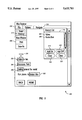
- FIG. 2 illustrates a frontal display diagram of the browser in accordance with the present invention.
- FIG. 3 illustrates a frontal display diagram of the browser in accordance with the present invention.
- FIG. 4 illustrates a flowchart of detailed logic according to the present invention.
- the preferred embodiment includes a computer-implemented method, a uniquely programmed computer system, and a memory embodying detailed logic for directing a computer system to store links into a temporary list that will not require manual deletion and will allow the user to visit multiple sites/documents on a page without backtracking.
- Computer system 100 includes central processing unit (CPU) 10, such as an IBM'sTM PowerPCTM 601 or Intel'sTM 486 microprocessor for processing cache 15, random access memory (RAM) 14, read only memory 16, and non-volatile RAM (NVRAM) 32.
- CPU central processing unit
- RAM random access memory
- NVRAM non-volatile RAM
- One or more disks 20, controlled by I/O adapter 18, provide long term storage.
- a variety of other storage media may be employed, including tapes, CD-ROM, and WORM drives.
- Removable storage media may also be provided to store data or computer process instructions.
- I/O devices i.e., user controls
- Display 38 displays information to the user, while keyboard 24, pointing device 26, and speaker 28 allow the user to direct the computer system.
- Communications adapter 34 controls communications between this computer system and other processing units connected to a network by network interface 40.
- Display adapter 36 controls communications between this computer system and display 38.
- the preferred embodiment includes an INTERNET browser for displaying window 200 on display 38.
- INTERNET browser for displaying window 200 on display 38.
- the following description describes the browser as performing unique functions and features. In actuality, the browser merely directs CPU 10 to perform those functions and features.
- Window 200 is a two-dimensional workspace for displaying text, hypertext links 202, 204, 206 and 208, menu bar 210, itinerary list 214, and drop-down list 226.
- the diagonal hatching marks on hypertext links 202, 204, 206 and 208 indicate to the user that they are indeed hypertext links.
- hypertext links 202, 204, 206 and 208 could be represented in a different color from the other text.
- Menu bar 210 allows the user to select various operations.
- the user may "turn on” the itinerary function by selecting file button 228 using a pointing device. Selecting buttons using a pointing device (e.g., mouse and mouse pointer) is well known in the computer art and need not be further described.
- a pointing device e.g., mouse and mouse pointer
- drop-down menu 226 appears.
- the user scrolls down drop-down menu 226 to select "build itinerary” button 212.
- build itinerary button 212 places the browser in an "itinerary" mode. The user knows that the browser is in the itinerary mode because mouse pointer 216 changes shape to an "I". Alternatively, any shaped pointer could be utilized when in the itinerary mode.
- the browser When in the itinerary mode, if the user selects a hypertext link, the browser will not load the document represented by the URL, but rather will add that link and its URL to itinerary list 214. Conversely, if the browser is in the non-itinerary mode, a selection of a hypertext link would cause the browser to load the document represented by the URL.
- Itinerary list 214 is a small window that remains on the screen while active and may be placed anywhere on the screen. However, once the session ends or the user closes itinerary list 214, the browser clears the contents of itinerary list 214. Therefore, itinerary list 214 is not permanent storage, but is merely a temporary itinerary of links that the user intends to visit in the future.
- the user may move the browser from "itinerary" mode to "non-itinerary” mode by selecting "add off” button 220.
- "add on” button 218 moves the browser from the non-itinerary mode to the itinerary mode.
- the user merely selects "clear” button 224.
- "Close” button 222 moves the browser into the non-itinerary mode, clears the list, and removes itinerary list 214 from the screen. Additional buttons, such as a help button and/or a cancel button, could be added.
- FIG. 3 illustrates "yahoo" window 300, which, in turn, displays a page of links.
- the user selected a number of hypertext links from "yahoo" window 300 to be placed in itinerary list 214.
- the links in itinerary list 214 e.g., yahoo hypertext link 202 change color once they have been selected and opened/visited.
- FIG. 4 illustrates a flowchart of detailed logic for implementing the preferred embodiment.
- the browser makes a determination if more events need to be processed. If so, at 412, the browser makes a determination if the itinerary mode has changed state, either from itinerary mode to non-itinerary mode or vice versa. This could occur if the user has clicked on build itinerary button 212, "add on” button 218, “add off” button 220 or “close” button 222 (please see FIG. 2).
- the browser determines if the event is a "link selected event". Such an event would occur if the browser detects that the user clicked on one of hypertext links 202, 204, 206 or 208. If so, at 426, the browser determines if the itinerary mode is "ON" or "OFF" by checking the state of "IT mode" variable to see if it has been set TRUE or FALSE. If set TRUE, at 428, the browser retrieves the URL address of the selected hypertext link and, at 430, retrieves the name of the document (i.e., the text representing the link). At 432, the browser generates an "ADD TO LIST" event. This event indicates that the selected document needs to be added to itinerary list 214. Control returns to 410, where the browser processes more events.
- the browser determines if a "LINK EXECUTION" event has been generated. Such an event would have generated if the user had clicked on a hypertext link displayed in itinerary list 214, such as hypertext links 202 or 208. If so, at 436, the browser retrieves the URL of the selected hypertext link and, at 438, fetches the document represented by the hypertext link. Control returns to 410.
- the browser determines if the "ADD TO LIST" event was generated at 432. In other words, the browser determines if the user attempted to add a document to itinerary list 214. If so, at 454, the browser adds the URL and name of the document to a database of documents (not shown) and, at 456, adds the name to the GUI (i.e., displays the name to the user in itinerary list 214). Control returns to 410.
- the browser determines if a "CLEAR ITLIST" event occurred. This event would have occurred if the user had clicked on "clear" button 224 (or a keyboard equivalent). If so, at 460 and 462, the browser erases all entries in itinerary list 214 and in the database (not shown). Control returns to 410.
Abstract
A uniquely programmed computer system, computer-implemented method, and computer readable memory embodying computer-readable detail logic direct a computer system to create a temporary list of links. The present invention creates the list of links without having to first open/visit the corresponding site to each link in the list or having to manually enter the name and address of the sites. The method includes placing the computer system in an itinerary mode, wherein the links lose their original function of opening/visiting the corresponding site when selected. The method includes displaying the list on a first portion of the display. The method includes selecting from a second portion of the display at least one link to be placed in the list. The method includes opening/visiting and displaying the site corresponding to the selected link on the second portion of the display in response to a selection of at least one link placed in the list.
Description
1. Field of the Invention
The present invention relates to improvements in computer network interfaces, and more particularly, but without limitation, to a system, method, and memory for creating an itinerary list for any INTERNET or hypertext interface.
2. Background Information and Description of the Related Art
A user interacts with objects on a computer network using a "browser". A browser is a graphical user interface that allows users to navigate through the INTERNET. On the INTERNET, the user may navigate through various "sites", such as file systems, HTML documents, and file transfer protocol (FTP) sites. Conventional INTERNET browsers allow the user to explore these various sites using hypertext links. A hypertext link contains the name and URL (uniform resource locator) address of an INTERNET site. Typically, the browser displays hypertext links in a different shade of color from other text on the screen so that the user can readily identify the hypertext links. If a user clicks on a hypertext link, the browser takes the user from the current document to another document represented by that selected hypertext link. In turn, the destination document may contain additional hypertext links that go to yet more documents. In this manner, the user may navigate through multiple hierarchical layers of documents of various sites by continuing to select hypertext links.
However, there are certain disadvantages and limitations in conventional browsers. For example, suppose a page displays three hypertext links pointing to sites of particular interest to the user. The user begins by selecting a first hypertext link and may decide to navigate through several other hypertext links extending from the first link. When the user has finished navigating the path from the first hypertext link, he must return to the original page to select the second hypertext link. However, to do so, the user must backtrack through the links to the original page, whereupon the user can then select the second hypertext link. The obvious limitation of this procedure is that the user must select one link, look at it and follow its path, back up through a number of links to return to the original page, then select another link, navigate through it, back up, etc. This forward, backward, forward, backward jaunt through links is very tedious and time consuming. Also, in many cases the user cannot even navigate backward because the link's server is busy.
In an attempt to solve this problem, some conventional browsers utilize quicklists. A quicklist (also known as hotlist) is a stored list of links in some conventional browser, quicklists are permanent until the user manually deletes a link from the list. To store a link within the quicklist, the user must first open/visit the document represented by the link and then select an "add" button to add the link to the quicklist. Alternatively, the user may utilize the edit function of the quicklist to manually type in the name and address of the link.
Some other conventional browsers allow a user to save a link to their quicklist without first visiting it. However, the user may decide after visiting it that they do not wish to continue saving it. Deletion of a link in a quicklist can be tedious because the user must first find the link in what may be a very large list and then manually delete the link. Therefore, because it is tedious work to delete a link in a quicklist, users frequently visit the site before they add it to their quicklist. As such, the user must do all the backtracking if one page has multiple links of interest.
Therefore, there is a great demand for an interface browser that allows the user to store links into a temporary list that will not require manual deletion and will allow the user to visit multiple sites/documents on a page without backtracking. The user should be able to select any of the links in the itinerary at any time without backtracking, even if the user has navigated far away from the original page.
Accordingly, a uniquely programmed computer system, computer-implemented method, and computer readable memory embodying computer-readable detail logic direct a computer system to create a temporary list of links. The present invention creates the list of links such that manual deletion of the links in the list is not required.
The method comprises the first step of placing the computer system in an itinerary mode, wherein the links lose their original function of opening/visiting the corresponding site when selected. A link has an original function of opening/visiting a corresponding site when selected. Accordingly, a link includes the name and address of the site. The second step includes displaying the list in a secondary window on a first portion of the display. The third step includes presenting at least one link in a second portion of the display so that the user can select a link to be placed in the list. The fourth step includes opening/visiting and displaying the site corresponding to the selected link in the second portion of the display in response to a selection of at least one link placed in the list.
Therefore, it is an object of the present invention to provide a browser that allows a user to select an itinerary of links without having to open/visit the site represented by the link or delete links that are no longer wanted.
It is a further object to provide a browser that allows the user to select and open/visit any of the links in the itinerary at any time without backtracking, even if the user has navigated far away from the original page.
These and other objects, advantages, and features will become even more apparent in light of the following drawings and detailed description.
FIG. 1 illustrates a schematic diagram of a computer system for use with the present invention.
FIG. 2 illustrates a frontal display diagram of the browser in accordance with the present invention.
FIG. 3 illustrates a frontal display diagram of the browser in accordance with the present invention.
FIG. 4 illustrates a flowchart of detailed logic according to the present invention.
The preferred embodiment includes a computer-implemented method, a uniquely programmed computer system, and a memory embodying detailed logic for directing a computer system to store links into a temporary list that will not require manual deletion and will allow the user to visit multiple sites/documents on a page without backtracking.
The present invention is practiced in a laptop computer or, alternatively, in the computer system illustrated in FIG. 1. Computer system 100 includes central processing unit (CPU) 10, such as an IBM's™ PowerPC™ 601 or Intel's™ 486 microprocessor for processing cache 15, random access memory (RAM) 14, read only memory 16, and non-volatile RAM (NVRAM) 32. One or more disks 20, controlled by I/O adapter 18, provide long term storage. A variety of other storage media may be employed, including tapes, CD-ROM, and WORM drives. Removable storage media may also be provided to store data or computer process instructions.
Instructions and data from the desktop of any suitable operating system, such as Sun Solaris™, Microsoft's Windows NT™, IBM's OS/2™, Apple's System 7™, control CPU 10 from RAM 14. Accordingly, the desktop executes from RAM 14. However, in the preferred embodiment, an IBM RISC System/6000™ runs the AIX™ operating system. As previously described, however, one skilled in the art readily recognizes that other hardware platforms and operating systems may be utilized to implement the present invention.
Users communicate with computer system 100 through I/O devices (i.e., user controls) controlled by user interface adapter 22. Display 38 displays information to the user, while keyboard 24, pointing device 26, and speaker 28 allow the user to direct the computer system. Communications adapter 34 controls communications between this computer system and other processing units connected to a network by network interface 40. Display adapter 36 controls communications between this computer system and display 38.
Referring to FIG. 2, the preferred embodiment includes an INTERNET browser for displaying window 200 on display 38. For ease and explanation, the following description describes the browser as performing unique functions and features. In actuality, the browser merely directs CPU 10 to perform those functions and features.
Referring again to FIG. 2, because the user selected yahoo hypertext link 202 and scuba dive hypertext link 208 when the browser was in the itinerary mode, the browser added them to itinerary list 214. The user then single clicked over yahoo hypertext link 202 in itinerary list 214 to open/visit its corresponding site, which is illustrated in FIG. 3.
FIG. 3 illustrates "yahoo" window 300, which, in turn, displays a page of links. In this example, the user selected a number of hypertext links from "yahoo" window 300 to be placed in itinerary list 214. The links in itinerary list 214 (e.g., yahoo hypertext link 202) change color once they have been selected and opened/visited.
FIG. 4 illustrates a flowchart of detailed logic for implementing the preferred embodiment. At 410, the browser makes a determination if more events need to be processed. If so, at 412, the browser makes a determination if the itinerary mode has changed state, either from itinerary mode to non-itinerary mode or vice versa. This could occur if the user has clicked on build itinerary button 212, "add on" button 218, "add off" button 220 or "close" button 222 (please see FIG. 2). At 414, the browser makes a determination if the itinerary mode has been "turned on." This would occur if the browser detects that the user clicked on build itinerary button 212 or "add on" button 218. If turned on, at 416, the browser sets a variable "IT mode"=TRUE and, at 418, generates a "TURN ON DISPLAY LIST" signal event (i.e., Display=TRUE).
Returning to 414, if the itinerary mode was turned off (e.g., the user clicked on "add off" button 220 or "close" button 222), at 420, the browser sets the variable "IT mode"=FALSE and, at 422, the browser generates a "TURN OFF DISPLAY LIST" event (i.e., Display =FALSE). Control returns to 410 where a determination is made if more events exist.
Returning to 412, if the browser makes a determination that the itinerary mode has not changed state, at 424, the browser determines if the event is a "link selected event". Such an event would occur if the browser detects that the user clicked on one of hypertext links 202, 204, 206 or 208. If so, at 426, the browser determines if the itinerary mode is "ON" or "OFF" by checking the state of "IT mode" variable to see if it has been set TRUE or FALSE. If set TRUE, at 428, the browser retrieves the URL address of the selected hypertext link and, at 430, retrieves the name of the document (i.e., the text representing the link). At 432, the browser generates an "ADD TO LIST" event. This event indicates that the selected document needs to be added to itinerary list 214. Control returns to 410, where the browser processes more events.
If 412 and 424 were both "NO", at 434, the browser determines if a "LINK EXECUTION" event has been generated. Such an event would have generated if the user had clicked on a hypertext link displayed in itinerary list 214, such as hypertext links 202 or 208. If so, at 436, the browser retrieves the URL of the selected hypertext link and, at 438, fetches the document represented by the hypertext link. Control returns to 410.
At 440, the browser determines if a "TURN ON" or "TURN OFF DISPLAY LIST" event has occurred. This event would have been generated at either step 418 or 422. If Display=TRUE at 442, at 444, the browser displays itinerary list 214. At 446, the browser sets a variable "ITSTATE"=TRUE. At 448, if Display=FALSE, the browser hides itinerary list 214 and, at 450, sets the variable "ITSTATE"=FALSE. Control returns to 410.
If 410, 412, 424, 434 and 440 are all "NO", at 452, the browser determines if the "ADD TO LIST" event was generated at 432. In other words, the browser determines if the user attempted to add a document to itinerary list 214. If so, at 454, the browser adds the URL and name of the document to a database of documents (not shown) and, at 456, adds the name to the GUI (i.e., displays the name to the user in itinerary list 214). Control returns to 410.
If 410, 412, 424, 434, 440, and 452 are all "NO", at 458, the browser determines if a "CLEAR ITLIST" event occurred. This event would have occurred if the user had clicked on "clear" button 224 (or a keyboard equivalent). If so, at 460 and 462, the browser erases all entries in itinerary list 214 and in the database (not shown). Control returns to 410.
At 464, other events are processed, if any exist, and control returns to 410 where, if no more events are to be processed, the flow ends.
The flow of execution of the preferred embodiment is as follows:
__________________________________________________________________________
Itinerary List Code
__________________________________________________________________________
TERMS:
ItList
Itinerary list
ItList dialog
dialog box (window) containing itinerary list
ItList database
database containing the itinerary list information
INITIALIZATION - - -
// Set Itinerary Mode to false
//
ItMode = FALSE
// Current state of ItList dialog - hidden or shown (FALSE = hidden)
//
ItState = FALSE
EVENT PROCESSING - - -
WHILE (more events to process)
    //
    // This event is caused by the user selecting the Start Itinerary
    // mode. This can be done by the user selecting a menu item or
    // performing a keyboard combination for instance.
    //
(412)
    IF (SET.sub.-- ITINERARY.sub.-- MODE Event)
(414)
     IF (set mode On)
(410)
      ItMode = TRUE    //Itinerary mode is ON
(418)
      Send.sub.-- Event (DISPLAY.sub.-- ITLIST)
                       //Show the ItList dialog
     ELSE
(420)
      ItMode = FALSE   //Itinerary mode is OFF
(422)
      Send.sub.-- Event (DISPLAY.sub.-- ITLIST)
                       //Hide the ItList dialog
     ENDIF
    ENDIF
    //
    // This event is caused by the end user selecting a hypertext link
    // on a web page from within a web browser. This could be from
    // the user single clicking with the mouse or if the browser
    // supports keyboard traversal, then it would be caused by the
    // user selecting the SELECTION Key.
    //
(424)
    IF (LINK.sub.-- SELECTION Event)
(426)
     IF (ItMode is TRUE)
(428)
      Get url address of link
(430)
      Get title of link
(432)
      Send (ADD.sub.-- TO.sub.-- ITLIST Event)
     ELSE
     ENDIF
    ENDIF
    //
    // Caused when the user selects a link from the ItList dialog.
    //
(434)
    IF (LINK.sub.-- EXECUTION Event)
(436)
     Get ItLink Selected
(438)
     Execute ItLink    //Fetch the document
    ENDIF
    //
    // Event to display or hide the ItList dialog box.
    //
(440)
    IF (DISPLAY.sub.-- ITLIST Event)
(442)
     IF (show itlist)
(444)
      Display ItList dialog box
(446)
      ItState = TRUE
     ELSE
(448)
      Hide ItList dialog box
(450)
      ItState = FALSE
    ENDIF
    //
    // Event to add a link to the ItList database and dialog
    //
(451)
    IF (ADD.sub.-- TO.sub.-- ITLIST Event)
(454)
     Add url and title to datebase
(456)
     Add title to gui itlist
    ENDIF
    //
    // Event to remove all entries in the ItList database
    //
(458)
    IF (CLEAR.sub.-- ITLIST Event)
     WHILE (More Entries in database)
(460)
      Get database entry
(462)
      Remove database entry
     ENDWHILE
    ENDIF
    //
(464)
    // Process other events
    //
    IF (Other Events)
     process other events
    ENDIF
ENDWHILE
__________________________________________________________________________
While the invention has been shown and described with reference to particular embodiments thereof, it will be understood by those skilled in the art that the foregoing and other changes in form and detail may be made therein without departing from the spirit and scope of the invention, which is defined only by the following claims.
Claims (11)
1. A computer-implemented method for directing a computer system to create an itinerary list, the computer system having at least a display for displaying links thereon, each link of a particular site having an original function of opening and displaying a corresponding new site when selected, comprising the steps of:
(a) placing the computer system in an itinerary mode, wherein the links displayed on the display do not have the original function of opening the new corresponding site when selected;
(b) in response to placing the computer system in the itinerary mode, displaying an itinerary list on a first portion of the display; and
(c) in response to a selection from a second portion of the display of at least one link, copying the selected link in the itinerary list, whereby the link copied in the itinerary list regains the original function, while the links in the second portion do not have the original function as long as the computer system is in the itinerary mode.
2. The computer-implemented method according to claim 1 further comprising the step of:
selecting from the second portion of the display a second link to be placed in the itinerary list; and
in response to a selection of the second link placed in the itinerary list, opening and displaying a document corresponding to the selected second link.
3. The computer-implemented method according to claim 1 further comprising the step of:
placing the computer system in a non-itinerary mode, wherein the links in the second portion regain the function of opening the corresponding document when selected.
4. The computer-implemented method according to claim 1 further comprising the step of:
in response to a second selection of at least one link placed in the itinerary list, opening and displaying the new site corresponding to the selected link on the second portion of the display.
5. The computer-implemented method according to claim 4 further comprising:
in response to opening the new site corresponding to the selected link on the display, selecting from the new site display at least another link to be placed in the itinerary list.
6. An article of manufacture comprising:
a computer usable medium having computer readable program code means embodied therein for directing a computer system to create an itinerary list, the computer system having at least a display for displaying links thereof, each link of a particular site having an original function of opening and displaying a corresponding new site when selected, the computer readable program code means in said article of manufacture comprising:
(a) computer readable program code means for placing the computer system in an itinerary mode, wherein the links displayed on the display do not have the original function of opening the corresponding new site when selected;
(b) in response to placing the computer system in the itinerary mode, computer readable program means for displaying an itinerary list on a first portion of the display; and
(c) in response to a selection from a second portion of the display of at least one link, computer readable program means for copying the selected link in the itinerary list, whereby the link copied in the itinerary list regains the original function, while the links in the second portion do not have the original function as long as the computer system is in the itinerary mode.
7. The article of manufacture according to claim 6 further comprising:
computer readable program means for selecting from the second portion of the display a second link to be placed in the itinerary list; and
in response to a selection of the second link placed in the itinerary list, computer readable program means for opening and displaying the new site corresponding to the selected second link.
8. The article of manufacture according to claim 6 further comprising:
computer readable program code for placing the computer system in a non-itinerary mode, wherein the links in the second portion regain the function of opening the corresponding site when selected.
9. The article of manufacture according to claim 6 further comprising:
in response to a second selection of at least one link placed in the list, computer readable program means for opening and displaying the site corresponding to the selected link on the second portion of the display.
10. The article of manufacture according to claim 9 further comprising:
in response to opening the new site corresponding to the selected link on the display, computer readable program means for selecting from the display at least another link to be placed in the itinerary list.
11. A computer system for creating an itinerary list, the computer system having at least a display for displaying links thereon, each link of a particular site having an original function of opening and displaying a corresponding new site when selected, comprising the steps of:
(a) means for placing the computer system in an itinerary mode, wherein the links displayed on the display do not have the original function of opening the new corresponding site when selected;
(b) in response to placing the computer system in the itinerary mode, means for displaying an itinerary list on a first portion of the display; and
(c) in response to a selection from a second portion of the display of at least one link, means for copying the selected link in the itinerary list, whereby the link copied in the itinerary list regains the original function, while the links in the second portion do not have the original function as long as the computer system is in the itinerary mode.
Priority Applications (1)
| Application Number | Priority Date | Filing Date | Title |
|---|---|---|---|
| US08/551,016 US5625781A (en) | 1995-10-31 | 1995-10-31 | Itinerary list for interfaces |
Applications Claiming Priority (1)
| Application Number | Priority Date | Filing Date | Title |
|---|---|---|---|
| US08/551,016 US5625781A (en) | 1995-10-31 | 1995-10-31 | Itinerary list for interfaces |
Publications (1)
| Publication Number | Publication Date |
|---|---|
| US5625781A true US5625781A (en) | 1997-04-29 |
Family
ID=24199488
Family Applications (1)
| Application Number | Title | Priority Date | Filing Date |
|---|---|---|---|
| US08/551,016 Expired - Fee Related US5625781A (en) | 1995-10-31 | 1995-10-31 | Itinerary list for interfaces |
Country Status (1)
| Country | Link |
|---|---|
| US (1) | US5625781A (en) |
Cited By (156)
| Publication number | Priority date | Publication date | Assignee | Title |
|---|---|---|---|---|
| WO1997028499A1 (en) * | 1996-02-02 | 1997-08-07 | Award Software International, Inc. | A set-top box with an internet bios for internet access |
| WO1997042585A1 (en) * | 1996-05-03 | 1997-11-13 | Mci Communications Corporation | A system and method for proactive search capability to arbitrary applications |
| WO1997043723A1 (en) * | 1996-05-17 | 1997-11-20 | Ameritech Corporation | Structured document browser |
| WO1998004985A1 (en) * | 1996-07-25 | 1998-02-05 | Mark Kriegsman | Web serving system with primary and secondary servers |
| US5724506A (en) * | 1995-05-05 | 1998-03-03 | Apple Computer, Inc. | Replaceable and extensible connection dialog component of a network component system |
| US5724595A (en) * | 1996-06-19 | 1998-03-03 | Sun Microsystems, Inc. | Simple method for creating hypertext links |
| WO1998009243A1 (en) * | 1996-08-30 | 1998-03-05 | Internet Media Corporation | System for providing easy access to the world wide web |
| WO1998011684A1 (en) * | 1996-09-13 | 1998-03-19 | Motorola Inc. | System and method for capturing internet access information |
| US5745681A (en) * | 1996-01-11 | 1998-04-28 | Sun Microsystems, Inc. | Stateless shopping cart for the web |
| US5761683A (en) * | 1996-02-13 | 1998-06-02 | Microtouch Systems, Inc. | Techniques for changing the behavior of a link in a hypertext document |
| US5764908A (en) * | 1996-07-12 | 1998-06-09 | Sofmap Future Design, Inc. | Network system containing program modules residing in different computers and executing commands without return results to calling modules |
| US5778367A (en) * | 1995-12-14 | 1998-07-07 | Network Engineering Software, Inc. | Automated on-line information service and directory, particularly for the world wide web |
| US5784058A (en) * | 1996-05-28 | 1998-07-21 | Sun Microsystems, Inc. | User-controllable persistent browser display pages |
| US5805442A (en) * | 1996-05-30 | 1998-09-08 | Control Technology Corporation | Distributed interface architecture for programmable industrial control systems |
| US5809247A (en) * | 1996-07-22 | 1998-09-15 | Intel Corporation | Method and apparatus for guided touring of internet/intranet websites |
| US5826267A (en) * | 1996-03-20 | 1998-10-20 | Mcmillan; James Michael | Web information kiosk |
| US5832212A (en) * | 1996-04-19 | 1998-11-03 | International Business Machines Corporation | Censoring browser method and apparatus for internet viewing |
| WO1998049617A2 (en) * | 1997-04-25 | 1998-11-05 | Adobe Systems Incorporated | Web site construction by inferring navigational structure from physical file structure |
| US5854630A (en) * | 1996-07-01 | 1998-12-29 | Sun Microsystems, Inc. | Prospective view for web backtrack |
| EP0889423A1 (en) * | 1997-06-30 | 1999-01-07 | Sun Microsystems, Inc. | Method and apparatus for a to-be-visited site list accessible through a web enabled application |
| US5872568A (en) * | 1996-08-14 | 1999-02-16 | International Business Machines Corporation | Application and method for creating a list from pre-defined and user values |
| US5897670A (en) * | 1996-07-12 | 1999-04-27 | Sun Microsystems, Inc. | Method and system for efficient organization of selectable elements on a graphical user interface |
| US5902353A (en) * | 1996-09-23 | 1999-05-11 | Motorola, Inc. | Method, system, and article of manufacture for navigating to a resource in an electronic network |
| US5903729A (en) * | 1996-09-23 | 1999-05-11 | Motorola, Inc. | Method, system, and article of manufacture for navigating to a resource in an electronic network |
| US5915096A (en) * | 1996-05-31 | 1999-06-22 | Sun Microsystems, Inc. | Network browsing system and method |
| US5914714A (en) * | 1997-04-01 | 1999-06-22 | Microsoft Corporation | System and method for changing the characteristics of a button by direct manipulation |
| US5918239A (en) * | 1997-01-21 | 1999-06-29 | International Business Machines Corporation | Deferred display of web pages corresponding to links selected by user |
| US5929849A (en) * | 1996-05-02 | 1999-07-27 | Phoenix Technologies, Ltd. | Integration of dynamic universal resource locators with television presentations |
| GB2333617A (en) * | 1997-11-21 | 1999-07-28 | Ibm | Bookmark set facilitates navigation in an electronic commerce related Web site |
| US5938726A (en) * | 1996-10-04 | 1999-08-17 | Motorola, Inc. | Apparatus for reading an electronic network navigation device and a peripheral for use therewith |
| US5959623A (en) * | 1995-12-08 | 1999-09-28 | Sun Microsystems, Inc. | System and method for displaying user selected set of advertisements |
| US5963964A (en) * | 1996-04-05 | 1999-10-05 | Sun Microsystems, Inc. | Method, apparatus and program product for updating visual bookmarks |
| US5973696A (en) * | 1996-08-08 | 1999-10-26 | Agranat Systems, Inc. | Embedded web server |
| US5977969A (en) * | 1997-11-03 | 1999-11-02 | International Business Machines Corporation | Universal resource locator dialog with extended top level domains |
| US5995728A (en) * | 1995-06-30 | 1999-11-30 | Forman; Ernest H. | Computer implemented method of generating and displaying objectives from pros and cons for evaluating decision alternatives |
| US5999929A (en) * | 1997-09-29 | 1999-12-07 | Continuum Software, Inc | World wide web link referral system and method for generating and providing related links for links identified in web pages |
| US6021435A (en) * | 1996-03-13 | 2000-02-01 | Sun Microsystems, Inc. | Apparatus and method for displaying enhanced hypertext link anchor information regarding hypertext page availability and content |
| US6035330A (en) * | 1996-03-29 | 2000-03-07 | British Telecommunications | World wide web navigational mapping system and method |
| US6035334A (en) * | 1997-09-10 | 2000-03-07 | Tibersoft Corporation | System for communicating state information relating to user previous interactions with other internet web sites during an internet session |
| US6037934A (en) * | 1997-11-21 | 2000-03-14 | International Business Machines Corporation | Named bookmark sets |
| US6041360A (en) * | 1997-11-21 | 2000-03-21 | International Business Machines Corporation | Web browser support for dynamic update of bookmarks |
| WO2000029922A2 (en) * | 1998-11-16 | 2000-05-25 | Essential Surfing Gear, Inc. | Providing web browsing companion tools and services |
| US6072483A (en) * | 1997-06-02 | 2000-06-06 | Sony Corporation | Active frame scroll interface |
| WO2000033213A2 (en) * | 1998-11-30 | 2000-06-08 | Nortel Networks Limited | Method and system for website overview |
| US6081827A (en) * | 1996-09-23 | 2000-06-27 | Motorola, Inc. | Network navigation methods and systems using an article of mail |
| US6081263A (en) * | 1997-10-23 | 2000-06-27 | Sony Corporation | System and method of a user configurable display of information resources |
| US6112992A (en) * | 1998-06-17 | 2000-09-05 | Motorola, Inc. | Optical code reader and methods and articles therefor |
| US6131110A (en) * | 1997-07-11 | 2000-10-10 | International Business Machines Corporation | System and method for predicting user interest in unaccessed site by counting the number of links to the unaccessed sites in previously accessed sites |
| US6137654A (en) * | 1997-06-23 | 2000-10-24 | Motorola, Inc. | Device having a diskette-like housing and a wireless transceiver and methods therefor |
| US6138151A (en) * | 1996-09-23 | 2000-10-24 | Motorola, Inc. | Network navigation method for printed articles by using embedded codes for article-associated links |
| US6151625A (en) * | 1997-09-10 | 2000-11-21 | Schneider Automation Inc. | Internet web interface including programmable logic controller for controlling output devices based on status of input devices |
| US6160552A (en) * | 1997-01-09 | 2000-12-12 | Sun Microsystems, Inc. | Method and apparatus for managing multiple hierarchical lists within a browser |
| US6175863B1 (en) * | 1996-07-17 | 2001-01-16 | Microsoft Corporation | Storage of sitemaps at server sites for holding information regarding content |
| US6177936B1 (en) * | 1998-08-20 | 2001-01-23 | International Business Machines Corporation | Browser hierarchical contextual information for web pages |
| US6185598B1 (en) | 1998-02-10 | 2001-02-06 | Digital Island, Inc. | Optimized network resource location |
| US6191786B1 (en) * | 1997-04-25 | 2001-02-20 | Alan K. Eyzaguirre | Navigational file system |
| US6199098B1 (en) * | 1996-02-23 | 2001-03-06 | Silicon Graphics, Inc. | Method and apparatus for providing an expandable, hierarchical index in a hypertextual, client-server environment |
| US6208995B1 (en) | 1997-11-24 | 2001-03-27 | International Business Machines Corporation | Web browser download of bookmark set |
| US6212522B1 (en) * | 1998-05-15 | 2001-04-03 | International Business Machines Corporation | Searching and conditionally serving bookmark sets based on keywords |
| US6211874B1 (en) * | 1998-05-15 | 2001-04-03 | International Business Machines Corporation | Method for parallel selection of URL's |
| US6222634B1 (en) * | 1997-07-11 | 2001-04-24 | International Business Machines Corporation | Apparatus and method for printing related web pages |
| US6233626B1 (en) | 1998-10-06 | 2001-05-15 | Schneider Automation Inc. | System for a modular terminal input/output interface for communicating messaging application layer over encoded ethernet to transport layer |
| US6240456B1 (en) | 1997-09-18 | 2001-05-29 | Microsoft Corporation | System and method for collecting printer administration information |
| US6246405B1 (en) * | 1997-06-06 | 2001-06-12 | Mci Communications Corporation | Method and apparatus for managing a plurality of objects on a graphical user interface |
| US6246410B1 (en) * | 1996-01-19 | 2001-06-12 | International Business Machines Corp. | Method and system for database access |
| WO2001047835A2 (en) * | 1999-12-24 | 2001-07-05 | Koninklijke Philips Electronics N.V. | Device for presenting information units |
| US6260760B1 (en) | 1998-06-17 | 2001-07-17 | Motorola, Inc. | Optical code reader including circuitry for processing the symbology |
| US6266060B1 (en) * | 1997-01-21 | 2001-07-24 | International Business Machines Corporation | Menu management mechanism that displays menu items based on multiple heuristic factors |
| US6269370B1 (en) | 1996-02-21 | 2001-07-31 | Infoseek Corporation | Web scan process |
| US6282454B1 (en) | 1997-09-10 | 2001-08-28 | Schneider Automation Inc. | Web interface to a programmable controller |
| US6290133B1 (en) | 1998-06-04 | 2001-09-18 | Motorola, Inc. | Optical code reader and methods and articles therefor |
| US6327511B1 (en) | 1998-12-30 | 2001-12-04 | Schneider Automation, Inc. | Input/output (I/O) scanner for a control system with peer determination |
| US6327045B1 (en) * | 1997-09-18 | 2001-12-04 | Microsoft Corporation | Computer network |
| US20010054019A1 (en) * | 2000-06-16 | 2001-12-20 | De Fabrega Ingrid Perscky | E-commerce development intranet portal |
| US20020059367A1 (en) * | 2000-09-27 | 2002-05-16 | Romero Richard D. | Segmenting electronic documents for use on a device of limited capability |
| US20020062325A1 (en) * | 2000-09-27 | 2002-05-23 | Berger Adam L. | Configurable transformation of electronic documents |
| US6405238B1 (en) * | 1998-07-31 | 2002-06-11 | Hewlett-Packard Co. | Quick navigation upon demand to main areas of web site |
| US6405222B1 (en) | 1998-12-17 | 2002-06-11 | International Business Machines Corporation | Requesting concurrent entries via bookmark set |
| US6418325B1 (en) | 1999-07-12 | 2002-07-09 | Motorola, Inc. | Handheld device having an optical data reader |
| US20020091784A1 (en) * | 1997-09-10 | 2002-07-11 | Baker Richard A. | Web interface to a device and an electrical network control system |
| US20020097261A1 (en) * | 1999-11-15 | 2002-07-25 | Gottfurcht Elliot A. | Apparatus and method for simple wide-area network navigation |
| US6434157B1 (en) | 1998-10-06 | 2002-08-13 | Schneider Automation, Inc. | MODBUS plus ethernet bridge |
| US6453173B1 (en) | 1997-04-14 | 2002-09-17 | Motorola, Inc. | Handheld device having an optical data reader |
| US6456308B1 (en) | 1996-08-08 | 2002-09-24 | Agranat Systems, Inc. | Embedded web server |
| US20020143827A1 (en) * | 2001-03-30 | 2002-10-03 | Crandall John Christopher | Document intelligence censor |
| US20020167967A1 (en) * | 2000-09-06 | 2002-11-14 | Schneider Electric | Method for managing bandwidth on an ethernet network |
| US20020169844A1 (en) * | 2000-09-06 | 2002-11-14 | Schneider Electric | Method and apparatus for ethernet prioritized device clock synchronization |
| US6493000B1 (en) | 2000-02-17 | 2002-12-10 | International Business Machines Corporation | Method and system for control of spawned web frames |
| US20020194365A1 (en) * | 1998-03-16 | 2002-12-19 | Francois Jammes | Communication system for a control system over ethernet and IP networks |
| US20030033030A1 (en) * | 2000-07-07 | 2003-02-13 | Ron Naismith | Input/output (I/O) scanner for a control system with peer determination |
| US20030046318A1 (en) * | 2001-05-08 | 2003-03-06 | Schohn Gregory C. | Reorganizing content of an electronic document |
| US20030065703A1 (en) * | 2001-10-02 | 2003-04-03 | Justin Aborn | Automated server replication |
| US20030065762A1 (en) * | 2001-09-28 | 2003-04-03 | Cable & Wireless Internet Services, Inc. | Configurable adaptive global traffic control and management |
| US20030079027A1 (en) * | 2001-10-18 | 2003-04-24 | Michael Slocombe | Content request routing and load balancing for content distribution networks |
| US20030093565A1 (en) * | 2001-07-03 | 2003-05-15 | Berger Adam L. | System and method for converting an attachment in an e-mail for delivery to a device of limited rendering capability |
| US6578048B1 (en) * | 1995-06-05 | 2003-06-10 | Carnegie Mellon University | Method for constructing a catalog of the files on a network and a catalog so constructed |
| US6587884B1 (en) | 1997-09-10 | 2003-07-01 | Schneider Automation, Inc. | Dual ethernet protocol stack for maximum speed access to a programmable logic controller (PLC) |
| US20030139821A1 (en) * | 1997-09-10 | 2003-07-24 | Papadopoulos A. Dean | System and method for interfacing with a controller |
| US6683633B2 (en) | 2000-03-20 | 2004-01-27 | Incontext Enterprises, Inc. | Method and system for accessing information |
| US20040019632A1 (en) * | 2002-07-25 | 2004-01-29 | International Business Machines Corporation | Smart bookmarks |
| US6715056B1 (en) | 1998-04-30 | 2004-03-30 | International Business Machines Corporation | Network document transmission to receiving display stations with automatic sizing of received document caches based upon user activity in prior browsing sessions |
| US20040066930A1 (en) * | 2002-10-07 | 2004-04-08 | Bangor Aaron W. | Method and system for performing network provisioning |
| US6732191B1 (en) | 1997-09-10 | 2004-05-04 | Schneider Automation Inc. | Web interface to an input/output device |
| US6769019B2 (en) | 1997-12-10 | 2004-07-27 | Xavier Ferguson | Method of background downloading of information from a computer network |
| US6769018B2 (en) | 1996-08-30 | 2004-07-27 | Internet Media Corporation | System and method for providing easy access to the world wide web |
| US20040150676A1 (en) * | 2002-03-25 | 2004-08-05 | Gottfurcht Elliot A. | Apparatus and method for simple wide-area network navigation |
| US20040150677A1 (en) * | 2000-03-03 | 2004-08-05 | Gottfurcht Elliot A. | Method for navigating web content with a simplified interface using audible commands |
| US6785865B1 (en) * | 1997-03-06 | 2004-08-31 | Microsoft Corporation | Discoverability and navigation of hyperlinks via tabs |
| US20040210629A1 (en) * | 1998-12-30 | 2004-10-21 | Klindt Charles J. | Interface to a programmable logic controller |
| US20040210664A1 (en) * | 2003-04-17 | 2004-10-21 | Schneider Automation Inc. | System and method for transmitting data |
| US6810395B1 (en) * | 1999-11-22 | 2004-10-26 | Hewlett-Packard Development Company, L.P. | Method and apparatus for query-specific bookmarking and data collection |
| US6845401B1 (en) | 1998-12-30 | 2005-01-18 | Schneider Automation Inc. | Embedded file system for a programmable logic controller |
| US20050021387A1 (en) * | 1999-11-15 | 2005-01-27 | Gottfurcht Elliot A. | Method to generate advertising revenue based on time and location |
| US6850891B1 (en) | 1999-07-23 | 2005-02-01 | Ernest H. Forman | Method and system of converting data and judgements to values or priorities |
| US20050044005A1 (en) * | 1999-10-14 | 2005-02-24 | Jarbridge, Inc. | Merging images for gifting |
| US6873610B1 (en) | 2000-05-01 | 2005-03-29 | Mobular Technologies, Inc. | System and method for efficiently accessing affiliated network addresses from a wireless device |
| US20050071257A1 (en) * | 1999-10-14 | 2005-03-31 | Jarbridge, Inc. | Merged images viewed via a virtual storage closet |
| US20050125416A1 (en) * | 1996-02-21 | 2005-06-09 | Kirsch Steven T. | Method and apparatus for redirection of server external hyper-link references |
| US20050216301A1 (en) * | 2004-03-28 | 2005-09-29 | Brown Kevin L | Itinerary planning tool, system, and method |
| US20050216346A1 (en) * | 2000-05-15 | 2005-09-29 | Avatizing, Llc | System and method for consumer-selected advertising and branding in interactive media |
| US7023795B1 (en) | 2000-11-07 | 2006-04-04 | Schneider Automation Inc. | Method and apparatus for an active standby control system on a network |
| US7032029B1 (en) | 2000-07-07 | 2006-04-18 | Schneider Automation Inc. | Method and apparatus for an active standby control system on a network |
| US7035898B1 (en) | 1997-09-10 | 2006-04-25 | Schneider Automation Inc. | System for programming a factory automation device using a web browser |
| US7054935B2 (en) | 1998-02-10 | 2006-05-30 | Savvis Communications Corporation | Internet content delivery network |
| US7058693B1 (en) | 1997-09-10 | 2006-06-06 | Schneider Automation Inc. | System for programming a programmable logic controller using a web browser |
| US20060203285A1 (en) * | 1997-10-27 | 2006-09-14 | Canon Kabushiki Kaisha | Image forming apparatus, image forming method, and storing medium |
| US20060218479A1 (en) * | 1996-09-03 | 2006-09-28 | Damon Torres | Automated content scheduler and displayer |
| US7127493B1 (en) | 1998-08-20 | 2006-10-24 | Gautier Taylor S | Optimizing server delivery of content by selective inclusion of optional data based on optimization criteria |
| US7146408B1 (en) | 1996-05-30 | 2006-12-05 | Schneider Automation Inc. | Method and system for monitoring a controller and displaying data from the controller in a format provided by the controller |
| US7181487B1 (en) | 2000-07-07 | 2007-02-20 | Schneider Automation Inc. | Method and system for transmitting and activating an application requesting human intervention in an automation network |
| US7210093B1 (en) * | 2000-03-09 | 2007-04-24 | International Business Machines Corporation | Method, system, and program for displaying pages downloaded from over a network in an application window |
| US20070094244A1 (en) * | 1994-09-02 | 2007-04-26 | Wolfe Mark A | System and Method for Enhanced Information Retrieval |
| US20070174463A1 (en) * | 2002-02-14 | 2007-07-26 | Level 3 Communications, Llc | Managed object replication and delivery |
| US7305624B1 (en) * | 1994-07-22 | 2007-12-04 | Siegel Steven H | Method for limiting Internet access |
| US7356569B1 (en) | 1999-04-26 | 2008-04-08 | Mainstream Scientific, Llc | Apparatus and method for tracing the distribution of diversely sourced internet content |
| US20080215718A1 (en) * | 2001-09-28 | 2008-09-04 | Level 3 Communications, Llc | Policy-based content delivery network selection |
| US20080215735A1 (en) * | 1998-02-10 | 2008-09-04 | Level 3 Communications, Llc | Resource invalidation in a content delivery network |
| US7433874B1 (en) | 1997-11-17 | 2008-10-07 | Wolfe Mark A | System and method for communicating information relating to a network resource |
| US7441196B2 (en) | 1999-11-15 | 2008-10-21 | Elliot Gottfurcht | Apparatus and method of manipulating a region on a wireless device screen for viewing, zooming and scrolling internet content |
| US20080279222A1 (en) * | 2001-10-18 | 2008-11-13 | Level 3 Communications Llc | Distribution of traffic across a computer network |
| US7467137B1 (en) | 1994-09-02 | 2008-12-16 | Wolfe Mark A | System and method for information retrieval employing a preloading procedure |
| US20090041589A1 (en) * | 2005-03-09 | 2009-02-12 | Knorr-Bremse Systeme Fur Schienenfahrzeuge Gmbh | Oil-Injected Compressor with a Temperature Switch |
| US20100082746A1 (en) * | 2008-09-30 | 2010-04-01 | Ulrich Sean M | System and method for web site driven collaborative web browsing |
| US7917397B1 (en) | 1999-10-14 | 2011-03-29 | Jarbridge, Inc. | Merging private images for gifting |
| US7953888B2 (en) | 1999-06-18 | 2011-05-31 | Level 3 Communications, Llc | On-demand overlay routing for computer-based communication networks |
| US7996264B2 (en) | 2000-05-15 | 2011-08-09 | Avatizing, Llc | System and method for consumer-selected advertising and branding in interactive media |
| EP2388715A1 (en) * | 2010-05-20 | 2011-11-23 | LG Electronics Inc. | Mobile terminal and controlling method thereof for navigating web pages |
| US8452653B1 (en) | 2000-03-15 | 2013-05-28 | Personal Data Network Corporation | Method for providing information and recommendations based on user activity |
| US8543901B1 (en) | 1999-11-01 | 2013-09-24 | Level 3 Communications, Llc | Verification of content stored in a network |
| US8601162B1 (en) * | 2006-07-27 | 2013-12-03 | Aol Inc. | Sharing network addresses |
| US8626763B1 (en) | 1997-05-22 | 2014-01-07 | Google Inc. | Server-side suggestion of preload operations |
| US20140306988A1 (en) * | 1997-06-25 | 2014-10-16 | Lexos Media Ip, Llc | System for replacing a cursor image in connection with displaying advertising content |
| US8930538B2 (en) | 2008-04-04 | 2015-01-06 | Level 3 Communications, Llc | Handling long-tail content in a content delivery network (CDN) |
| US8988418B1 (en) | 2007-01-05 | 2015-03-24 | Florelle, Inc. | System and method for parametric display of modular aesthetic designs |
| US9762692B2 (en) | 2008-04-04 | 2017-09-12 | Level 3 Communications, Llc | Handling long-tail content in a content delivery network (CDN) |
| US10924573B2 (en) | 2008-04-04 | 2021-02-16 | Level 3 Communications, Llc | Handling long-tail content in a content delivery network (CDN) |
Citations (9)
| Publication number | Priority date | Publication date | Assignee | Title |
|---|---|---|---|---|
| US4982344A (en) * | 1988-05-18 | 1991-01-01 | Xerox Corporation | Accelerating link creation |
| US5159669A (en) * | 1988-12-15 | 1992-10-27 | Xerox Corporation | Automatically creating a second workspace operation record including history data and a unit ID based on a first workspace operation |
| US5276789A (en) * | 1990-05-14 | 1994-01-04 | Hewlett-Packard Co. | Graphic display of network topology |
| US5297249A (en) * | 1990-10-31 | 1994-03-22 | International Business Machines Corporation | Hypermedia link marker abstract and search services |
| US5404534A (en) * | 1991-02-15 | 1995-04-04 | Sun Microsystems, Inc. | Method and apparatus for extensible object-oriented inter-application link management |
| US5408655A (en) * | 1989-02-27 | 1995-04-18 | Apple Computer, Inc. | User interface system and method for traversing a database |
| US5440558A (en) * | 1990-03-22 | 1995-08-08 | Nec Corporation | Data link setup in connection-oriented local area network with floating administration of data link addresses |
| US5446891A (en) * | 1992-02-26 | 1995-08-29 | International Business Machines Corporation | System for adjusting hypertext links with weighed user goals and activities |
| US5499369A (en) * | 1992-11-09 | 1996-03-12 | Microsoft Corporation | Method and system for connecting objects using alert and running states |
-
1995
- 1995-10-31 US US08/551,016 patent/US5625781A/en not_active Expired - Fee Related
Patent Citations (9)
| Publication number | Priority date | Publication date | Assignee | Title |
|---|---|---|---|---|
| US4982344A (en) * | 1988-05-18 | 1991-01-01 | Xerox Corporation | Accelerating link creation |
| US5159669A (en) * | 1988-12-15 | 1992-10-27 | Xerox Corporation | Automatically creating a second workspace operation record including history data and a unit ID based on a first workspace operation |
| US5408655A (en) * | 1989-02-27 | 1995-04-18 | Apple Computer, Inc. | User interface system and method for traversing a database |
| US5440558A (en) * | 1990-03-22 | 1995-08-08 | Nec Corporation | Data link setup in connection-oriented local area network with floating administration of data link addresses |
| US5276789A (en) * | 1990-05-14 | 1994-01-04 | Hewlett-Packard Co. | Graphic display of network topology |
| US5297249A (en) * | 1990-10-31 | 1994-03-22 | International Business Machines Corporation | Hypermedia link marker abstract and search services |
| US5404534A (en) * | 1991-02-15 | 1995-04-04 | Sun Microsystems, Inc. | Method and apparatus for extensible object-oriented inter-application link management |
| US5446891A (en) * | 1992-02-26 | 1995-08-29 | International Business Machines Corporation | System for adjusting hypertext links with weighed user goals and activities |
| US5499369A (en) * | 1992-11-09 | 1996-03-12 | Microsoft Corporation | Method and system for connecting objects using alert and running states |
Cited By (339)
| Publication number | Priority date | Publication date | Assignee | Title |
|---|---|---|---|---|
| US7305624B1 (en) * | 1994-07-22 | 2007-12-04 | Siegel Steven H | Method for limiting Internet access |
| US20070106704A1 (en) * | 1994-09-02 | 2007-05-10 | Mark Wolfe | System and Method for Enhanced Information Retrieval |
| US8639694B1 (en) | 1994-09-02 | 2014-01-28 | Google Inc. | Client-side processing of preload operations |
| US7467137B1 (en) | 1994-09-02 | 2008-12-16 | Wolfe Mark A | System and method for information retrieval employing a preloading procedure |
| US20070094244A1 (en) * | 1994-09-02 | 2007-04-26 | Wolfe Mark A | System and Method for Enhanced Information Retrieval |
| US5724506A (en) * | 1995-05-05 | 1998-03-03 | Apple Computer, Inc. | Replaceable and extensible connection dialog component of a network component system |
| US6578048B1 (en) * | 1995-06-05 | 2003-06-10 | Carnegie Mellon University | Method for constructing a catalog of the files on a network and a catalog so constructed |
| US5995728A (en) * | 1995-06-30 | 1999-11-30 | Forman; Ernest H. | Computer implemented method of generating and displaying objectives from pros and cons for evaluating decision alternatives |
| US5959623A (en) * | 1995-12-08 | 1999-09-28 | Sun Microsystems, Inc. | System and method for displaying user selected set of advertisements |
| US20050114335A1 (en) * | 1995-12-14 | 2005-05-26 | Wesinger Ralph E.Jr. | Method and apparatus for creating a personalized home page with an independent universal resource locator on a web site |
| US20050120023A1 (en) * | 1995-12-14 | 2005-06-02 | Wesinger Ralph E.Jr. | Method and apparatus for providing a searchable information system |
| US7028034B2 (en) | 1995-12-14 | 2006-04-11 | Graphon Nes Sub, Llc | Method and apparatus for providing a dynamically-updating pay-for-service web site |
| US20110219006A1 (en) * | 1995-12-14 | 2011-09-08 | Graphon Corporation | Method and apparatus for electronically publishing information on a computer network |
| US7269591B2 (en) | 1995-12-14 | 2007-09-11 | Graphon Nes Sub, Llc. | Method and apparatus for providing a pay-for-service web site |
| US20050114292A1 (en) * | 1995-12-14 | 2005-05-26 | Wesinger Ralph E.Jr. | Method and apparatus for electronically publishing information on a computer network |
| US20050114347A1 (en) * | 1995-12-14 | 2005-05-26 | Wesinger Ralph E.Jr. | Method and apparatus for displaying search results |
| US5778367A (en) * | 1995-12-14 | 1998-07-07 | Network Engineering Software, Inc. | Automated on-line information service and directory, particularly for the world wide web |
| US20050114336A1 (en) * | 1995-12-14 | 2005-05-26 | Wesinger Ralph E.Jr. | Method for updating personal financial information on a web site |
| US20060085411A1 (en) * | 1995-12-14 | 2006-04-20 | Graphon Corporation | Method for maintaining the look and feel of a user interface between uses |
| US6324538B1 (en) * | 1995-12-14 | 2001-11-27 | Ralph E. Wesinger, Jr. | Automated on-line information service and directory, particularly for the world wide web |
| US20050114346A1 (en) * | 1995-12-14 | 2005-05-26 | Wesinger Ralph E.Jr. | Method for searching a database on a web site |
| US20050120022A1 (en) * | 1995-12-14 | 2005-06-02 | Wesinger Ralph E.Jr. | Method for facilitating an online transaction between users of a web site |
| US20050114343A1 (en) * | 1995-12-14 | 2005-05-26 | Wesinger Ralph E.Jr. | Automated on-line information service and directory, particularly for the world wide web |
| US20050120041A1 (en) * | 1995-12-14 | 2005-06-02 | Wesinger Ralph E.Jr. | Method of updating entries in a web site database |
| US20050114163A1 (en) * | 1995-12-14 | 2005-05-26 | Wesinger Ralph E.Jr. | Method and apparatus for cataloguing information on the World Wide Web |
| US20050119997A1 (en) * | 1995-12-14 | 2005-06-02 | Wesinger Ralph E.Jr. | Method and apparatus for a web page accessible by search engines |
| US20050125373A1 (en) * | 1995-12-14 | 2005-06-09 | Wesinger Ralph E.Jr. | Method and apparatus for providing a dynamically-updating pay-for-service web site |
| US7127464B2 (en) | 1995-12-14 | 2006-10-24 | Graphon Corporation | Method for updating personal financial information on a web site |
| US8676778B2 (en) | 1995-12-14 | 2014-03-18 | Graphon Corporation | Method and apparatus for electronically publishing information on a computer network |
| US20050108214A1 (en) * | 1995-12-14 | 2005-05-19 | Wesinger Ralph E.Jr. | Automated on-line information service and directory, particularly for the World Wide Web |
| US20050138035A1 (en) * | 1995-12-14 | 2005-06-23 | Wesinger Ralph E.Jr. | Method and apparatus for presenting fee-based information on a web site |
| US20050144085A1 (en) * | 1995-12-14 | 2005-06-30 | Wesinger Ralph E.Jr. | Method and apparatus for providing a pay-for-service web site |
| US5745681A (en) * | 1996-01-11 | 1998-04-28 | Sun Microsystems, Inc. | Stateless shopping cart for the web |
| US6246410B1 (en) * | 1996-01-19 | 2001-06-12 | International Business Machines Corp. | Method and system for database access |
| WO1997028499A1 (en) * | 1996-02-02 | 1997-08-07 | Award Software International, Inc. | A set-top box with an internet bios for internet access |
| US5761683A (en) * | 1996-02-13 | 1998-06-02 | Microtouch Systems, Inc. | Techniques for changing the behavior of a link in a hypertext document |
| US6269370B1 (en) | 1996-02-21 | 2001-07-31 | Infoseek Corporation | Web scan process |
| US20100217797A1 (en) * | 1996-02-21 | 2010-08-26 | Disney Enterprises, Inc. | Method and apparatus for redirection of server external hyper-link references |
| US20050125416A1 (en) * | 1996-02-21 | 2005-06-09 | Kirsch Steven T. | Method and apparatus for redirection of server external hyper-link references |
| US8117286B2 (en) | 1996-02-21 | 2012-02-14 | Disney Enterprises, Inc. | Method and apparatus for redirection of server external hyper-link references |
| US20060253452A9 (en) * | 1996-02-21 | 2006-11-09 | Kirsch Steven T | Method and apparatus for redirection of server external hyper-link references |
| US7702752B2 (en) | 1996-02-21 | 2010-04-20 | Disney Enterprises, Inc. | Method and apparatus for redirection of server external hyper-link references |
| US6199098B1 (en) * | 1996-02-23 | 2001-03-06 | Silicon Graphics, Inc. | Method and apparatus for providing an expandable, hierarchical index in a hypertextual, client-server environment |
| US6021435A (en) * | 1996-03-13 | 2000-02-01 | Sun Microsystems, Inc. | Apparatus and method for displaying enhanced hypertext link anchor information regarding hypertext page availability and content |
| US5826267A (en) * | 1996-03-20 | 1998-10-20 | Mcmillan; James Michael | Web information kiosk |
| US6035330A (en) * | 1996-03-29 | 2000-03-07 | British Telecommunications | World wide web navigational mapping system and method |
| US5963964A (en) * | 1996-04-05 | 1999-10-05 | Sun Microsystems, Inc. | Method, apparatus and program product for updating visual bookmarks |
| US5832212A (en) * | 1996-04-19 | 1998-11-03 | International Business Machines Corporation | Censoring browser method and apparatus for internet viewing |
| US5929849A (en) * | 1996-05-02 | 1999-07-27 | Phoenix Technologies, Ltd. | Integration of dynamic universal resource locators with television presentations |
| WO1997042585A1 (en) * | 1996-05-03 | 1997-11-13 | Mci Communications Corporation | A system and method for proactive search capability to arbitrary applications |
| US20080082917A1 (en) * | 1996-05-17 | 2008-04-03 | Schumacher Robert M | Structured document browser |
| US5933841A (en) * | 1996-05-17 | 1999-08-03 | Ameritech Corporation | Structured document browser |
| US20080065985A1 (en) * | 1996-05-17 | 2008-03-13 | Schumacher Robert M | Structured document browser |
| US20080065986A1 (en) * | 1996-05-17 | 2008-03-13 | Schumacher Robert M | Structured document browser |
| US20080046810A1 (en) * | 1996-05-17 | 2008-02-21 | Schumacher Robert M | Structured document browser |
| WO1997043723A1 (en) * | 1996-05-17 | 1997-11-20 | Ameritech Corporation | Structured document browser |
| US20080065511A1 (en) * | 1996-05-17 | 2008-03-13 | Schumacher Robert M | Structured document browser |
| US20070136674A2 (en) * | 1996-05-17 | 2007-06-14 | Sbc Properties, L.P. | Structured document browser |
| US6442574B1 (en) | 1996-05-17 | 2002-08-27 | Ameritech Corporation | Structured document browser |
| US20080126964A1 (en) * | 1996-05-17 | 2008-05-29 | Schumacher Robert M | Structured Document Browser |
| US20080072149A1 (en) * | 1996-05-17 | 2008-03-20 | Schumacher Robert M | Structured Document Browser |
| US20080109720A1 (en) * | 1996-05-17 | 2008-05-08 | Schumacher Robert M | Structured document browser |
| US20080071643A1 (en) * | 1996-05-17 | 2008-03-20 | Schumacher Robert M | Structured document browser |
| US20080072176A1 (en) * | 1996-05-17 | 2008-03-20 | Schumacher Robert M | Structured document browser |
| US20080086702A1 (en) * | 1996-05-17 | 2008-04-10 | Schumacher Robert M | Structured document browser |
| US20080082906A1 (en) * | 1996-05-17 | 2008-04-03 | Schumacher Robert M | Structured document browser |
| US20080071644A1 (en) * | 1996-05-17 | 2008-03-20 | Schumacher Robert M | Structured document browser |
| US20080082916A1 (en) * | 1996-05-17 | 2008-04-03 | Schumacher Robert M | Structured document browser |
| US20080082915A1 (en) * | 1996-05-17 | 2008-04-03 | Schumacher Robert M | Structured document browser |
| US20080072137A1 (en) * | 1996-05-17 | 2008-03-20 | Schumacher Robert M | Structured document browser |
| US20080065512A1 (en) * | 1996-05-17 | 2008-03-13 | Schumacher Robert M | Structured document browser |
| US20080082942A1 (en) * | 1996-05-17 | 2008-04-03 | Schumacher Robert M | Structured document browser |
| US20050216849A1 (en) * | 1996-05-17 | 2005-09-29 | Schumacher Robert M | Structured document browser |
| US5933142A (en) * | 1996-05-28 | 1999-08-03 | Sun Microsystems, Inc. | User-controllable persistent browser display pages |
| US5784058A (en) * | 1996-05-28 | 1998-07-21 | Sun Microsystems, Inc. | User-controllable persistent browser display pages |
| US5805442A (en) * | 1996-05-30 | 1998-09-08 | Control Technology Corporation | Distributed interface architecture for programmable industrial control systems |
| US7146408B1 (en) | 1996-05-30 | 2006-12-05 | Schneider Automation Inc. | Method and system for monitoring a controller and displaying data from the controller in a format provided by the controller |
| US7490138B2 (en) | 1996-05-30 | 2009-02-10 | Schneider Automation Inc. | System for distributed programmable control |
| US5915096A (en) * | 1996-05-31 | 1999-06-22 | Sun Microsystems, Inc. | Network browsing system and method |
| US5724595A (en) * | 1996-06-19 | 1998-03-03 | Sun Microsystems, Inc. | Simple method for creating hypertext links |
| US5854630A (en) * | 1996-07-01 | 1998-12-29 | Sun Microsystems, Inc. | Prospective view for web backtrack |
| US5897670A (en) * | 1996-07-12 | 1999-04-27 | Sun Microsystems, Inc. | Method and system for efficient organization of selectable elements on a graphical user interface |
| US5764908A (en) * | 1996-07-12 | 1998-06-09 | Sofmap Future Design, Inc. | Network system containing program modules residing in different computers and executing commands without return results to calling modules |
| US6069625A (en) * | 1996-07-12 | 2000-05-30 | Sun Microsystems, Inc. | Method and system for efficient organization of selectable elements on a graphical user interface |
| US6005567A (en) * | 1996-07-12 | 1999-12-21 | Sun Microsystems, Inc. | Method and system for efficient organization of selectable elements on a graphical user interface |
| US6175863B1 (en) * | 1996-07-17 | 2001-01-16 | Microsoft Corporation | Storage of sitemaps at server sites for holding information regarding content |
| US5809247A (en) * | 1996-07-22 | 1998-09-15 | Intel Corporation | Method and apparatus for guided touring of internet/intranet websites |
| US6915329B2 (en) | 1996-07-25 | 2005-07-05 | Xcelera | Web serving system |
| US20050038851A1 (en) * | 1996-07-25 | 2005-02-17 | Xcelera, A Delaware Corporation | Web serving system |
| WO1998004985A1 (en) * | 1996-07-25 | 1998-02-05 | Mark Kriegsman | Web serving system with primary and secondary servers |
| US6370580B2 (en) | 1996-07-25 | 2002-04-09 | Clearway Acquisition, Inc. | Web serving system that coordinates multiple servers to optimize file transfers |
| US5991809A (en) * | 1996-07-25 | 1999-11-23 | Clearway Technologies, Llc | Web serving system that coordinates multiple servers to optimize file transfers |
| US6480893B2 (en) | 1996-07-25 | 2002-11-12 | Clearway Acquisition, Inc. | Web serving system |
| US8019869B2 (en) | 1996-07-25 | 2011-09-13 | Xcelera Inc. | Web serving system |
| US5973696A (en) * | 1996-08-08 | 1999-10-26 | Agranat Systems, Inc. | Embedded web server |
| US6456308B1 (en) | 1996-08-08 | 2002-09-24 | Agranat Systems, Inc. | Embedded web server |
| US5982367A (en) * | 1996-08-14 | 1999-11-09 | International Business Machines | Graphical interface method, apparatus and application for creating a list from pre-defined and user-defined values |
| US5872568A (en) * | 1996-08-14 | 1999-02-16 | International Business Machines Corporation | Application and method for creating a list from pre-defined and user values |
| WO1998009243A1 (en) * | 1996-08-30 | 1998-03-05 | Internet Media Corporation | System for providing easy access to the world wide web |
| US6769018B2 (en) | 1996-08-30 | 2004-07-27 | Internet Media Corporation | System and method for providing easy access to the world wide web |
| US6049835A (en) * | 1996-08-30 | 2000-04-11 | Internet Media Corporation | System for providing easy access to the World Wide Web utilizing a published list of preselected Internet locations together with their unique multi-digit jump codes |
| AU718916B2 (en) * | 1996-08-30 | 2000-04-20 | Internet Media Corporation | System for providing easy access to the world wide web |
| US8606819B2 (en) | 1996-09-03 | 2013-12-10 | Robocast, Inc. | Automated content scheduler and displayer |
| US8965932B2 (en) | 1996-09-03 | 2015-02-24 | Robocast, Inc. | Automated content scheduler and displayer |
| US8738655B2 (en) | 1996-09-03 | 2014-05-27 | Robocast, Inc. | Automated content scheduler and displayer |
| US20060218479A1 (en) * | 1996-09-03 | 2006-09-28 | Damon Torres | Automated content scheduler and displayer |
| US8606820B2 (en) | 1996-09-03 | 2013-12-10 | Robocast, Inc. | Automated content scheduler and displayer |
| WO1998011684A1 (en) * | 1996-09-13 | 1998-03-19 | Motorola Inc. | System and method for capturing internet access information |
| US5902353A (en) * | 1996-09-23 | 1999-05-11 | Motorola, Inc. | Method, system, and article of manufacture for navigating to a resource in an electronic network |
| US6138151A (en) * | 1996-09-23 | 2000-10-24 | Motorola, Inc. | Network navigation method for printed articles by using embedded codes for article-associated links |
| US6081827A (en) * | 1996-09-23 | 2000-06-27 | Motorola, Inc. | Network navigation methods and systems using an article of mail |
| US5903729A (en) * | 1996-09-23 | 1999-05-11 | Motorola, Inc. | Method, system, and article of manufacture for navigating to a resource in an electronic network |
| US5938726A (en) * | 1996-10-04 | 1999-08-17 | Motorola, Inc. | Apparatus for reading an electronic network navigation device and a peripheral for use therewith |
| US6160552A (en) * | 1997-01-09 | 2000-12-12 | Sun Microsystems, Inc. | Method and apparatus for managing multiple hierarchical lists within a browser |
| US5918239A (en) * | 1997-01-21 | 1999-06-29 | International Business Machines Corporation | Deferred display of web pages corresponding to links selected by user |
| US6266060B1 (en) * | 1997-01-21 | 2001-07-24 | International Business Machines Corporation | Menu management mechanism that displays menu items based on multiple heuristic factors |
| US6847387B2 (en) | 1997-01-21 | 2005-01-25 | International Business Machines Corporation | Menu management mechanism that displays menu items based on multiple heuristic factors |
| US20040210830A1 (en) * | 1997-03-06 | 2004-10-21 | Microsoft Corporation | Discoverability and navigation of hyperlinks via tabs |
| US7272781B2 (en) | 1997-03-06 | 2007-09-18 | Microsoft Corporation | Stopping the downloading of at least one image on a browser by selecting a placeholder representing the image |
| US7673230B2 (en) | 1997-03-06 | 2010-03-02 | Microsoft Corporation | Discoverability and navigation of hyperlinks via tabs |
| US6785865B1 (en) * | 1997-03-06 | 2004-08-31 | Microsoft Corporation | Discoverability and navigation of hyperlinks via tabs |
| US20100100800A1 (en) * | 1997-03-06 | 2010-04-22 | Joseph Paul-Emile-Pierre Cote | Discoverability and navigation of hyperlinks |
| US9152324B2 (en) | 1997-03-06 | 2015-10-06 | Microsoft Technology Licensing, Llc | Discoverability and navigation of hyperlinks |
| US5914714A (en) * | 1997-04-01 | 1999-06-22 | Microsoft Corporation | System and method for changing the characteristics of a button by direct manipulation |
| US6453173B1 (en) | 1997-04-14 | 2002-09-17 | Motorola, Inc. | Handheld device having an optical data reader |
| WO1998049617A3 (en) * | 1997-04-25 | 1999-03-18 | Adobe Systems Inc | Web site construction by inferring navigational structure from physical file structure |
| US6191786B1 (en) * | 1997-04-25 | 2001-02-20 | Alan K. Eyzaguirre | Navigational file system |
| WO1998049617A2 (en) * | 1997-04-25 | 1998-11-05 | Adobe Systems Incorporated | Web site construction by inferring navigational structure from physical file structure |
| US6148311A (en) * | 1997-04-25 | 2000-11-14 | Adobe Systems Incorporation | Web site construction by inferring navigational structure from physical file structure |
| US8626763B1 (en) | 1997-05-22 | 2014-01-07 | Google Inc. | Server-side suggestion of preload operations |
| US6295057B1 (en) * | 1997-06-02 | 2001-09-25 | Sony Corporation | Internet content and television programming selectively displaying system |
| US6072483A (en) * | 1997-06-02 | 2000-06-06 | Sony Corporation | Active frame scroll interface |
| US6246405B1 (en) * | 1997-06-06 | 2001-06-12 | Mci Communications Corporation | Method and apparatus for managing a plurality of objects on a graphical user interface |
| US6137654A (en) * | 1997-06-23 | 2000-10-24 | Motorola, Inc. | Device having a diskette-like housing and a wireless transceiver and methods therefor |
| US20140310110A1 (en) * | 1997-06-25 | 2014-10-16 | Lexos Media Ip, Llc | System for replacing a cursor image in connection with displaying advertising content |
| US20140306988A1 (en) * | 1997-06-25 | 2014-10-16 | Lexos Media Ip, Llc | System for replacing a cursor image in connection with displaying advertising content |
| EP0889423A1 (en) * | 1997-06-30 | 1999-01-07 | Sun Microsystems, Inc. | Method and apparatus for a to-be-visited site list accessible through a web enabled application |
| US6131110A (en) * | 1997-07-11 | 2000-10-10 | International Business Machines Corporation | System and method for predicting user interest in unaccessed site by counting the number of links to the unaccessed sites in previously accessed sites |
| US6222634B1 (en) * | 1997-07-11 | 2001-04-24 | International Business Machines Corporation | Apparatus and method for printing related web pages |
| US20030139821A1 (en) * | 1997-09-10 | 2003-07-24 | Papadopoulos A. Dean | System and method for interfacing with a controller |
| US6151625A (en) * | 1997-09-10 | 2000-11-21 | Schneider Automation Inc. | Internet web interface including programmable logic controller for controlling output devices based on status of input devices |
| US6587884B1 (en) | 1997-09-10 | 2003-07-01 | Schneider Automation, Inc. | Dual ethernet protocol stack for maximum speed access to a programmable logic controller (PLC) |
| US7035898B1 (en) | 1997-09-10 | 2006-04-25 | Schneider Automation Inc. | System for programming a factory automation device using a web browser |
| US6035334A (en) * | 1997-09-10 | 2000-03-07 | Tibersoft Corporation | System for communicating state information relating to user previous interactions with other internet web sites during an internet session |
| US8291121B2 (en) | 1997-09-10 | 2012-10-16 | Square D Company | System and method for interfacing with a controller |
| US6963922B2 (en) | 1997-09-10 | 2005-11-08 | Schneider Automatiion Inc. | Dual protocol stack for maximum speed access to a programmable logic controller (PLC) in a factor automation system |
| US6732191B1 (en) | 1997-09-10 | 2004-05-04 | Schneider Automation Inc. | Web interface to an input/output device |
| US7058693B1 (en) | 1997-09-10 | 2006-06-06 | Schneider Automation Inc. | System for programming a programmable logic controller using a web browser |
| US20020091784A1 (en) * | 1997-09-10 | 2002-07-11 | Baker Richard A. | Web interface to a device and an electrical network control system |
| US6282454B1 (en) | 1997-09-10 | 2001-08-28 | Schneider Automation Inc. | Web interface to a programmable controller |
| US6240456B1 (en) | 1997-09-18 | 2001-05-29 | Microsoft Corporation | System and method for collecting printer administration information |
| US6327045B1 (en) * | 1997-09-18 | 2001-12-04 | Microsoft Corporation | Computer network |
| US5999929A (en) * | 1997-09-29 | 1999-12-07 | Continuum Software, Inc | World wide web link referral system and method for generating and providing related links for links identified in web pages |
| US6081263A (en) * | 1997-10-23 | 2000-06-27 | Sony Corporation | System and method of a user configurable display of information resources |
| US9141313B2 (en) | 1997-10-27 | 2015-09-22 | Canon Kabushiki Kaisha | Image forming apparatus, image forming method, and storing medium |
| US20060203285A1 (en) * | 1997-10-27 | 2006-09-14 | Canon Kabushiki Kaisha | Image forming apparatus, image forming method, and storing medium |
| US8330976B2 (en) * | 1997-10-27 | 2012-12-11 | Canon Kabushiki Kaisha | Printing data held on a WWW server |
| US5977969A (en) * | 1997-11-03 | 1999-11-02 | International Business Machines Corporation | Universal resource locator dialog with extended top level domains |
| US7536385B1 (en) | 1997-11-17 | 2009-05-19 | Wolfe Mark A | System and method for communicating information relating to a network resource |
| US9934516B1 (en) | 1997-11-17 | 2018-04-03 | Google Llc | Communicating information relating to a network resource |
| US7433874B1 (en) | 1997-11-17 | 2008-10-07 | Wolfe Mark A | System and method for communicating information relating to a network resource |
| GB2333617A (en) * | 1997-11-21 | 1999-07-28 | Ibm | Bookmark set facilitates navigation in an electronic commerce related Web site |
| US6037934A (en) * | 1997-11-21 | 2000-03-14 | International Business Machines Corporation | Named bookmark sets |
| US6041360A (en) * | 1997-11-21 | 2000-03-21 | International Business Machines Corporation | Web browser support for dynamic update of bookmarks |
| US6208995B1 (en) | 1997-11-24 | 2001-03-27 | International Business Machines Corporation | Web browser download of bookmark set |
| US6769019B2 (en) | 1997-12-10 | 2004-07-27 | Xavier Ferguson | Method of background downloading of information from a computer network |
| US20050198334A1 (en) * | 1998-02-10 | 2005-09-08 | Farber David A. | Optimized network resource location |
| US6654807B2 (en) | 1998-02-10 | 2003-11-25 | Cable & Wireless Internet Services, Inc. | Internet content delivery network |
| US7949779B2 (en) | 1998-02-10 | 2011-05-24 | Level 3 Communications, Llc | Controlling subscriber information rates in a content delivery network |
| US20110219120A1 (en) * | 1998-02-10 | 2011-09-08 | Level 3 Communications, Llc | Transparent Redirection Of Resource Requests |
| US7945693B2 (en) | 1998-02-10 | 2011-05-17 | Level 3 Communications, Llc | Controlling subscriber information rates in a content delivery network |
| US20070233846A1 (en) * | 1998-02-10 | 2007-10-04 | Level 3 Communications, Llc | Delivering resources to clients in a distributed computing environment |
| US20080140800A1 (en) * | 1998-02-10 | 2008-06-12 | Level 3 Communications, Llc | Shared content delivery infrastructure & method of generating a web page |
| US6185598B1 (en) | 1998-02-10 | 2001-02-06 | Digital Island, Inc. | Optimized network resource location |
| US7054935B2 (en) | 1998-02-10 | 2006-05-30 | Savvis Communications Corporation | Internet content delivery network |
| US8683076B2 (en) | 1998-02-10 | 2014-03-25 | Level 3 Communications, Llc | Method of generating a web page |
| US20070233705A1 (en) * | 1998-02-10 | 2007-10-04 | Level 3 Communications, Llc | Method of generating a web page |
| US20070233706A1 (en) * | 1998-02-10 | 2007-10-04 | Level 3 Communications, Llc | Shared content delivery infrastructure with rendezvous based on load balancing and network conditions |
| US8281035B2 (en) | 1998-02-10 | 2012-10-02 | Level 3 Communications, Llc | Optimized network resource location |
| US20080104268A1 (en) * | 1998-02-10 | 2008-05-01 | Level 3 Communications, Llc | Controlling Subscriber information rates in a content delivery network |
| US20080215735A1 (en) * | 1998-02-10 | 2008-09-04 | Level 3 Communications, Llc | Resource invalidation in a content delivery network |
| US8572208B2 (en) | 1998-02-10 | 2013-10-29 | Level 3 Communications, Llc | Shared content delivery infrastructure |
| US8572210B2 (en) | 1998-02-10 | 2013-10-29 | Level 3 Communications, Llc | Shared content delivery infrastructure and method of generating a web page |
| US20070233884A1 (en) * | 1998-02-10 | 2007-10-04 | Level 3 Communications, Llc | Shared content delivery infrastructure |
| US8291046B2 (en) | 1998-02-10 | 2012-10-16 | Level 3 Communications, Llc | Shared content delivery infrastructure with rendezvous based on load balancing and network conditions |
| US8478903B2 (en) | 1998-02-10 | 2013-07-02 | Level 3 Communications, Llc | Shared content delivery infrastructure |
| US8473613B2 (en) | 1998-02-10 | 2013-06-25 | Level 3 Communications, Llc | Transparent redirection of resource requests |
| US8296396B2 (en) | 1998-02-10 | 2012-10-23 | Level 3 Communications, Llc | Delivering resources to clients in a distributed computing environment with rendezvous based on load balancing and network conditions |
| US8060613B2 (en) | 1998-02-10 | 2011-11-15 | Level 3 Communications, Llc | Resource invalidation in a content delivery network |
| US8468245B2 (en) | 1998-02-10 | 2013-06-18 | Level 3 Communications, Llc | Delivering resources to clients in a distributed computing environment |
| US7162510B2 (en) | 1998-03-16 | 2007-01-09 | Schneider Automation Inc. | Communication system for a control system over Ethernet and IP networks |
| US20020194365A1 (en) * | 1998-03-16 | 2002-12-19 | Francois Jammes | Communication system for a control system over ethernet and IP networks |
| US6715056B1 (en) | 1998-04-30 | 2004-03-30 | International Business Machines Corporation | Network document transmission to receiving display stations with automatic sizing of received document caches based upon user activity in prior browsing sessions |
| US6212522B1 (en) * | 1998-05-15 | 2001-04-03 | International Business Machines Corporation | Searching and conditionally serving bookmark sets based on keywords |
| US6211874B1 (en) * | 1998-05-15 | 2001-04-03 | International Business Machines Corporation | Method for parallel selection of URL's |
| US6290133B1 (en) | 1998-06-04 | 2001-09-18 | Motorola, Inc. | Optical code reader and methods and articles therefor |
| US6112992A (en) * | 1998-06-17 | 2000-09-05 | Motorola, Inc. | Optical code reader and methods and articles therefor |
| US6260760B1 (en) | 1998-06-17 | 2001-07-17 | Motorola, Inc. | Optical code reader including circuitry for processing the symbology |
| US6405238B1 (en) * | 1998-07-31 | 2002-06-11 | Hewlett-Packard Co. | Quick navigation upon demand to main areas of web site |
| US8103739B1 (en) | 1998-08-20 | 2012-01-24 | Gautier Taylor S | Optimizing server delivery of content by selective inclusion of optional data based on optimization criteria |
| US7127493B1 (en) | 1998-08-20 | 2006-10-24 | Gautier Taylor S | Optimizing server delivery of content by selective inclusion of optional data based on optimization criteria |
| US8745160B2 (en) | 1998-08-20 | 2014-06-03 | Taylor S. Gautier | Optimizing server delivery of content by selective inclusion of optional data based on optimization criteria |
| US6177936B1 (en) * | 1998-08-20 | 2001-01-23 | International Business Machines Corporation | Browser hierarchical contextual information for web pages |
| US8484315B2 (en) | 1998-08-20 | 2013-07-09 | Taylor S. Gautier | Optimizing server delivery of content by selective inclusion of optional data based on optimization criteria |
| US20070016909A1 (en) * | 1998-08-20 | 2007-01-18 | Innovation Management Sciences | Optimizing server delivery of content by selective inclusion of optional data based on optimization criteria |
| US9560113B2 (en) | 1998-08-20 | 2017-01-31 | Idl Concepts, Llc | Optimizing server delivery of content by selective inclusion of optional data based on optimization criteria |
| US7627646B2 (en) | 1998-08-20 | 2009-12-01 | Gautier Taylor S | Optimizing server delivery of content by selective inclusion of optional data based on optimization criteria |
| US8065388B1 (en) | 1998-08-20 | 2011-11-22 | Gautier Taylor S | Methods and systems of delivering directions to a mobile device |
| US6434157B1 (en) | 1998-10-06 | 2002-08-13 | Schneider Automation, Inc. | MODBUS plus ethernet bridge |
| US6466995B2 (en) | 1998-10-06 | 2002-10-15 | Schneider Automation, Inc. | Messaging application layer over ethernet to transport layer (TCP) communications method and apparatus for a modular terminal input/output system |
| US7590702B2 (en) | 1998-10-06 | 2009-09-15 | Schneider Automation Inc. | Messaging application layer over ethernet to transport layer (TCP) communications method and apparatus for a modular terminal input/output system |
| US6233626B1 (en) | 1998-10-06 | 2001-05-15 | Schneider Automation Inc. | System for a modular terminal input/output interface for communicating messaging application layer over encoded ethernet to transport layer |
| WO2000029922A2 (en) * | 1998-11-16 | 2000-05-25 | Essential Surfing Gear, Inc. | Providing web browsing companion tools and services |
| WO2000029922A3 (en) * | 1998-11-16 | 2000-12-07 | Essential Surfing Gear Inc | Providing web browsing companion tools and services |
| US6297819B1 (en) * | 1998-11-16 | 2001-10-02 | Essential Surfing Gear, Inc. | Parallel web sites |
| WO2000033213A2 (en) * | 1998-11-30 | 2000-06-08 | Nortel Networks Limited | Method and system for website overview |
| EP2410443A1 (en) * | 1998-11-30 | 2012-01-25 | Nortel Networks Limited | Method and system for website overview |
| US6344851B1 (en) | 1998-11-30 | 2002-02-05 | Northern Telecom Limited | Method and system for website overview |
| WO2000033213A3 (en) * | 1998-11-30 | 2000-10-12 | Nortel Networks Corp | Method and system for website overview |
| US6405222B1 (en) | 1998-12-17 | 2002-06-11 | International Business Machines Corporation | Requesting concurrent entries via bookmark set |
| US6845401B1 (en) | 1998-12-30 | 2005-01-18 | Schneider Automation Inc. | Embedded file system for a programmable logic controller |
| US6327511B1 (en) | 1998-12-30 | 2001-12-04 | Schneider Automation, Inc. | Input/output (I/O) scanner for a control system with peer determination |
| US20040210629A1 (en) * | 1998-12-30 | 2004-10-21 | Klindt Charles J. | Interface to a programmable logic controller |
| US7062335B2 (en) | 1998-12-30 | 2006-06-13 | Schneider Automation Inc. | Interface to a programmable logic controller |
| US6853867B1 (en) | 1998-12-30 | 2005-02-08 | Schneider Automation Inc. | Interface to a programmable logic controller |
| US7756967B1 (en) | 1999-04-26 | 2010-07-13 | Mainstream Scientific, Llc | Apparatus and method of hosting internet content |
| US9124665B2 (en) | 1999-04-26 | 2015-09-01 | Mainstream Scientific, Llc | Server including components for accessing and displaying internet content and for providing same to a client |
| US8521833B1 (en) | 1999-04-26 | 2013-08-27 | Mainstream Scientific, Llc | System and method for accessing and displaying internet content via an integrated application media package |
| US7660868B1 (en) | 1999-04-26 | 2010-02-09 | John Albert Kembel | Apparatus and method for interacting with internet content via one or more applications that do not include native web browsing navigation control features |
| US9723108B2 (en) | 1999-04-26 | 2017-08-01 | John Albert Kembel | System and methods for creating and authorizing internet content using application media packages |
| US20080229217A1 (en) * | 1999-04-26 | 2008-09-18 | Mainstream Scientific, Llc | Component for Accessing and Displaying Internet Content |
| US9438467B1 (en) | 1999-04-26 | 2016-09-06 | John Albert Kembel | Methods of obtaining application media packages |
| US8510406B2 (en) | 1999-04-26 | 2013-08-13 | Mainstream Scientific, Llc | Component for accessing and displaying internet content |
| US9426255B2 (en) | 1999-04-26 | 2016-08-23 | John Albert Kembel | Apparatus and method for dynamically coordinating the delivery of computer readable media |
| US9369545B2 (en) | 1999-04-26 | 2016-06-14 | Mainstream Scientific, Llc | Accessing and displaying network content |
| US8020083B1 (en) | 1999-04-26 | 2011-09-13 | Mainstream Scientific, Llc | System and methods for creating and authoring internet content using application media packages |
| US8510407B1 (en) | 1999-04-26 | 2013-08-13 | Mainstream Scientific, Llc | Displaying time-varying internet based data using application media packages |
| US20100257442A1 (en) * | 1999-04-26 | 2010-10-07 | Mainstream Scientific, Llc | Apparatus and method for dynamically coordinating the delivery of computer readable media |
| US7356569B1 (en) | 1999-04-26 | 2008-04-08 | Mainstream Scientific, Llc | Apparatus and method for tracing the distribution of diversely sourced internet content |
| US7792947B1 (en) | 1999-04-26 | 2010-09-07 | Mainstream Scientific, Llc | Apparatus and method for dynamically coordinating the delivery of computer readable media |
| US8346887B1 (en) | 1999-04-26 | 2013-01-01 | Mainstream Scientific, Llc | Tracking and tracing user activity with application media packages |
| US20080163202A1 (en) * | 1999-04-26 | 2008-07-03 | Mainstream Scientific, Llc | Server Including Components for Accessing and Displaying Internet Content and for Providing Same to a Client |
| US8621034B1 (en) | 1999-04-26 | 2013-12-31 | John Albert Kembel | Indexing, sorting, and categorizing application media packages |
| US8599697B2 (en) | 1999-06-18 | 2013-12-03 | Level 3 Communications, Llc | Overlay network |
| US7953888B2 (en) | 1999-06-18 | 2011-05-31 | Level 3 Communications, Llc | On-demand overlay routing for computer-based communication networks |
| US6418325B1 (en) | 1999-07-12 | 2002-07-09 | Motorola, Inc. | Handheld device having an optical data reader |
| US6850891B1 (en) | 1999-07-23 | 2005-02-01 | Ernest H. Forman | Method and system of converting data and judgements to values or priorities |
| US20050071257A1 (en) * | 1999-10-14 | 2005-03-31 | Jarbridge, Inc. | Merged images viewed via a virtual storage closet |
| US20050044005A1 (en) * | 1999-10-14 | 2005-02-24 | Jarbridge, Inc. | Merging images for gifting |
| US7917397B1 (en) | 1999-10-14 | 2011-03-29 | Jarbridge, Inc. | Merging private images for gifting |
| US7418407B2 (en) | 1999-10-14 | 2008-08-26 | Jarbridge, Inc. | Method for electronic gifting using merging images |
| US7712035B2 (en) | 1999-10-14 | 2010-05-04 | Jarbridge, Inc. | Merged images viewed via a virtual storage closet |
| US8543901B1 (en) | 1999-11-01 | 2013-09-24 | Level 3 Communications, Llc | Verification of content stored in a network |
| US7194698B2 (en) | 1999-11-15 | 2007-03-20 | Elliot A. Gottfurcht | Method to advertise and search on television for web content using a simplified interface |
| US20100017295A1 (en) * | 1999-11-15 | 2010-01-21 | Emg Technology, Llc | Navigation interface |
| US7441196B2 (en) | 1999-11-15 | 2008-10-21 | Elliot Gottfurcht | Apparatus and method of manipulating a region on a wireless device screen for viewing, zooming and scrolling internet content |
| US20050021387A1 (en) * | 1999-11-15 | 2005-01-27 | Gottfurcht Elliot A. | Method to generate advertising revenue based on time and location |
| US6600497B1 (en) | 1999-11-15 | 2003-07-29 | Elliot A. Gottfurcht | Apparatus and method to navigate interactive television using unique inputs with a remote control |
| US20060229930A9 (en) * | 1999-11-15 | 2006-10-12 | Gottfurcht Elliot A | Method to generate advertising revenue based on time and location |
| US20020097261A1 (en) * | 1999-11-15 | 2002-07-25 | Gottfurcht Elliot A. | Apparatus and method for simple wide-area network navigation |
| US20090138799A1 (en) * | 1999-11-15 | 2009-05-28 | Gottfurcht Elliot A | Navigation Interface |
| US6810395B1 (en) * | 1999-11-22 | 2004-10-26 | Hewlett-Packard Development Company, L.P. | Method and apparatus for query-specific bookmarking and data collection |
| WO2001047835A2 (en) * | 1999-12-24 | 2001-07-05 | Koninklijke Philips Electronics N.V. | Device for presenting information units |
| WO2001047835A3 (en) * | 1999-12-24 | 2004-01-08 | Koninkl Philips Electronics Nv | Device for presenting information units |
| CN100383782C (en) * | 1999-12-24 | 2008-04-23 | 皇家菲利浦电子有限公司 | Device for presenting information units |
| US6493000B1 (en) | 2000-02-17 | 2002-12-10 | International Business Machines Corporation | Method and system for control of spawned web frames |
| US20040199932A1 (en) * | 2000-03-03 | 2004-10-07 | Gottfurcht Elliot A. | Navigating web content with a simplified interface using directional input |
| US20040150677A1 (en) * | 2000-03-03 | 2004-08-05 | Gottfurcht Elliot A. | Method for navigating web content with a simplified interface using audible commands |
| US7210093B1 (en) * | 2000-03-09 | 2007-04-24 | International Business Machines Corporation | Method, system, and program for displaying pages downloaded from over a network in an application window |
| US8452653B1 (en) | 2000-03-15 | 2013-05-28 | Personal Data Network Corporation | Method for providing information and recommendations based on user activity |
| US6683633B2 (en) | 2000-03-20 | 2004-01-27 | Incontext Enterprises, Inc. | Method and system for accessing information |
| US6873610B1 (en) | 2000-05-01 | 2005-03-29 | Mobular Technologies, Inc. | System and method for efficiently accessing affiliated network addresses from a wireless device |
| US8407086B2 (en) | 2000-05-15 | 2013-03-26 | Downing Place Limited Liability Company | System and method for consumer-selected advertising and branding in interactive media |
| US8417535B2 (en) | 2000-05-15 | 2013-04-09 | Downing Place Limited Liability Company | System and method for consumer-selected advertising and branding in interactive media |
| US9589274B2 (en) | 2000-05-15 | 2017-03-07 | Chemtron Research Llc | System and method for consumer-selected advertising and branding in interactive media |
| US20050216346A1 (en) * | 2000-05-15 | 2005-09-29 | Avatizing, Llc | System and method for consumer-selected advertising and branding in interactive media |
| US7797168B2 (en) | 2000-05-15 | 2010-09-14 | Avatizing Llc | System and method for consumer-selected advertising and branding in interactive media |
| US7996264B2 (en) | 2000-05-15 | 2011-08-09 | Avatizing, Llc | System and method for consumer-selected advertising and branding in interactive media |
| US20100293569A1 (en) * | 2000-05-15 | 2010-11-18 | Avatizing, Llc | System and method for consumer-selected advertising and branding in interactive media |
| US20010054019A1 (en) * | 2000-06-16 | 2001-12-20 | De Fabrega Ingrid Perscky | E-commerce development intranet portal |
| US7647259B2 (en) | 2000-06-16 | 2010-01-12 | De Fabrega Ingrid Perscky | E-commerce development intranet portal |
| US7181487B1 (en) | 2000-07-07 | 2007-02-20 | Schneider Automation Inc. | Method and system for transmitting and activating an application requesting human intervention in an automation network |
| US7519737B2 (en) | 2000-07-07 | 2009-04-14 | Schneider Automation Inc. | Input/output (I/O) scanner for a control system with peer determination |
| US20030033030A1 (en) * | 2000-07-07 | 2003-02-13 | Ron Naismith | Input/output (I/O) scanner for a control system with peer determination |
| US7032029B1 (en) | 2000-07-07 | 2006-04-18 | Schneider Automation Inc. | Method and apparatus for an active standby control system on a network |
| US20020167967A1 (en) * | 2000-09-06 | 2002-11-14 | Schneider Electric | Method for managing bandwidth on an ethernet network |
| US7028204B2 (en) | 2000-09-06 | 2006-04-11 | Schneider Automation Inc. | Method and apparatus for ethernet prioritized device clock synchronization |
| US20020169844A1 (en) * | 2000-09-06 | 2002-11-14 | Schneider Electric | Method and apparatus for ethernet prioritized device clock synchronization |
| US7613810B2 (en) | 2000-09-27 | 2009-11-03 | Nokia Inc. | Segmenting electronic documents for use on a device of limited capability |
| US20020062325A1 (en) * | 2000-09-27 | 2002-05-23 | Berger Adam L. | Configurable transformation of electronic documents |
| US20020059367A1 (en) * | 2000-09-27 | 2002-05-16 | Romero Richard D. | Segmenting electronic documents for use on a device of limited capability |
| US7210100B2 (en) | 2000-09-27 | 2007-04-24 | Eizel Technologies, Inc. | Configurable transformation of electronic documents |
| US7023795B1 (en) | 2000-11-07 | 2006-04-04 | Schneider Automation Inc. | Method and apparatus for an active standby control system on a network |
| US20020143827A1 (en) * | 2001-03-30 | 2002-10-03 | Crandall John Christopher | Document intelligence censor |
| US7565605B2 (en) | 2001-05-08 | 2009-07-21 | Nokia, Inc. | Reorganizing content of an electronic document |
| US20030046318A1 (en) * | 2001-05-08 | 2003-03-06 | Schohn Gregory C. | Reorganizing content of an electronic document |
| US20030093565A1 (en) * | 2001-07-03 | 2003-05-15 | Berger Adam L. | System and method for converting an attachment in an e-mail for delivery to a device of limited rendering capability |
| US7822871B2 (en) | 2001-09-28 | 2010-10-26 | Level 3 Communications, Llc | Configurable adaptive global traffic control and management |
| US20080215718A1 (en) * | 2001-09-28 | 2008-09-04 | Level 3 Communications, Llc | Policy-based content delivery network selection |
| US8645517B2 (en) | 2001-09-28 | 2014-02-04 | Level 3 Communications, Llc | Policy-based content delivery network selection |
| US9203636B2 (en) | 2001-09-28 | 2015-12-01 | Level 3 Communications, Llc | Distributing requests across multiple content delivery networks based on subscriber policy |
| US20030065762A1 (en) * | 2001-09-28 | 2003-04-03 | Cable & Wireless Internet Services, Inc. | Configurable adaptive global traffic control and management |
| US20080147866A1 (en) * | 2001-09-28 | 2008-06-19 | Level 3 Communications, Llc | Distributing requests across multiple content delivery networks based on subscriber policy |
| US7860964B2 (en) | 2001-09-28 | 2010-12-28 | Level 3 Communications, Llc | Policy-based content delivery network selection |
| US7373644B2 (en) | 2001-10-02 | 2008-05-13 | Level 3 Communications, Llc | Automated server replication |
| US20030065703A1 (en) * | 2001-10-02 | 2003-04-03 | Justin Aborn | Automated server replication |
| US9338227B2 (en) | 2001-10-02 | 2016-05-10 | Level 3 Communications, Llc | Automated management of content servers based on change in demand |
| US10771541B2 (en) | 2001-10-02 | 2020-09-08 | Level 3 Communications, Llc | Automated management of content servers based on change in demand |
| US20080162700A1 (en) * | 2001-10-02 | 2008-07-03 | Level 3 Communications Llc | Automated server replication |
| US10476984B2 (en) | 2001-10-18 | 2019-11-12 | Level 3 Communications, Llc | Content request routing and load balancing for content distribution networks |
| US20030079027A1 (en) * | 2001-10-18 | 2003-04-24 | Michael Slocombe | Content request routing and load balancing for content distribution networks |
| US9021112B2 (en) | 2001-10-18 | 2015-04-28 | Level 3 Communications, Llc | Content request routing and load balancing for content distribution networks |
| US20080279222A1 (en) * | 2001-10-18 | 2008-11-13 | Level 3 Communications Llc | Distribution of traffic across a computer network |
| US9167036B2 (en) | 2002-02-14 | 2015-10-20 | Level 3 Communications, Llc | Managed object replication and delivery |
| US8924466B2 (en) | 2002-02-14 | 2014-12-30 | Level 3 Communications, Llc | Server handoff in content delivery network |
| US10979499B2 (en) | 2002-02-14 | 2021-04-13 | Level 3 Communications, Llc | Managed object replication and delivery |
| US9992279B2 (en) | 2002-02-14 | 2018-06-05 | Level 3 Communications, Llc | Managed object replication and delivery |
| US20070174463A1 (en) * | 2002-02-14 | 2007-07-26 | Level 3 Communications, Llc | Managed object replication and delivery |
| US20040150676A1 (en) * | 2002-03-25 | 2004-08-05 | Gottfurcht Elliot A. | Apparatus and method for simple wide-area network navigation |
| US20040019632A1 (en) * | 2002-07-25 | 2004-01-29 | International Business Machines Corporation | Smart bookmarks |
| US7051117B2 (en) | 2002-07-25 | 2006-05-23 | International Business Machines Corporation | Smart bookmarks |
| US8910062B2 (en) | 2002-10-07 | 2014-12-09 | At&T Intellectual Property I, L.P. | Method and system for performing network provisioning |
| US20040066930A1 (en) * | 2002-10-07 | 2004-04-08 | Bangor Aaron W. | Method and system for performing network provisioning |
| US20040210664A1 (en) * | 2003-04-17 | 2004-10-21 | Schneider Automation Inc. | System and method for transmitting data |
| US20050216301A1 (en) * | 2004-03-28 | 2005-09-29 | Brown Kevin L | Itinerary planning tool, system, and method |
| US20090041589A1 (en) * | 2005-03-09 | 2009-02-12 | Knorr-Bremse Systeme Fur Schienenfahrzeuge Gmbh | Oil-Injected Compressor with a Temperature Switch |
| US10237332B2 (en) | 2006-07-27 | 2019-03-19 | Oath Inc. | Sharing network addresses |
| US11102270B2 (en) | 2006-07-27 | 2021-08-24 | Verizon Media Inc. | Sharing network addresses |
| US9749392B2 (en) * | 2006-07-27 | 2017-08-29 | Oath Inc. | Sharing network addresses |
| US8601162B1 (en) * | 2006-07-27 | 2013-12-03 | Aol Inc. | Sharing network addresses |
| US20140067926A1 (en) * | 2006-07-27 | 2014-03-06 | Aol Inc. | Sharing network addresses |
| US8988418B1 (en) | 2007-01-05 | 2015-03-24 | Florelle, Inc. | System and method for parametric display of modular aesthetic designs |
| US10218806B2 (en) | 2008-04-04 | 2019-02-26 | Level 3 Communications, Llc | Handling long-tail content in a content delivery network (CDN) |
| US8930538B2 (en) | 2008-04-04 | 2015-01-06 | Level 3 Communications, Llc | Handling long-tail content in a content delivery network (CDN) |
| US10924573B2 (en) | 2008-04-04 | 2021-02-16 | Level 3 Communications, Llc | Handling long-tail content in a content delivery network (CDN) |
| US9762692B2 (en) | 2008-04-04 | 2017-09-12 | Level 3 Communications, Llc | Handling long-tail content in a content delivery network (CDN) |
| US20100082746A1 (en) * | 2008-09-30 | 2010-04-01 | Ulrich Sean M | System and method for web site driven collaborative web browsing |
| CN102253955A (en) * | 2010-05-20 | 2011-11-23 | Lg电子株式会社 | Mobile terminal and controlling method thereof for navigating web pages |
| EP2388715A1 (en) * | 2010-05-20 | 2011-11-23 | LG Electronics Inc. | Mobile terminal and controlling method thereof for navigating web pages |
Similar Documents
| Publication | Publication Date | Title |
|---|---|---|
| US5625781A (en) | Itinerary list for interfaces | |
| US20200150834A1 (en) | Active path menu navigation system | |
| US6584469B1 (en) | Automatically initiating a knowledge portal query from within a displayed document | |
| US6091409A (en) | Automatically activating a browser with internet shortcuts on the desktop | |
| US5978818A (en) | Automated hypertext outline generation for documents | |
| US6189019B1 (en) | Computer system and computer-implemented process for presenting document connectivity | |
| US5890172A (en) | Method and apparatus for retrieving data from a network using location identifiers | |
| US8826121B2 (en) | Magnifying the text of a link while still retaining browser function in the magnified display | |
| US5905498A (en) | System and method for managing semantic network display | |
| US6233591B1 (en) | Dropping hyperlink onto document object | |
| US7730397B2 (en) | System and method for rapid presentation of structured digital content items | |
| US5877767A (en) | Graphical method and system for accessing information on a communications network | |
| US5721851A (en) | Transient link indicators in image maps | |
| JP3309066B2 (en) | Computer system, method and program for constructing statement | |
| US7302635B2 (en) | Computer system and method of displaying hypertext documents with internal hypertext link definitions | |
| US6788313B1 (en) | Method and apparatus for providing on line help for custom application interfaces | |
| JP3258263B2 (en) | Method and apparatus for providing a browser that can simultaneously maintain multiple URLs active | |
| CA2036859C (en) | System and method for editing a structured document to modify emphasis characteristics | |
| US20050131945A1 (en) | Compact interface for the display and navigation of object hierarchies | |
| US20040133601A1 (en) | Method and system for organizing document information in a non-directed arrangement of documents | |
| US7165070B2 (en) | Information retrieval system | |
| EP0694857A1 (en) | Information retrieval system and method | |
| US6567801B1 (en) | Automatically initiating a knowledge portal query from within a displayed document | |
| US8103950B2 (en) | Structure and method for linking within a website | |
| US5917498A (en) | Multi-object views in an object modeling tool |
Legal Events
| Date | Code | Title | Description |
|---|---|---|---|
| FPAY | Fee payment |
Year of fee payment: 4 |
|
| FEPP | Fee payment procedure |
Free format text: PAYOR NUMBER ASSIGNED (ORIGINAL EVENT CODE: ASPN); ENTITY STATUS OF PATENT OWNER: LARGE ENTITY |
|
| FPAY | Fee payment |
Year of fee payment: 8 |
|
| REMI | Maintenance fee reminder mailed | ||
| LAPS | Lapse for failure to pay maintenance fees | ||
| STCH | Information on status: patent discontinuation |
Free format text: PATENT EXPIRED DUE TO NONPAYMENT OF MAINTENANCE FEES UNDER 37 CFR 1.362 |
|
| FP | Lapsed due to failure to pay maintenance fee |
Effective date: 20090429 |