US5991828A - System for automatically connecting portable device to network using network environment information including domain name of naming device and community name of network management protocol - Google Patents
System for automatically connecting portable device to network using network environment information including domain name of naming device and community name of network management protocol Download PDFInfo
- Publication number
- US5991828A US5991828A US08/954,994 US95499497A US5991828A US 5991828 A US5991828 A US 5991828A US 95499497 A US95499497 A US 95499497A US 5991828 A US5991828 A US 5991828A
- Authority
- US
- United States
- Prior art keywords
- setting
- network
- information
- address
- network environment
- Prior art date
- Legal status (The legal status is an assumption and is not a legal conclusion. Google has not performed a legal analysis and makes no representation as to the accuracy of the status listed.)
- Expired - Fee Related
Links
Images


Classifications
-
- H—ELECTRICITY
- H04—ELECTRIC COMMUNICATION TECHNIQUE
- H04L—TRANSMISSION OF DIGITAL INFORMATION, e.g. TELEGRAPHIC COMMUNICATION
- H04L41/00—Arrangements for maintenance, administration or management of data switching networks, e.g. of packet switching networks
- H04L41/08—Configuration management of networks or network elements
- H04L41/0803—Configuration setting
- H04L41/0806—Configuration setting for initial configuration or provisioning, e.g. plug-and-play
-
- H—ELECTRICITY
- H04—ELECTRIC COMMUNICATION TECHNIQUE
- H04L—TRANSMISSION OF DIGITAL INFORMATION, e.g. TELEGRAPHIC COMMUNICATION
- H04L61/00—Network arrangements, protocols or services for addressing or naming
- H04L61/50—Address allocation
- H04L61/5007—Internet protocol [IP] addresses
-
- H—ELECTRICITY
- H04—ELECTRIC COMMUNICATION TECHNIQUE
- H04L—TRANSMISSION OF DIGITAL INFORMATION, e.g. TELEGRAPHIC COMMUNICATION
- H04L41/00—Arrangements for maintenance, administration or management of data switching networks, e.g. of packet switching networks
-
- H—ELECTRICITY
- H04—ELECTRIC COMMUNICATION TECHNIQUE
- H04L—TRANSMISSION OF DIGITAL INFORMATION, e.g. TELEGRAPHIC COMMUNICATION
- H04L41/00—Arrangements for maintenance, administration or management of data switching networks, e.g. of packet switching networks
- H04L41/08—Configuration management of networks or network elements
- H04L41/0866—Checking the configuration
-
- H—ELECTRICITY
- H04—ELECTRIC COMMUNICATION TECHNIQUE
- H04L—TRANSMISSION OF DIGITAL INFORMATION, e.g. TELEGRAPHIC COMMUNICATION
- H04L41/00—Arrangements for maintenance, administration or management of data switching networks, e.g. of packet switching networks
- H04L41/08—Configuration management of networks or network elements
- H04L41/0876—Aspects of the degree of configuration automation
-
- H—ELECTRICITY
- H04—ELECTRIC COMMUNICATION TECHNIQUE
- H04L—TRANSMISSION OF DIGITAL INFORMATION, e.g. TELEGRAPHIC COMMUNICATION
- H04L61/00—Network arrangements, protocols or services for addressing or naming
- H04L61/50—Address allocation
-
- H—ELECTRICITY
- H04—ELECTRIC COMMUNICATION TECHNIQUE
- H04L—TRANSMISSION OF DIGITAL INFORMATION, e.g. TELEGRAPHIC COMMUNICATION
- H04L61/00—Network arrangements, protocols or services for addressing or naming
- H04L61/50—Address allocation
- H04L61/5084—Providing for device mobility
-
- H—ELECTRICITY
- H04—ELECTRIC COMMUNICATION TECHNIQUE
- H04L—TRANSMISSION OF DIGITAL INFORMATION, e.g. TELEGRAPHIC COMMUNICATION
- H04L61/00—Network arrangements, protocols or services for addressing or naming
- H04L61/50—Address allocation
- H04L61/5092—Address allocation by self-assignment, e.g. picking addresses at random and testing if they are already in use
-
- H—ELECTRICITY
- H04—ELECTRIC COMMUNICATION TECHNIQUE
- H04L—TRANSMISSION OF DIGITAL INFORMATION, e.g. TELEGRAPHIC COMMUNICATION
- H04L61/00—Network arrangements, protocols or services for addressing or naming
- H04L61/45—Network directories; Name-to-address mapping
Definitions
- the present invention generally relates to information networks, and more particularly to a method for automatically setting address information and network environment information necessary for a device to operate under predetermined network environment such as TCP/IP (Transmission Control Protocol/Internet Protocol) when such a device is newly joined or moved from a position to another position. Further, the present invention is concerned with a system using the above method.
- TCP/IP Transmission Control Protocol/Internet Protocol
- network at a destination means a network which has a network number or a sub-network number different from that of a network to which the devices were originally connected.
- a network is also referred to as a sub-net.
- the information to be set in each of the portable device includes an IP address and a host name (device name), which is some information contained in the address information.
- the portable devices have different values of the IP address and different values of the host name.
- the above information includes other information items contained in the address information, the other information items including an IP address of a default gateway, sub-net mask information and so on.
- the values of the other information items contained in the address information depend on the network management method, and may be the same as each other with respect to all the portable devices. Furthermore, the above information to be set in each of the newly joined portable device includes network environment information including the domain name of a naming device (name server), a community name of an SNMP (Simple Network Management Protocol) and so on. The values of the network environment information depend on the network management method and may be the same as each other with respect to all the portable devices.
- name server name server
- SNMP Simple Network Management Protocol
- the conventional method has a disadvantage in that it takes a long time to complete the setting operation by the user or the system engineer in order to enable the portable devices on the PCP/IP network and a disadvantage in that a malfunction may occur due to errors in the manual setting. If the address information is mistakenly set, the network may be confused.
- the devices on the TCP/IP network cannot operate only by acquiring the IP address if any manual setting is not performed.
- the host name it is necessary to made the host name specifically assigned to the network correspond to the IP address and set the other address information items and the environment information to the devices.
- a more specific object of the present invention is to provide a method for automatically setting address information and network environment information to a device connected to a network in which address information and network environment information are integrally managed by a setting device, which makes matching among the values of the address information and network environment information and sends the above information to a setting request device in response to a request therefrom, so that the address information and the network environment information can be automatically set to the setting request device rather than the manual setting by the user or the system engineer and the setting request device can operate on a predetermined network protocol such as the TCP/IP.
- a method for automatically address information and network environment information in networks mutually connectable to each other under a predetermined protocol network environment comprising:
- Another object of the present invention is to provide a system using the above method.
- This object of the present invention is achieved by a system for automatically address information and network environment information in networks mutually connectable to each other under a predetermined protocol network environment, the system comprising:
- fourth means for storing, in the setting-needed device, the address information and the network environment information sent from the setting device, so that the setting-needed device can operate under the predetermined network environment.
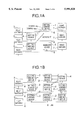
- FIGS. 1A and 1B are diagrams for explaining the principle of the present invention.
- FIGS. 2A, 2B, 2C, 2D, 2E and 2F are sequence diagrams of operations according to an embodiment of the present invention.
- FIG. 3 is a diagram of a format of messages used in the embodiment of the present invention.
- FIG. 4 is a diagram of a database managed by a setting device shown in FIGS. 1A and 1B;
- FIG. 5 is a diagram of a correspondence table managed by a name server shown in FIGS. 1A and 1B;
- FIGS. 6, 7 and 8 are flowcharts of the operations of the embodiment of the present invention.
- FIG. 9 is a block diagram of a portable device, a setting device, a business device and a name server shown in FIGS. 1A and 1B;
- FIG. 10 is a block diagram of a relay device shown in FIGS. 1A and 1B.
- FIGS. 1A and 1B are respectively diagrams of network systems used to explain the principle of the present invention.
- FIG. 1A shows that a portable device connected to one sub-net is moved to another sub-net.
- FIG. 1B shows a plurality of portable devices are newly joined in sub-nets.
- the network systems shown in FIGS. 1A and 1B include a frame network including relay devices 3 and a plurality of local area networks 6 functioning as sub-nets.
- the networks 6 are connected to the frame network via the relay devices, and make it possible for the networks 6 to communicate with each other under the TCP/IP network environment.
- FIG. 1A shows that a setting-needed device (a device operating under the TCP/IP environment is called a host device) 1, which is a portable device, is moved from one network 6 to another network 6.
- FIG. 1B shows that a plurality of setting-needed devices, which are portable devices, are newly joined to the networks 6.
- the network system shown in FIG. 1A has a business device 5, which performs business communications with the setting-needed device 1.
- the portable device 1 is moved from one network 6 to another network 6 and functions as a setting-needed device.
- the setting-needed device 1 sends the setting device 4 to a message (configuration request: CONFIG req) for requesting address information and network information.
- the setting device 4 receives the above message and makes the one-by-one correspondence between the host name of the setting-needed device 1 and the IP address thereof on the network. Then, the setting device 4 sends back a reply message (configuration reply: CONFIG reply) to the setting-needed device 1. Then, the address information and the network environment information are sent to the setting-needed device 1 and are automatically set thereto.
- the setting-needed devices 2 sends the setting device 4 the messages (CONFIG req) for requesting address information and network environment information.
- the setting device 4 makes the one-by-one correspondence between the host name and IP address of each of the setting-needed devices 2 on the network. Then, the setting device 4 returns reply messages (CONFIG reply) to the setting-needed devices 2.
- the information necessary to use the TCP/IP network environment is automatically given to each of the setting-needed devices 1 and 2 directly or via the relay devices 3. Hence, the manual setting operation is no longer needed. It is possible to provide the setting device 4 with an interface for releasing (removing) the above necessary information if each of the setting-needed devices 1 and 2 does not need the information any more.
- each of the setting-needed devices 1 and 2 When each of the setting-needed devices 1 and 2 notifies, in a message, the setting device 4 of the host name which each of the setting-needed devices 1 requests to use, the setting device 4 confirms the host name and makes the correspondence between the assigned IP address and the above host name. Hence, each of the setting-needed devices 1 and 2 is capable of using a desired host name.
- each of the setting-needed devices 1 and 2 with a function of containing a notification in the message to be sent to the setting device 4, said notification indicating whether another device is allowed to use, after a predetermined time, the value of the IP address assigned to the setting-needed device which issues the above notification or is inhibited from using the above value of the IP address. Thereby, it is possible to exclusively assign the particular value of the IP address.
- the network formation shown in FIGS. 1A and 1B is of a bus type LAN. However, it is possible to employ another type of the network formation, such as a star type LAN or a ring type LAN. Further, it is not limited to use of wire cables. For example, the LAN may employ wireless communications.
- FIGS. 1A and 1B and other figures of an embodiment of the present invention.
- Each of the setting-needed devices 1 and 2 sends the setting device 4 the message (CONFIG req) for requesting address information and network information necessary for the devices 1 and 2 to operate on the network. For example, each of the setting-needed devices 1 and 2 broadcasts the above message to the network. In response to the above request, the setting device 4 sends each of the setting-needed devices 1 and 2 to the address information and the network environment information together with the reply message (CONFIG reply).
- the message used to request the address information and network information is formatted so that the host name which each of the setting-needed devices 1 and 2 requests to use can be specified.
- the host name which was previously used in the network 6 by the setting-needed device 1 can be used in the destination network 6. It is also possible to assign the setting-needed device 2 a particular host name. It will be noted that each setting-needed device is called host.
- the setting device 4 asks the name server 7 about the IP address and the host name which are some items of the address information sent to the setting device 4 so that the one-by-one correspondence between the IP address and the host name can be established on the network.
- the setting device 4 asks the associated name server 7, if necessary.
- the name servers 7, provided in the respective networks 6, manages the correspondence between the IP address and the host name.
- the host name is formed by a character sequence containing arbitrary alphabets and/or numerals.
- the setting-needed device 1 can request the setting device 4 to exclusively assign the IP address and the host name to its own when sending the information request message (CONFIG req) to the setting device 4.
- the setting device 1 inhibits the requested IP address and the host name from being assigned to another device. If the request for the exclusive use is not issued, the setting device 1 allows the requested IP address and the host name to be used by another device.
- the setting-needed device 1 When the setting-needed device 1 needs the IP address and the host name no longer at the time of movement, the setting-needed device 1 sends the setting device 4 a message (REMOVE req) for notifying the setting device 4 of removing (release) of the above IP address and the host name. In receipt of the above message, the setting device 4 sends the setting-needed device 1 a message (REMOVE reply) indicating that the requested removing is successful. After a predetermined time, the setting device 4 can assign the removed IP address or the host name to another device.
- REMOVE req a message for notifying the setting device 4 of removing (release) of the above IP address and the host name.
- the setting device 4 sends the setting-needed device 1 a message (REMOVE reply) indicating that the requested removing is successful.
- the setting device 4 can assign the removed IP address or the host name to another device.
- the setting-needed device 1 can send the setting device 4 a message (CHECK req) for requesting confirmation of use of the above IP address and the host name.
- the setting device 4 can deal with the above message (CHECK req) more easily than the information request message (CONFIG req).
- the setting device 4 sends back a reply message (CHECK reply) to the setting-needed device 1.
- Each of the setting-needed devices 1 and 2 sends the messages by setting, in the messages CONFIG req and CHECK request, broadcast addresses receivable by all devices connected to the networks 6 as a physical address and the IP address.
- the relay device or devices 3 located therebetween pass the broadcast addresses.
- the setting-needed devices 1 and 2 do not know their own IP addresses at this time, the receivable IP addresses are only the broadcast addresses.
- Each of the relay devices 3 transfers the received information request message to the setting device 4 in order to make the information request message output from each of the setting-needed devices 1 and 2 reach the setting device 4. Further, each of the relay devices 3 sets, as IP addresses, broadcast addresses to the reply messages addressed to the setting-needed devices 1 and 2 received from the setting device 4, and outputs the networks 6. It is not required that each of the relay devices 3 is a device that directly connects networks together. Of course, it is possible to use the relay devices which directly connect the network 6 together.
- FIG. 2A shows a CONFIG req/CONFIG reply communications sequence used when the setting-needed device 1 or 2 is connected to the same network as the setting device 4.
- FIG. 2B shows a CONFIG req/CONFIG reply communications sequence used when the setting-needed device 1 or 2 is connected to a different network to which the setting device 4 is connected.
- FIG. 2C shows a REMOVE req/REMOVE reply communications sequence used when the setting-needed device 1 or 2 is connected to the same network as the setting device 4.
- FIG. 2D shows a REMOVE req/REMOVE reply communications sequence used when the setting-needed device 1 or 2 is connected to a different network to which the setting device 4 is connected.
- FIG. 2A shows a CONFIG req/CONFIG reply communications sequence used when the setting-needed device 1 or 2 is connected to the same network as the setting device 4.
- FIG. 2B shows a CONFIG req/CONFIG reply communications sequence used when the setting-needed device 1 or 2 is
- FIG. 2E shows a CHECK req/CHECK reply communications sequence used when the setting-needed device 1 or 2 is connected to the same network as the setting device.
- FIG. 2F shows a CHECK req/CHECK reply communications sequence used when the setting-needed device 1 or 2 is connected to a different network to which the setting device 4 is connected.
- FIG. 3 shows an example of the format of the above-mentioned messages.
- the format shown in FIG. 3 has a maximum of nine fields F1 through F9. More particularly, the field F1 is used to store information indicating the type of message.
- the field F2 is used to store information concerning whether or not the IP address should be exclusively used.
- the field F3 is used to store the IP address of the setting-needed device 1 or 2. The field F3 may be omitted when the setting-needed device 1 or 2 broadcast the information request message.
- the field F4 is used to store the IP address of the setting device 4.
- the field F5 is used to store the IP address of the relay device 3.
- the field F6 is used to store the host name of the setting-needed device 1 or 2. The field F6 may be omitted.
- the field F7 is used to store the host name of the setting device 4.
- the field F8 is used to store a password.
- the field F9 is used to store the network environment information which is, for example, the address of the name server 7, the table of the correspondence between host name and IP address of another device or the like.
- FIG. 4 shows an example of a database (DB) managed by the setting device 4.
- the setting device 4 manages the address information and the network environment information necessary for the setting-needed device 1 or 2 to use the TCP/IP network environment.
- the information managed by the setting device 4 includes a MAC (Media Access Control) address forming a 48-bit physical address, the IP address consisting of 32 bits, the host name formed by a character string used to discriminate the hosts (devices connected to the networks 6) from each other, and an exclusive-use/non-exclusive use indication indicating whether or not the IP address and the host name are exclusively used for a particularly one device.
- the items of the above information are managed by the setting device 4 in a table format shown in FIG. 4.
- the IP address is made up of the network number and the host number exclusively assigned in the networks 6 so that the devices have different host numbers.
- FIG. 5 shows a correspondence table managed by the name server 7.
- the correspondence table shown in FIG. 5 is also used in the prior art.
- the name server 7 manages the correspondence between the IP address and the host name, and has the function of notifying a device of information concerning a requested correspondence requested by the above device.
- FIGS. 6, 7 and 8 are flowcharts of processes respectively performed by the setting device 4 when receiving the CONFIG req message, the REMOVE req message and CHECK req message from the setting-needed device 1 or 2.
- the symbol "DB" denotes the address information of the setting-needed device 1 or 2, such as the IP address and the host name, the network environment information and the database indicating the correspondence between the address information and the network environment information.
- step (a) shown in FIG. 6 the setting device 4 receives the CONFIG req message from the setting-needed device 1 or 2.
- step (b) the setting device 4 determines whether or not the host name is specified in the received message. When it is determined that the host name is specified in the received message, the setting device 4 proceeds to step (d). When it is determined that the host name is not specified in the received message, the setting device 4 assigns an exclusive host name to the setting-needed device of concern, the exclusive host name being exclusively used in the networks 6. Then, the setting device 4 proceeds to step (h).
- step (d) when the host name is specified in the received message, the setting device 4 determines whether or not the specified host name has been registered in the database managed by the setting device 4. When it is determined that the specified host name has not been registered in the database, the setting device 4 proceeds to step (f). In step (e), when the host name has been registered in the database managed by the setting device 4, the setting device 4 confirms that the device which has registered the host name is the device which sent the setting device 4 the CONFIG req message being considered. Then, the setting device 4 proceeds to step (h).
- step (g) when there is the registered IP address and host name, the setting device 4 determines that the received CONFIG req message requests change of the host name, and changes the host name registered in the database. Then, the setting device 4 writes the new IP in the database into the CONFIG reply message and sends it to the setting-needed device 1 or 2 being considered. Then, the setting device 4 instructs the name server 7 to register therein the correspondence between the new host name and the IP address.
- step (h) the setting device 4 determines whether or not it is requested to exclusively use the IP address. When the exclusive use is requested, the setting device 4 proceeds to step (i). When the non-exclusive use is requested, the setting device 4 proceeds to step (j).
- step (i) if the requested exclusive use is possible, the setting device 4 assigns the IP address, and writes information made to correspond to the specified host name, the registered host name or newly assigned host name in the CONFIG reply message, and sends it to the setting-needed device 1 or 2 being considered. Then the setting device 4 ends the process.
- step (j) if the requested non-exclusive use is possible, the setting device 4 assigns the IP address, and writes information made to correspond to the specified host name, the registered host name or newly assigned host name in the CONFIG reply message, and sends it to the setting-needed device 1 or 2 being considered. Further, the setting device 4 registers in the name server 7 the information concerning the correspondence between the IP address and the host name.
- the setting device 4 In receipt of the REMOVE req message from the setting-needed device 1 or 2, the setting device 4 operates in the sequence shown in FIG. 7.
- the setting device 4 receives the REMOVE req message from the setting-needed device 1 or 2.
- the setting device 4 searches for information concerning the setting-needed device 1 or 2 of concern by using, as key information, the MAC address, the IP address or the host name.
- the setting device 4 if the MAC address, the IP address and the host name are the same as corresponding those registered in the database, the setting device 4 removes the information, and sends back the REMOVE reply message to the setting-needed device 1 or 2 of concern. Further, the setting device 4 requests the name server 7 to delete information concerning the correspondence between the IP address and the host name, and ends the process.
- the setting device 4 In receipt of the CHECK req message from the setting-needed device 1 or 2, the setting device 4 operates in the sequence shown in FIG. 8.
- the setting device 4 receives the CHECK req message from the setting-needed device 1 or 2.
- the setting device 4 searches for information concerning the setting-needed device 1 or 2 of concern by using, as key information, the MAC address, the IP address or the host name.
- the setting device 4 collects the registered information and sends back the CHECK reply message to the setting-needed device 1 or 2. If necessary, the setting device 4 requests the name server 7 to register therein information concerning the performed confirmation.
- FIG. 9 is a block diagram of each of the structures of the portable devices 1 and 2, the setting device 4, the business device 5 and the name server 7 shown in FIGS. 1A and 1B.
- Each of these devices is made up of a CPU (Central Processing Unit) 11, a memory (MEM) 12, a disk storage device (DISK) 13, a network interface card (I/O card) 14 and a bus 15.
- the memory 12 includes a ROM which stores programs executed by the CPU 11, and a RAM serving as a work memory of the CPU 11.
- the network interface card 14 connects the device to the network 6.
- the disk storage device 13 of the portable device includes a programmable ROM stores the address information and the network environment information supplied from the setting device 4.
- FIG. 10 is a block diagram of the structure of the relay devices 3 shown in FIGS. 1A and 1B.
- Each of the relay devices 3 is made up of a CPU 21, a memory 12, a disk storage device 23, a network interface card 24, two network interface cards 24 and 25, and a bus 26.
- the memory 22 includes a ROM which stores programs executed by the CPU 21, and a RAM serving as a work memory of the CPU 21.
- the network interface card 24 connects the relay device 3 to the network 6, and the network interface card 24 connects the relay device 3 to another network connected to another relay device 3 (in the case shown in FIGS. 1A and 1B) or the network 6 different from the network 6 to which the network interface card 24 is connected.
- the present invention it is possible to rapidly and correctly perform the setting of the address information and the network environment information with respect to portable devices directly if the portable devices are connected to the same network as the setting device, or via the relay device or devices if the portable devices are connected to a network different from the network to which the setting device is connected. Further, it is possible for the portable devices to use, even after the movement of the portable devices, the same host name as that used before the movement thereof and to operate under the same environment as the previous environment. Hence, the present invention greatly contributes to improvements in portability of devices used in the TCP/IP network and in reductions of the work of the operator and/or the system engineer.
Abstract
In a method for automatically address information and network environment information in networks mutually connectable to each other under a predetermined protocol network environment, step (a) is to manage, in a setting device connected to one of the networks, address information and network environment information used for each device connected on of the networks to operate under the predetermined protocol network environment. Step (b) sends, from a setting-needed device moved from one of the networks to another network or newly joined to one of the networks, a request message for requesting address information and network environment information to the setting device. Step (c) makes, in the setting device, a correspondence between a device name of the setting-needed device and a network address of the setting-needed device and sending back a reply message to the setting-needed device from the setting device, the reply message in order to send the address information containing the device name and the network address of the setting-needed device and the network environment information. Step (b) stores, in the setting-needed device, the address information and the network environment information sent from the setting device, so that the setting-needed device can operate under the predetermined network environment.
Description
This application is a continuation of application Ser. No. 08/274,746, filed Jul. 14, 1994, now abandoned.
1. Field of the Invention
The present invention generally relates to information networks, and more particularly to a method for automatically setting address information and network environment information necessary for a device to operate under predetermined network environment such as TCP/IP (Transmission Control Protocol/Internet Protocol) when such a device is newly joined or moved from a position to another position. Further, the present invention is concerned with a system using the above method.
Recently, personal computers of the laptop type or notebook type, UNIX computers and network devices such as relays have been down-sized and reduced in weight. As the number of such portable devices increases, it is increasingly required to connect portable devices to a network at a destination and easily utilize the devices. Hereinafter, the term "network at a destination" means a network which has a network number or a sub-network number different from that of a network to which the devices were originally connected. Hereinafter, such a network is also referred to as a sub-net.
In order to enable the portable device at the destination, it is necessary to reset address information and network environment information concerning the sub-net at the destination to the above portable device. When a large number of portable devices are newly joined in a network, it is necessary to set the following information to each of the portable devices. The information to be set in each of the portable device includes an IP address and a host name (device name), which is some information contained in the address information. The portable devices have different values of the IP address and different values of the host name. Further, the above information includes other information items contained in the address information, the other information items including an IP address of a default gateway, sub-net mask information and so on. The values of the other information items contained in the address information depend on the network management method, and may be the same as each other with respect to all the portable devices. Furthermore, the above information to be set in each of the newly joined portable device includes network environment information including the domain name of a naming device (name server), a community name of an SNMP (Simple Network Management Protocol) and so on. The values of the network environment information depend on the network management method and may be the same as each other with respect to all the portable devices.
2. Description of the Prior Art
In the prior art, in order to move a portable device from a sub-net to another sub-net and enable the user to the portable device connected to the sub-net at the destination, it is required that the user asks a network management person about the address information and the network environment information and sets the received information to the portable device for himself or herself. Further, in order for the portable device at the destination to take place a communication with another device (for example, a business device which stores general databases and files), it is necessary to change the correspondence between the IP address and host name of the portable device moved to the destination, the above correspondence being stored in the above business device. If the correspondence between the IP address and the host name are shared in the network, it is necessary to change the correspondence between the IP address and host name of the portable device moved to the destination, the above correspondence being managed by a name server.
When a large number of devices are newly introduced into the network, it is necessary for a system engineer to set the address information and the network environment information to these devices.
It can be seen from the above that conventionally, it is necessary for the use or the system engineer to correctly set many items of address information and network environment information.
Hence, the conventional method has a disadvantage in that it takes a long time to complete the setting operation by the user or the system engineer in order to enable the portable devices on the PCP/IP network and a disadvantage in that a malfunction may occur due to errors in the manual setting. If the address information is mistakenly set, the network may be confused. The devices on the TCP/IP network cannot operate only by acquiring the IP address if any manual setting is not performed. Regarding the host name, it is necessary to made the host name specifically assigned to the network correspond to the IP address and set the other address information items and the environment information to the devices.
It is a general object of the present invention to provide a method for automatically setting address information and network environment information to a device connected to a network in which the above disadvantages are eliminated.
A more specific object of the present invention is to provide a method for automatically setting address information and network environment information to a device connected to a network in which address information and network environment information are integrally managed by a setting device, which makes matching among the values of the address information and network environment information and sends the above information to a setting request device in response to a request therefrom, so that the address information and the network environment information can be automatically set to the setting request device rather than the manual setting by the user or the system engineer and the setting request device can operate on a predetermined network protocol such as the TCP/IP.
The above objects of the present invention are achieved by a method for automatically address information and network environment information in networks mutually connectable to each other under a predetermined protocol network environment, the method comprising:
(a) managing, in a setting device connected to one of the networks, address information and network environment information used for each device connected on of the networks to operate under the predetermined protocol network environment;
(b) sending, from a setting-needed device moved from one of the networks to another network or newly joined to one of the networks, a request message for requesting address information and network environment information to the setting device;
(c) making, in the setting device, a correspondence between a device name of the setting-needed device and a network address of the setting-needed device and sending back a reply message to the setting-needed device from the setting device, the reply message in order to send the address information containing the device name and the network address of the setting-needed device and the network environment information; and
(d) storing, in the setting-needed device, the address information and the network environment information sent from the setting device, so that the setting-needed device can operate under the predetermined network environment.
Another object of the present invention is to provide a system using the above method.
This object of the present invention is achieved by a system for automatically address information and network environment information in networks mutually connectable to each other under a predetermined protocol network environment, the system comprising:
first means for managing, in a setting device connected to one of the networks, address information and network environment information used for each device connected on of the networks to operate under the predetermined protocol network environment;
second means for sending, from a device moved from one of the networks to another network or newly joined to one of the networks, a request message for requesting address information and network environment information to the setting device;
third means for making, in the setting device, a correspondence between a device name of the setting-needed device and a network address of the setting-needed device and sending back a reply message to the setting-needed device from the setting device, the reply message in order to send the address information containing the device name and the network address of the setting-needed device and the network environment information; and
fourth means for storing, in the setting-needed device, the address information and the network environment information sent from the setting device, so that the setting-needed device can operate under the predetermined network environment.
Other objects, features and advantages of the present invention will become more apparent from the following detailed description when read in conjunction with the accompanying drawings, in which:
FIGS. 1A and 1B are diagrams for explaining the principle of the present invention;
FIGS. 2A, 2B, 2C, 2D, 2E and 2F are sequence diagrams of operations according to an embodiment of the present invention;
FIG. 3 is a diagram of a format of messages used in the embodiment of the present invention;
FIG. 4 is a diagram of a database managed by a setting device shown in FIGS. 1A and 1B;
FIG. 5 is a diagram of a correspondence table managed by a name server shown in FIGS. 1A and 1B;
FIGS. 6, 7 and 8 are flowcharts of the operations of the embodiment of the present invention;
FIG. 9 is a block diagram of a portable device, a setting device, a business device and a name server shown in FIGS. 1A and 1B; and
FIG. 10 is a block diagram of a relay device shown in FIGS. 1A and 1B.
FIGS. 1A and 1B are respectively diagrams of network systems used to explain the principle of the present invention. FIG. 1A shows that a portable device connected to one sub-net is moved to another sub-net. FIG. 1B shows a plurality of portable devices are newly joined in sub-nets.
The network systems shown in FIGS. 1A and 1B include a frame network including relay devices 3 and a plurality of local area networks 6 functioning as sub-nets. The networks 6 are connected to the frame network via the relay devices, and make it possible for the networks 6 to communicate with each other under the TCP/IP network environment. FIG. 1A shows that a setting-needed device (a device operating under the TCP/IP environment is called a host device) 1, which is a portable device, is moved from one network 6 to another network 6. FIG. 1B shows that a plurality of setting-needed devices, which are portable devices, are newly joined to the networks 6. Each of the network systems shown in FIGS. 1A and 1B has a setting device 4, which integrally manage address information and network environment information and assigns the above information to the setting-needed devices 1 and 2 and notifies these derives of the information. The network system shown in FIG. 1A has a business device 5, which performs business communications with the setting-needed device 1. Name servers 7, which are connected to respective networks 6 shown in FIG. 1A, integrally manage the correspondence between the IP address and the host name (device name) on the network.
In the network system shown in FIG. 1A, the portable device 1 is moved from one network 6 to another network 6 and functions as a setting-needed device. The setting-needed device 1 sends the setting device 4 to a message (configuration request: CONFIG req) for requesting address information and network information. The setting device 4 receives the above message and makes the one-by-one correspondence between the host name of the setting-needed device 1 and the IP address thereof on the network. Then, the setting device 4 sends back a reply message (configuration reply: CONFIG reply) to the setting-needed device 1. Then, the address information and the network environment information are sent to the setting-needed device 1 and are automatically set thereto.
In the network shown in FIG. 1B, the setting-needed devices 2 sends the setting device 4 the messages (CONFIG req) for requesting address information and network environment information. The setting device 4 makes the one-by-one correspondence between the host name and IP address of each of the setting-needed devices 2 on the network. Then, the setting device 4 returns reply messages (CONFIG reply) to the setting-needed devices 2.
In the above-mentioned manner, the information necessary to use the TCP/IP network environment is automatically given to each of the setting-needed devices 1 and 2 directly or via the relay devices 3. Hence, the manual setting operation is no longer needed. It is possible to provide the setting device 4 with an interface for releasing (removing) the above necessary information if each of the setting-needed devices 1 and 2 does not need the information any more.
When each of the setting-needed devices 1 and 2 notifies, in a message, the setting device 4 of the host name which each of the setting-needed devices 1 requests to use, the setting device 4 confirms the host name and makes the correspondence between the assigned IP address and the above host name. Hence, each of the setting-needed devices 1 and 2 is capable of using a desired host name.
It is possible to provide each of the setting-needed devices 1 and 2 with a function of containing a notification in the message to be sent to the setting device 4, said notification indicating whether another device is allowed to use, after a predetermined time, the value of the IP address assigned to the setting-needed device which issues the above notification or is inhibited from using the above value of the IP address. Thereby, it is possible to exclusively assign the particular value of the IP address.
The network formation shown in FIGS. 1A and 1B is of a bus type LAN. However, it is possible to employ another type of the network formation, such as a star type LAN or a ring type LAN. Further, it is not limited to use of wire cables. For example, the LAN may employ wireless communications.
A description will be now given, with reference to FIGS. 1A and 1B and other figures, of an embodiment of the present invention.
Each of the setting-needed devices 1 and 2 sends the setting device 4 the message (CONFIG req) for requesting address information and network information necessary for the devices 1 and 2 to operate on the network. For example, each of the setting-needed devices 1 and 2 broadcasts the above message to the network. In response to the above request, the setting device 4 sends each of the setting-needed devices 1 and 2 to the address information and the network environment information together with the reply message (CONFIG reply).
The message used to request the address information and network information is formatted so that the host name which each of the setting-needed devices 1 and 2 requests to use can be specified. Hence, the host name which was previously used in the network 6 by the setting-needed device 1 can be used in the destination network 6. It is also possible to assign the setting-needed device 2 a particular host name. It will be noted that each setting-needed device is called host.
The setting device 4 asks the name server 7 about the IP address and the host name which are some items of the address information sent to the setting device 4 so that the one-by-one correspondence between the IP address and the host name can be established on the network. In the case where the one-by-one correspondence has been established, the setting device 4 asks the associated name server 7, if necessary. Hence, it becomes possible for other devices such as the business device 5 to recognize the new correspondence between the IP address and the host name. The name servers 7, provided in the respective networks 6, manages the correspondence between the IP address and the host name. The host name is formed by a character sequence containing arbitrary alphabets and/or numerals.
The setting-needed device 1 can request the setting device 4 to exclusively assign the IP address and the host name to its own when sending the information request message (CONFIG req) to the setting device 4. In response to the above request, the setting device 1 inhibits the requested IP address and the host name from being assigned to another device. If the request for the exclusive use is not issued, the setting device 1 allows the requested IP address and the host name to be used by another device.
When the setting-needed device 1 needs the IP address and the host name no longer at the time of movement, the setting-needed device 1 sends the setting device 4 a message (REMOVE req) for notifying the setting device 4 of removing (release) of the above IP address and the host name. In receipt of the above message, the setting device 4 sends the setting-needed device 1 a message (REMOVE reply) indicating that the requested removing is successful. After a predetermined time, the setting device 4 can assign the removed IP address or the host name to another device.
In the case where the setting-needed device 1 connected to a network 6 has requested exclusive use of the IP address and the host name at the time of sending the information request message to the setting device 4, if the above setting-needed device 1 is detached from the above network 6 and is connected thereto again, the setting-needed device 1 can send the setting device 4 a message (CHECK req) for requesting confirmation of use of the above IP address and the host name. The setting device 4 can deal with the above message (CHECK req) more easily than the information request message (CONFIG req). In order to send the setting-needed device 1 confirmation of use of the IP address and the host name, the setting device 4 sends back a reply message (CHECK reply) to the setting-needed device 1.
Each of the setting-needed devices 1 and 2 sends the messages by setting, in the messages CONFIG req and CHECK request, broadcast addresses receivable by all devices connected to the networks 6 as a physical address and the IP address. In a case where the setting-needed device 1 or 2 is connected to a network 6 different from the network 6 to which the setting device 4 is connected, the relay device or devices 3 located therebetween pass the broadcast addresses. The setting-needed devices 1 and 2 do not know their own IP addresses at this time, the receivable IP addresses are only the broadcast addresses.
Each of the relay devices 3 transfers the received information request message to the setting device 4 in order to make the information request message output from each of the setting-needed devices 1 and 2 reach the setting device 4. Further, each of the relay devices 3 sets, as IP addresses, broadcast addresses to the reply messages addressed to the setting-needed devices 1 and 2 received from the setting device 4, and outputs the networks 6. It is not required that each of the relay devices 3 is a device that directly connects networks together. Of course, it is possible to use the relay devices which directly connect the network 6 together.
FIG. 2A shows a CONFIG req/CONFIG reply communications sequence used when the setting-needed device 1 or 2 is connected to the same network as the setting device 4. FIG. 2B shows a CONFIG req/CONFIG reply communications sequence used when the setting-needed device 1 or 2 is connected to a different network to which the setting device 4 is connected. FIG. 2C shows a REMOVE req/REMOVE reply communications sequence used when the setting-needed device 1 or 2 is connected to the same network as the setting device 4. FIG. 2D shows a REMOVE req/REMOVE reply communications sequence used when the setting-needed device 1 or 2 is connected to a different network to which the setting device 4 is connected. FIG. 2E shows a CHECK req/CHECK reply communications sequence used when the setting-needed device 1 or 2 is connected to the same network as the setting device. FIG. 2F shows a CHECK req/CHECK reply communications sequence used when the setting-needed device 1 or 2 is connected to a different network to which the setting device 4 is connected.
FIG. 3 shows an example of the format of the above-mentioned messages. The format shown in FIG. 3 has a maximum of nine fields F1 through F9. More particularly, the field F1 is used to store information indicating the type of message. The field F2 is used to store information concerning whether or not the IP address should be exclusively used. The field F3 is used to store the IP address of the setting-needed device 1 or 2. The field F3 may be omitted when the setting-needed device 1 or 2 broadcast the information request message. The field F4 is used to store the IP address of the setting device 4. The field F5 is used to store the IP address of the relay device 3. The field F6 is used to store the host name of the setting-needed device 1 or 2. The field F6 may be omitted. The field F7 is used to store the host name of the setting device 4. The field F8 is used to store a password. The field F9 is used to store the network environment information which is, for example, the address of the name server 7, the table of the correspondence between host name and IP address of another device or the like.
FIG. 4 shows an example of a database (DB) managed by the setting device 4. The setting device 4 manages the address information and the network environment information necessary for the setting-needed device 1 or 2 to use the TCP/IP network environment. The information managed by the setting device 4 includes a MAC (Media Access Control) address forming a 48-bit physical address, the IP address consisting of 32 bits, the host name formed by a character string used to discriminate the hosts (devices connected to the networks 6) from each other, and an exclusive-use/non-exclusive use indication indicating whether or not the IP address and the host name are exclusively used for a particularly one device. The items of the above information are managed by the setting device 4 in a table format shown in FIG. 4. The IP address is made up of the network number and the host number exclusively assigned in the networks 6 so that the devices have different host numbers.
FIG. 5 shows a correspondence table managed by the name server 7. The correspondence table shown in FIG. 5 is also used in the prior art. The name server 7 manages the correspondence between the IP address and the host name, and has the function of notifying a device of information concerning a requested correspondence requested by the above device.
FIGS. 6, 7 and 8 are flowcharts of processes respectively performed by the setting device 4 when receiving the CONFIG req message, the REMOVE req message and CHECK req message from the setting-needed device 1 or 2. In FIGS. 6 through 8, the symbol "DB" denotes the address information of the setting-needed device 1 or 2, such as the IP address and the host name, the network environment information and the database indicating the correspondence between the address information and the network environment information.
In step (a) shown in FIG. 6, the setting device 4 receives the CONFIG req message from the setting-needed device 1 or 2. In step (b), the setting device 4 determines whether or not the host name is specified in the received message. When it is determined that the host name is specified in the received message, the setting device 4 proceeds to step (d). When it is determined that the host name is not specified in the received message, the setting device 4 assigns an exclusive host name to the setting-needed device of concern, the exclusive host name being exclusively used in the networks 6. Then, the setting device 4 proceeds to step (h).
In step (d), when the host name is specified in the received message, the setting device 4 determines whether or not the specified host name has been registered in the database managed by the setting device 4. When it is determined that the specified host name has not been registered in the database, the setting device 4 proceeds to step (f). In step (e), when the host name has been registered in the database managed by the setting device 4, the setting device 4 confirms that the device which has registered the host name is the device which sent the setting device 4 the CONFIG req message being considered. Then, the setting device 4 proceeds to step (h).
In step (g), when there is the registered IP address and host name, the setting device 4 determines that the received CONFIG req message requests change of the host name, and changes the host name registered in the database. Then, the setting device 4 writes the new IP in the database into the CONFIG reply message and sends it to the setting-needed device 1 or 2 being considered. Then, the setting device 4 instructs the name server 7 to register therein the correspondence between the new host name and the IP address.
In step (h), the setting device 4 determines whether or not it is requested to exclusively use the IP address. When the exclusive use is requested, the setting device 4 proceeds to step (i). When the non-exclusive use is requested, the setting device 4 proceeds to step (j).
In step (i), if the requested exclusive use is possible, the setting device 4 assigns the IP address, and writes information made to correspond to the specified host name, the registered host name or newly assigned host name in the CONFIG reply message, and sends it to the setting-needed device 1 or 2 being considered. Then the setting device 4 ends the process.
In step (j), if the requested non-exclusive use is possible, the setting device 4 assigns the IP address, and writes information made to correspond to the specified host name, the registered host name or newly assigned host name in the CONFIG reply message, and sends it to the setting-needed device 1 or 2 being considered. Further, the setting device 4 registers in the name server 7 the information concerning the correspondence between the IP address and the host name.
In receipt of the REMOVE req message from the setting-needed device 1 or 2, the setting device 4 operates in the sequence shown in FIG. 7. In step (a), the setting device 4 receives the REMOVE req message from the setting-needed device 1 or 2. In step (b), the setting device 4 searches for information concerning the setting-needed device 1 or 2 of concern by using, as key information, the MAC address, the IP address or the host name. In step (c), if the MAC address, the IP address and the host name are the same as corresponding those registered in the database, the setting device 4 removes the information, and sends back the REMOVE reply message to the setting-needed device 1 or 2 of concern. Further, the setting device 4 requests the name server 7 to delete information concerning the correspondence between the IP address and the host name, and ends the process.
In receipt of the CHECK req message from the setting-needed device 1 or 2, the setting device 4 operates in the sequence shown in FIG. 8. In step (b), the setting device 4 receives the CHECK req message from the setting-needed device 1 or 2. In step (b), the setting device 4 searches for information concerning the setting-needed device 1 or 2 of concern by using, as key information, the MAC address, the IP address or the host name. In step (c), if the MAC address, the IP address and the host name are the same as corresponding those registered in the database, the setting device 4 collects the registered information and sends back the CHECK reply message to the setting-needed device 1 or 2. If necessary, the setting device 4 requests the name server 7 to register therein information concerning the performed confirmation.
FIG. 9 is a block diagram of each of the structures of the portable devices 1 and 2, the setting device 4, the business device 5 and the name server 7 shown in FIGS. 1A and 1B. Each of these devices is made up of a CPU (Central Processing Unit) 11, a memory (MEM) 12, a disk storage device (DISK) 13, a network interface card (I/O card) 14 and a bus 15. The memory 12 includes a ROM which stores programs executed by the CPU 11, and a RAM serving as a work memory of the CPU 11. The network interface card 14 connects the device to the network 6. The disk storage device 13 of the portable device includes a programmable ROM stores the address information and the network environment information supplied from the setting device 4.
FIG. 10 is a block diagram of the structure of the relay devices 3 shown in FIGS. 1A and 1B. Each of the relay devices 3 is made up of a CPU 21, a memory 12, a disk storage device 23, a network interface card 24, two network interface cards 24 and 25, and a bus 26. The memory 22 includes a ROM which stores programs executed by the CPU 21, and a RAM serving as a work memory of the CPU 21. The network interface card 24 connects the relay device 3 to the network 6, and the network interface card 24 connects the relay device 3 to another network connected to another relay device 3 (in the case shown in FIGS. 1A and 1B) or the network 6 different from the network 6 to which the network interface card 24 is connected.
According to the present invention, it is possible to rapidly and correctly perform the setting of the address information and the network environment information with respect to portable devices directly if the portable devices are connected to the same network as the setting device, or via the relay device or devices if the portable devices are connected to a network different from the network to which the setting device is connected. Further, it is possible for the portable devices to use, even after the movement of the portable devices, the same host name as that used before the movement thereof and to operate under the same environment as the previous environment. Hence, the present invention greatly contributes to improvements in portability of devices used in the TCP/IP network and in reductions of the work of the operator and/or the system engineer.
The present invention is not limited to the specifically disclosed embodiments, and variations and modifications may be made without departing from the scope of the present invention.
Claims (9)
1. A method for automatically determining address information and network environment information in an internetwork of networks mutually connectable to each other under a network environment, said internetwork having at least one setting device, said method comprising:
(a) managing, in said setting device connected to one of the networks, address information and network environment information used for each device connected to each network to operate under the network environment, the network environment information including information unique to each network, including protocol information;
(b) sending, from a setting-needed device moved from one of the networks to another network or newly joined to one of the networks, a request message for requesting address information and network environment information to said setting device;
(c) establishing, in said setting device, a correspondence between a host name of the setting-needed device and a network address of the setting-needed device and sending back a reply message to the setting-needed device from the setting device, the reply message including the address information containing the host name and the network address of the setting-needed device and the network environment information;
(d) storing, in the setting-needed device, the address information and the network environment information sent from said setting device, so that the setting-needed device can operate under the network environment; and
(e) reconfiguring the networks of the internetwork based on the information stored at step (d) to accommodate the setting-needed device after being moved from one of the networks to another one of the networks or newly joined to one of the networks, wherein said network environment information includes a domain name of a naming device and a community name of a network management protocol.
2. The method of claim 1, wherein:
the step (b) comprises the step of sending the request message containing a host name to the setting device; and
the step (c) comprises the step of:
determining whether or not the host name can be used to the setting-needed device which sent the request message in the step (b); and
making the correspondence between the host name and the network address of the setting-needed device when the name can be used.
3. The method of claim 1, wherein:
the step (b) comprises the step of containing an exclusive-use/non-exclusive use information in the request message, the exclusive-use/non-exclusive use information indicating whether or not the network address is allowed to be used by another device after a predetermined time; and
the step (c) comprises the step of assigning the network address on the basis of the exclusive-use/non-exclusive use information.
4. A system for automatically determining address information and network environment information in networks mutually connectable to each other under a predetermined protocol network environment, the system comprising:
first means for managing, in a setting device connected to one of the networks, address information and network environment information used for each device connected to one of the networks to operate under the predetermined protocol network environment;
second means for sending, from a setting-needed device moved from one of the networks to another network or newly joined to one of the networks, a request message for requesting address information and network environment information from the setting device;
third means for making, in the setting device, a correspondence between a host name of the setting-needed device and a network address of the setting-needed device and sending back a reply message to the setting-needed device from the setting device, the reply message containing address information containing a host name and a network address of the setting-needed device and network environment information; and
fourth means for storing, in the setting-needed device, the address information and the network environment information sent from the setting device, so that the setting-needed device can operate under the predetermined network environment, wherein said network environment information includes a domain name of a naming device and a community name of a network management protocol.
5. The system of claim 1, wherein:
the second means comprises means for sending the request message containing a host name to the setting device; and
the third means comprises means for determining whether or not the host name can be used to the setting-needed device which sent the request message and for making the correspondence between the name and the network address of the setting-needed device when the host name can be used.
6. The system of claim 4, wherein:
the second means comprises means for containing an exclusive-use/non-exclusive use information in the request message, the exclusive-use/non-exclusive use information indicating whether or not the network address is allowed to be used by another device after a predetermined time; and
the third means comprises means for assigning the network address on the basis of the exclusive-use/non-exclusive use information.
7. A method for automatically determining address information and network environment information in sub-networks of a network wherein the sub-networks are mutually connectable to each other under a predetermined protocol, comprising the steps of:
(a) sending a request message from a portable device to the local manager for address information and network environment information, the portable device having been moved from one sub-network to another sub-network or newly joined to one of the sub-networks;
(b) making a correspondence in the local manager between a host name of the portable device and a network address of the portable device;
(c) sending back a reply message from the local manager to the portable device containing the host name and the network address of the portable device as determined in step (b) and other network information;
(d) storing the address and network environment information in the portable device so that the portable device can operate under the predetermined network environment, wherein said network environment information includes a domain name of a naming device and a community name of a network management protocol.
8. The method of claim 7, further comprising the step of:
connecting a plurality of sub-networks using gateways.
9. A method for determining identifying information in a network composed of sub-networks so as to enable the automatic connection of a portable device to a second sub-network having been moved from a first sub-network or newly joined, comprising the steps of:
(a) communicating between a local network manager and the portable device wherein the local manager makes a correspondence between a host name of the portable device and a network address of the portable device and sends back to the portable device such correspondence along with other network environment information;
(b) setting the portable device with such environment information so that the device can operate under a network environment, wherein said network environment information includes a domain name of a naming device and a community name of a network management protocol.
Priority Applications (1)
| Application Number | Priority Date | Filing Date | Title |
|---|---|---|---|
| US08/954,994 US5991828A (en) | 1993-08-25 | 1997-10-07 | System for automatically connecting portable device to network using network environment information including domain name of naming device and community name of network management protocol |
Applications Claiming Priority (4)
| Application Number | Priority Date | Filing Date | Title |
|---|---|---|---|
| JP5-210318 | 1993-08-25 | ||
| JP21031893A JP3425192B2 (en) | 1993-08-25 | 1993-08-25 | Address information automatic setting processing method and address information setting device |
| US27474694A | 1994-07-14 | 1994-07-14 | |
| US08/954,994 US5991828A (en) | 1993-08-25 | 1997-10-07 | System for automatically connecting portable device to network using network environment information including domain name of naming device and community name of network management protocol |
Related Parent Applications (1)
| Application Number | Title | Priority Date | Filing Date |
|---|---|---|---|
| US27474694A Continuation | 1993-08-25 | 1994-07-14 |
Publications (1)
| Publication Number | Publication Date |
|---|---|
| US5991828A true US5991828A (en) | 1999-11-23 |
Family
ID=16587445
Family Applications (1)
| Application Number | Title | Priority Date | Filing Date |
|---|---|---|---|
| US08/954,994 Expired - Fee Related US5991828A (en) | 1993-08-25 | 1997-10-07 | System for automatically connecting portable device to network using network environment information including domain name of naming device and community name of network management protocol |
Country Status (3)
| Country | Link |
|---|---|
| US (1) | US5991828A (en) |
| JP (1) | JP3425192B2 (en) |
| KR (1) | KR970008306B1 (en) |
Cited By (68)
| Publication number | Priority date | Publication date | Assignee | Title |
|---|---|---|---|---|
| US6233612B1 (en) * | 1998-08-31 | 2001-05-15 | International Business Machines Corporation | Dynamic network protocol management information base options |
| US6286039B1 (en) * | 1997-08-28 | 2001-09-04 | Cisco Technology, Inc. | Automatic static to dynamic IP address and DNS address management for remote communications network access |
| US6381646B2 (en) | 1998-11-03 | 2002-04-30 | Cisco Technology, Inc. | Multiple network connections from a single PPP link with partial network address translation |
| US6381650B1 (en) * | 1997-03-10 | 2002-04-30 | Palm, Inc. | Method for finding the address of a workstation assigned a dynamic address |
| US6396833B1 (en) | 1998-12-02 | 2002-05-28 | Cisco Technology, Inc. | Per user and network routing tables |
| US6427170B1 (en) | 1998-12-08 | 2002-07-30 | Cisco Technology, Inc. | Integrated IP address management |
| US6427174B1 (en) | 1998-11-12 | 2002-07-30 | Cisco Technology, Inc. | Dynamic IP addressing and quality of service assurance |
| US20020116336A1 (en) * | 2001-02-05 | 2002-08-22 | Athanassios Diacakis | Method and device for displaying contact information in a presence and availability management system |
| US20020120860A1 (en) * | 2001-02-20 | 2002-08-29 | Ferguson Tabitha K. | Duplicate mobile device PIN detection and elimination |
| US6460084B1 (en) | 1997-08-28 | 2002-10-01 | Cisco Technology, Inc. | Forced network portal |
| US20020165984A1 (en) * | 2001-04-13 | 2002-11-07 | Tsutomu Yuki | Device information renewal system |
| US6490290B1 (en) | 1998-12-30 | 2002-12-03 | Cisco Technology, Inc. | Default internet traffic and transparent passthrough |
| US6490289B1 (en) | 1998-11-03 | 2002-12-03 | Cisco Technology, Inc. | Multiple network connections from a single PPP link with network address translation |
| US20030014542A1 (en) * | 2001-07-13 | 2003-01-16 | Haug Brian R. | Method for deriving a network name |
| US6526444B1 (en) | 1998-05-08 | 2003-02-25 | Cisco Technology, Inc. | Using an authentication server to obtain dial-out information on a network |
| US6539431B1 (en) | 1998-11-12 | 2003-03-25 | Cisco Technology, Inc. | Support IP pool-based configuration |
| US20030061361A1 (en) * | 2001-09-13 | 2003-03-27 | Roman Bacik | System and methods for automatic negotiation in distributed computing |
| US6591304B1 (en) | 1999-06-21 | 2003-07-08 | Cisco Technology, Inc. | Dynamic, scaleable attribute filtering in a multi-protocol compatible network access environment |
| US20030174814A1 (en) * | 2002-03-18 | 2003-09-18 | Athanassios Diacakis | System and method for providing voice-activated presence information |
| US6636499B1 (en) * | 1999-12-02 | 2003-10-21 | Cisco Technology, Inc. | Apparatus and method for cluster network device discovery |
| US20030204612A1 (en) * | 2002-04-30 | 2003-10-30 | Mark Warren | System and method for facilitating device communication, management and control in a network |
| US20030212824A1 (en) * | 2002-04-30 | 2003-11-13 | Fujitsu Limited | Environment setting device, environment setting program storage medium, information processing device and environment setting method |
| US6654801B2 (en) | 1999-01-04 | 2003-11-25 | Cisco Technology, Inc. | Remote system administration and seamless service integration of a data communication network management system |
| US6658475B1 (en) * | 1998-01-23 | 2003-12-02 | Sony Corporation | Method and device for initializing a wireless network using a plurality of controlled devices |
| EP1398924A2 (en) * | 2002-09-11 | 2004-03-17 | Microsoft Corporation | System and method for creating improved overlay networks with an efficient distributed data structure |
| US6718376B1 (en) | 1998-12-15 | 2004-04-06 | Cisco Technology, Inc. | Managing recovery of service components and notification of service errors and failures |
| US6792457B1 (en) | 1998-10-13 | 2004-09-14 | Cisco Systems, Inc. | Multiple-level internet protocol accounting |
| US6816901B1 (en) | 1999-05-06 | 2004-11-09 | Cisco Technology, Inc. | Proxy session count limitation |
| US6822955B1 (en) * | 1998-01-22 | 2004-11-23 | Nortel Networks Limited | Proxy server for TCP/IP network address portability |
| US6826396B1 (en) * | 1998-09-30 | 2004-11-30 | Matsushita Electric Industrial Co., Ltd. | Radio communication system and gateway exchange method therefore |
| US6871224B1 (en) | 1999-01-04 | 2005-03-22 | Cisco Technology, Inc. | Facility to transmit network management data to an umbrella management system |
| US6874030B1 (en) | 2000-11-13 | 2005-03-29 | Cisco Technology, Inc. | PPP domain name and L2TP tunnel selection configuration override |
| US20050086332A1 (en) * | 2002-02-22 | 2005-04-21 | Toshiyuki Nakazawa | Network device management method, network device management program, and network control apparatus |
| US6895434B1 (en) | 2000-01-03 | 2005-05-17 | Cisco Technology, Inc. | Sharing of NAS information between PoPs |
| US20050119989A1 (en) * | 2003-12-02 | 2005-06-02 | International Business Machines Corporation | Storing fibre channel information on an infiniband administration data base |
| US6910067B1 (en) | 1999-05-06 | 2005-06-21 | Cisco Technology, Inc. | Virtual private data network session count limitation |
| US6917626B1 (en) | 1999-11-30 | 2005-07-12 | Cisco Technology, Inc. | Apparatus and method for automatic cluster network device address assignment |
| US20050188092A1 (en) * | 1997-03-12 | 2005-08-25 | Nomadix, Inc. | System and method for establishing network connection with unknown network and/or user device |
| US6985935B1 (en) | 2000-12-20 | 2006-01-10 | Cisco Technology, Inc. | Method and system for providing network access to PPP clients |
| US6988148B1 (en) | 2001-01-19 | 2006-01-17 | Cisco Technology, Inc. | IP pool management utilizing an IP pool MIB |
| US7023879B1 (en) | 2001-03-09 | 2006-04-04 | Cisco Technology, Inc. | Dynamic multi-hop ingress to egress L2TP tunnel mapping |
| US7036142B1 (en) | 1998-12-02 | 2006-04-25 | Cisco Technology, Inc. | Single step network logon based on point to point protocol |
| US20060098666A1 (en) * | 2004-10-25 | 2006-05-11 | Francis Conde Powell Justin M | Portable device configuration system |
| US7047563B1 (en) | 2000-12-07 | 2006-05-16 | Cisco Technology, Inc. | Command authorization via RADIUS |
| US7054924B1 (en) | 2000-09-29 | 2006-05-30 | Cisco Technology, Inc. | Method and apparatus for provisioning network devices using instructions in extensible markup language |
| US7139276B1 (en) | 2001-02-27 | 2006-11-21 | Cisco Technology, Inc. | Load sharing between L2TP tunnels |
| US7165117B1 (en) | 1998-11-12 | 2007-01-16 | Cisco Technology, Inc. | Dynamic IP addressing and quality of service assurance |
| US7165122B1 (en) | 1998-11-12 | 2007-01-16 | Cisco Technology, Inc. | Dynamic IP addressing and quality of service assurance |
| US20070050532A1 (en) * | 2005-08-26 | 2007-03-01 | Canon Kabushiki Kaisha | Device and control method of the device |
| US7197549B1 (en) | 2001-06-04 | 2007-03-27 | Cisco Technology, Inc. | On-demand address pools |
| US7272649B1 (en) | 1999-09-30 | 2007-09-18 | Cisco Technology, Inc. | Automatic hardware failure detection and recovery for distributed max sessions server |
| US7302476B1 (en) * | 2002-10-29 | 2007-11-27 | Cisco Technology, Inc. | Method and apparatus for configuring a device that is non-conforming with a management system using configurations provided by the management system over a network |
| US7325058B1 (en) | 2000-11-13 | 2008-01-29 | Cisco Technology, Inc. | Method and system for controlling subscriber access in a network capable of establishing connections with a plurality of domain sites |
| US7370102B1 (en) | 1998-12-15 | 2008-05-06 | Cisco Technology, Inc. | Managing recovery of service components and notification of service errors and failures |
| US20080126521A1 (en) * | 2006-09-21 | 2008-05-29 | Hanes David H | Network device management system and method |
| US7386632B1 (en) | 2002-06-07 | 2008-06-10 | Cisco Technology, Inc. | Dynamic IP addressing and quality of service assurance |
| US7389354B1 (en) | 2000-12-11 | 2008-06-17 | Cisco Technology, Inc. | Preventing HTTP server attacks |
| US20080177868A1 (en) * | 2007-01-23 | 2008-07-24 | Itai Ephraim Zilbershtein | Address Provisioning |
| US7443865B1 (en) | 2002-04-04 | 2008-10-28 | Cisco Technology, Inc. | Multiple network connections from a single PPP link with network address translation |
| US7577725B1 (en) | 2000-02-25 | 2009-08-18 | Cisco Technology, Inc. | IP address allocation in a network environment |
| US7606246B2 (en) | 1999-05-06 | 2009-10-20 | Cisco Technology, Inc. | Proxy on demand |
| US7689716B2 (en) | 1998-12-08 | 2010-03-30 | Nomadix, Inc. | Systems and methods for providing dynamic network authorization, authentication and accounting |
| US7739159B1 (en) | 1998-11-23 | 2010-06-15 | Cisco Technology, Inc. | Aggregation of user usage data for accounting systems in dynamically configured networks |
| AU2006201049B2 (en) * | 2005-03-15 | 2010-07-29 | Nec Corporation | Network device and management technique of the same |
| US7788345B1 (en) | 2001-06-04 | 2010-08-31 | Cisco Technology, Inc. | Resource allocation and reclamation for on-demand address pools |
| US8156246B2 (en) | 1998-12-08 | 2012-04-10 | Nomadix, Inc. | Systems and methods for providing content and services on a network system |
| US8613053B2 (en) | 1998-12-08 | 2013-12-17 | Nomadix, Inc. | System and method for authorizing a portable communication device |
| US20230076195A1 (en) * | 2020-02-19 | 2023-03-09 | Nchain Licensing Ag | Adapting connections of a layered network |
Families Citing this family (11)
| Publication number | Priority date | Publication date | Assignee | Title |
|---|---|---|---|---|
| JPH0944436A (en) * | 1995-07-27 | 1997-02-14 | Nec Corp | Automatic network address assignment system |
| JP3463434B2 (en) * | 1995-11-20 | 2003-11-05 | 株式会社日立製作所 | Data communication method and data communication system |
| KR100340253B1 (en) * | 1997-06-25 | 2002-06-12 | 윤종용 | Improved home network, browser based, command and control |
| GB2333670B (en) | 1998-01-19 | 2003-02-12 | Ericsson Telefon Ab L M | Address allocation |
| KR100261111B1 (en) * | 1998-05-06 | 2000-07-01 | 윤종용 | Method of displaying system device operation of ieee 1394 network system |
| KR20020053995A (en) * | 2000-12-26 | 2002-07-06 | 오길록 | Home networking Apparatus and method |
| JP2003050757A (en) * | 2001-08-08 | 2003-02-21 | Toshiba Corp | Method for providing environmental setting information of communication application |
| JP2003110564A (en) * | 2001-09-28 | 2003-04-11 | Toshiba Corp | Information processor and network setting method |
| JP2006222929A (en) * | 2005-01-14 | 2006-08-24 | Hitachi Communication Technologies Ltd | Network system |
| JP2007158512A (en) * | 2005-12-01 | 2007-06-21 | Mitsubishi Electric Corp | Ip network system |
| JP4501932B2 (en) * | 2006-12-18 | 2010-07-14 | ソニー株式会社 | Call system, terminal device and call method |
Citations (15)
| Publication number | Priority date | Publication date | Assignee | Title |
|---|---|---|---|---|
| JPS61222341A (en) * | 1985-03-12 | 1986-10-02 | Fujitsu Ltd | Address setting system |
| US4677588A (en) * | 1983-11-14 | 1987-06-30 | International Business Machines Corp. | Network interconnection without integration |
| JPH01177736A (en) * | 1988-01-08 | 1989-07-14 | Hitachi Ltd | Network address management system |
| JPH01300735A (en) * | 1988-05-30 | 1989-12-05 | Nec Corp | System for dynamically setting group address of lan |
| US5109486A (en) * | 1989-01-06 | 1992-04-28 | Motorola, Inc. | Distributed computer system with network and resource status monitoring |
| US5150464A (en) * | 1990-06-06 | 1992-09-22 | Apple Computer, Inc. | Local area network device startup process |
| US5159592A (en) * | 1990-10-29 | 1992-10-27 | International Business Machines Corporation | Network address management for a wired network supporting wireless communication to a plurality of mobile users |
| US5166931A (en) * | 1990-09-04 | 1992-11-24 | At&T Bell Laboratories | Communications network dynamic addressing arrangement |
| US5249270A (en) * | 1991-03-29 | 1993-09-28 | Echelon Corporation | Development system protocol |
| US5265238A (en) * | 1991-01-25 | 1993-11-23 | International Business Machines Corporation | Automatic device configuration for dockable portable computers |
| US5317693A (en) * | 1991-04-04 | 1994-05-31 | Digital Equipment Corporation | Computer peripheral device network with peripheral address resetting capabilities |
| US5408618A (en) * | 1992-07-31 | 1995-04-18 | International Business Machines Corporation | Automatic configuration mechanism |
| US5410543A (en) * | 1993-01-04 | 1995-04-25 | Apple Computer, Inc. | Method for connecting a mobile computer to a computer network by using an address server |
| US5457680A (en) * | 1993-05-18 | 1995-10-10 | International Business Machines Corporation | Data gateway for mobile data radio terminals in a data communication network |
| US5491692A (en) * | 1991-06-14 | 1996-02-13 | Digital Equipment International Limited | Hybrid units for a communication network |
-
1993
- 1993-08-25 JP JP21031893A patent/JP3425192B2/en not_active Expired - Fee Related
-
1994
- 1994-07-20 KR KR19940017525A patent/KR970008306B1/en not_active IP Right Cessation
-
1997
- 1997-10-07 US US08/954,994 patent/US5991828A/en not_active Expired - Fee Related
Patent Citations (15)
| Publication number | Priority date | Publication date | Assignee | Title |
|---|---|---|---|---|
| US4677588A (en) * | 1983-11-14 | 1987-06-30 | International Business Machines Corp. | Network interconnection without integration |
| JPS61222341A (en) * | 1985-03-12 | 1986-10-02 | Fujitsu Ltd | Address setting system |
| JPH01177736A (en) * | 1988-01-08 | 1989-07-14 | Hitachi Ltd | Network address management system |
| JPH01300735A (en) * | 1988-05-30 | 1989-12-05 | Nec Corp | System for dynamically setting group address of lan |
| US5109486A (en) * | 1989-01-06 | 1992-04-28 | Motorola, Inc. | Distributed computer system with network and resource status monitoring |
| US5150464A (en) * | 1990-06-06 | 1992-09-22 | Apple Computer, Inc. | Local area network device startup process |
| US5166931A (en) * | 1990-09-04 | 1992-11-24 | At&T Bell Laboratories | Communications network dynamic addressing arrangement |
| US5159592A (en) * | 1990-10-29 | 1992-10-27 | International Business Machines Corporation | Network address management for a wired network supporting wireless communication to a plurality of mobile users |
| US5265238A (en) * | 1991-01-25 | 1993-11-23 | International Business Machines Corporation | Automatic device configuration for dockable portable computers |
| US5249270A (en) * | 1991-03-29 | 1993-09-28 | Echelon Corporation | Development system protocol |
| US5317693A (en) * | 1991-04-04 | 1994-05-31 | Digital Equipment Corporation | Computer peripheral device network with peripheral address resetting capabilities |
| US5491692A (en) * | 1991-06-14 | 1996-02-13 | Digital Equipment International Limited | Hybrid units for a communication network |
| US5408618A (en) * | 1992-07-31 | 1995-04-18 | International Business Machines Corporation | Automatic configuration mechanism |
| US5410543A (en) * | 1993-01-04 | 1995-04-25 | Apple Computer, Inc. | Method for connecting a mobile computer to a computer network by using an address server |
| US5457680A (en) * | 1993-05-18 | 1995-10-10 | International Business Machines Corporation | Data gateway for mobile data radio terminals in a data communication network |
Cited By (134)
| Publication number | Priority date | Publication date | Assignee | Title |
|---|---|---|---|---|
| US6381650B1 (en) * | 1997-03-10 | 2002-04-30 | Palm, Inc. | Method for finding the address of a workstation assigned a dynamic address |
| US8594107B2 (en) | 1997-03-12 | 2013-11-26 | Nomadix, Inc. | System and method for establishing network connection |
| US8027339B2 (en) | 1997-03-12 | 2011-09-27 | Nomadix, Inc. | System and method for establishing network connection |
| US20050188092A1 (en) * | 1997-03-12 | 2005-08-25 | Nomadix, Inc. | System and method for establishing network connection with unknown network and/or user device |
| US7554995B2 (en) | 1997-03-12 | 2009-06-30 | Nomadix, Inc. | System and method for establishing network connection with unknown network and/or user device |
| US7088727B1 (en) | 1997-03-12 | 2006-08-08 | Nomadix, Inc. | System and method for establishing network connection with unknown network and/or user device |
| US6286039B1 (en) * | 1997-08-28 | 2001-09-04 | Cisco Technology, Inc. | Automatic static to dynamic IP address and DNS address management for remote communications network access |
| US6625645B1 (en) | 1997-08-28 | 2003-09-23 | Cisco Technology, Inc. | Automatic static to dynamic IP address and DNS address management for remote communications network access |
| US6460084B1 (en) | 1997-08-28 | 2002-10-01 | Cisco Technology, Inc. | Forced network portal |
| US6732178B1 (en) | 1997-08-28 | 2004-05-04 | Cisco Technology, Inc. | Forced network portal |
| US6822955B1 (en) * | 1998-01-22 | 2004-11-23 | Nortel Networks Limited | Proxy server for TCP/IP network address portability |
| US6658475B1 (en) * | 1998-01-23 | 2003-12-02 | Sony Corporation | Method and device for initializing a wireless network using a plurality of controlled devices |
| US6526444B1 (en) | 1998-05-08 | 2003-02-25 | Cisco Technology, Inc. | Using an authentication server to obtain dial-out information on a network |
| US6233612B1 (en) * | 1998-08-31 | 2001-05-15 | International Business Machines Corporation | Dynamic network protocol management information base options |
| US8160051B2 (en) | 1998-09-30 | 2012-04-17 | Panasonic Corporation | Gateway relaying communication between a radio intelligent terminal and a server |
| US20050083903A1 (en) * | 1998-09-30 | 2005-04-21 | Matsushita Electric Industrial Co., Ltd. | Radio communication system and gateway exchange methods therefor |
| US20090124285A1 (en) * | 1998-09-30 | 2009-05-14 | Panasonic Corporation | Gateway relaying communication between a radio intelligent terminal and a server |
| US6826396B1 (en) * | 1998-09-30 | 2004-11-30 | Matsushita Electric Industrial Co., Ltd. | Radio communication system and gateway exchange method therefore |
| US7088992B2 (en) | 1998-09-30 | 2006-08-08 | Matsushita Electric Industrial Co., Ltd. | Radio-based intelligent terminal and program for notice of gateway exchange |
| US7480520B2 (en) | 1998-09-30 | 2009-01-20 | Panasonic Corporation | Gateway relaying communication between a radio intelligent terminal and a server |
| US20050054323A1 (en) * | 1998-09-30 | 2005-03-10 | Matsushita Electric Industrial Co., Ltd. | Radio communication system and gateway exchange methods therefor |
| US7346697B2 (en) | 1998-10-13 | 2008-03-18 | Cisco Technology, Inc. | Multiple-level internet protocol accounting |
| US6792457B1 (en) | 1998-10-13 | 2004-09-14 | Cisco Systems, Inc. | Multiple-level internet protocol accounting |
| US20050044216A1 (en) * | 1998-10-13 | 2005-02-24 | Shujin Zhang | Multiple-level Internet protocol accounting |
| US6490289B1 (en) | 1998-11-03 | 2002-12-03 | Cisco Technology, Inc. | Multiple network connections from a single PPP link with network address translation |
| US6381646B2 (en) | 1998-11-03 | 2002-04-30 | Cisco Technology, Inc. | Multiple network connections from a single PPP link with partial network address translation |
| US6539431B1 (en) | 1998-11-12 | 2003-03-25 | Cisco Technology, Inc. | Support IP pool-based configuration |
| US7558863B1 (en) | 1998-11-12 | 2009-07-07 | Cisco Technology, Inc. | Support IP pool-based configuration |
| US7165122B1 (en) | 1998-11-12 | 2007-01-16 | Cisco Technology, Inc. | Dynamic IP addressing and quality of service assurance |
| US6427174B1 (en) | 1998-11-12 | 2002-07-30 | Cisco Technology, Inc. | Dynamic IP addressing and quality of service assurance |
| US7165117B1 (en) | 1998-11-12 | 2007-01-16 | Cisco Technology, Inc. | Dynamic IP addressing and quality of service assurance |
| US7739159B1 (en) | 1998-11-23 | 2010-06-15 | Cisco Technology, Inc. | Aggregation of user usage data for accounting systems in dynamically configured networks |
| US7865410B1 (en) | 1998-11-23 | 2011-01-04 | Cisco Technology, Inc. | Aggregation of user usage data for accounting systems in dynamically configured networks |
| US7036142B1 (en) | 1998-12-02 | 2006-04-25 | Cisco Technology, Inc. | Single step network logon based on point to point protocol |
| US6982978B1 (en) | 1998-12-02 | 2006-01-03 | Cisco Technology, Inc. | Per user and network routing tables |
| US7539194B1 (en) | 1998-12-02 | 2009-05-26 | Cisco Technology, Inc. | Per user and network routing tables |
| US6396833B1 (en) | 1998-12-02 | 2002-05-28 | Cisco Technology, Inc. | Per user and network routing tables |
| US8725899B2 (en) | 1998-12-08 | 2014-05-13 | Nomadix, Inc. | Systems and methods for providing content and services on a network system |
| US6427170B1 (en) | 1998-12-08 | 2002-07-30 | Cisco Technology, Inc. | Integrated IP address management |
| US8266266B2 (en) | 1998-12-08 | 2012-09-11 | Nomadix, Inc. | Systems and methods for providing dynamic network authorization, authentication and accounting |
| US8613053B2 (en) | 1998-12-08 | 2013-12-17 | Nomadix, Inc. | System and method for authorizing a portable communication device |
| US10341243B2 (en) | 1998-12-08 | 2019-07-02 | Nomadix, Inc. | Systems and methods for providing content and services on a network system |
| US8266269B2 (en) | 1998-12-08 | 2012-09-11 | Nomadix, Inc. | Systems and methods for providing content and services on a network system |
| US10110436B2 (en) | 1998-12-08 | 2018-10-23 | Nomadix, Inc. | Systems and methods for providing content and services on a network system |
| US8713641B1 (en) | 1998-12-08 | 2014-04-29 | Nomadix, Inc. | Systems and methods for authorizing, authenticating and accounting users having transparent computer access to a network using a gateway device |
| US9548935B2 (en) | 1998-12-08 | 2017-01-17 | Nomadix, Inc. | Systems and methods for providing content and services on a network system |
| US9160672B2 (en) | 1998-12-08 | 2015-10-13 | Nomadix, Inc. | Systems and methods for controlling user perceived connection speed |
| US8370477B2 (en) | 1998-12-08 | 2013-02-05 | Nomadix, Inc. | Systems and methods for providing content and services on a network system |
| US8244886B2 (en) | 1998-12-08 | 2012-08-14 | Nomadix, Inc. | Systems and methods for providing content and services on a network system |
| US7689716B2 (en) | 1998-12-08 | 2010-03-30 | Nomadix, Inc. | Systems and methods for providing dynamic network authorization, authentication and accounting |
| US8788690B2 (en) | 1998-12-08 | 2014-07-22 | Nomadix, Inc. | Systems and methods for providing content and services on a network system |
| US8606917B2 (en) | 1998-12-08 | 2013-12-10 | Nomadix, Inc. | Systems and methods for providing content and services on a network system |
| US8725888B2 (en) | 1998-12-08 | 2014-05-13 | Nomadix, Inc. | Systems and methods for providing content and services on a network system |
| US8364806B2 (en) | 1998-12-08 | 2013-01-29 | Nomadix, Inc. | Systems and methods for providing content and services on a network system |
| US8156246B2 (en) | 1998-12-08 | 2012-04-10 | Nomadix, Inc. | Systems and methods for providing content and services on a network system |
| US7370102B1 (en) | 1998-12-15 | 2008-05-06 | Cisco Technology, Inc. | Managing recovery of service components and notification of service errors and failures |
| US6718376B1 (en) | 1998-12-15 | 2004-04-06 | Cisco Technology, Inc. | Managing recovery of service components and notification of service errors and failures |
| US8077738B2 (en) | 1998-12-30 | 2011-12-13 | Cisco Technology, Inc. | Default internet traffic and transparent passthrough |
| US7420932B1 (en) | 1998-12-30 | 2008-09-02 | Cisco Technology, Inc. | Default internet traffic and transparent passthrough |
| US6490290B1 (en) | 1998-12-30 | 2002-12-03 | Cisco Technology, Inc. | Default internet traffic and transparent passthrough |
| US20080256620A1 (en) * | 1998-12-30 | 2008-10-16 | Cisco Technology, Inc. | Default Internet Traffic and Transparent Passthrough |
| US7580999B1 (en) | 1999-01-04 | 2009-08-25 | Cisco Technology, Inc. | Remote system administration and seamless service integration of a data communication network management system |
| US6654801B2 (en) | 1999-01-04 | 2003-11-25 | Cisco Technology, Inc. | Remote system administration and seamless service integration of a data communication network management system |
| US7502851B1 (en) | 1999-01-04 | 2009-03-10 | Cisco Technology, Inc. | Facility to transmit network management data to an umbrella management system |
| US6871224B1 (en) | 1999-01-04 | 2005-03-22 | Cisco Technology, Inc. | Facility to transmit network management data to an umbrella management system |
| US6910067B1 (en) | 1999-05-06 | 2005-06-21 | Cisco Technology, Inc. | Virtual private data network session count limitation |
| US7606246B2 (en) | 1999-05-06 | 2009-10-20 | Cisco Technology, Inc. | Proxy on demand |
| US6816901B1 (en) | 1999-05-06 | 2004-11-09 | Cisco Technology, Inc. | Proxy session count limitation |
| US7493395B2 (en) | 1999-05-06 | 2009-02-17 | Cisco Technology, Inc. | Virtual private data network session count limitation |
| US6591304B1 (en) | 1999-06-21 | 2003-07-08 | Cisco Technology, Inc. | Dynamic, scaleable attribute filtering in a multi-protocol compatible network access environment |
| US7272649B1 (en) | 1999-09-30 | 2007-09-18 | Cisco Technology, Inc. | Automatic hardware failure detection and recovery for distributed max sessions server |
| US7925732B2 (en) | 1999-09-30 | 2011-04-12 | Cisco Technology, Inc. | Automatic hardware failure detection and recovery for distributed max sessions server |
| US8078715B2 (en) | 1999-09-30 | 2011-12-13 | Cisco Technology, Inc. | Automatic hardware failure detection and recovery for distributed max sessions server |
| US20050207414A1 (en) * | 1999-11-30 | 2005-09-22 | Cisco Technology, Inc. | Apparatus and method for automatic cluster network device address assignment |
| US6917626B1 (en) | 1999-11-30 | 2005-07-12 | Cisco Technology, Inc. | Apparatus and method for automatic cluster network device address assignment |
| US7545820B2 (en) | 1999-11-30 | 2009-06-09 | Cisco Technology, Inc. | Apparatus and method for automatic cluster network device address assignment |
| US6636499B1 (en) * | 1999-12-02 | 2003-10-21 | Cisco Technology, Inc. | Apparatus and method for cluster network device discovery |
| US7554959B1 (en) | 1999-12-02 | 2009-06-30 | Cisco Technology, Inc. | Apparatus and method for cluster network device discovery |
| US7529826B2 (en) | 2000-01-03 | 2009-05-05 | Cisco Technology, Inc. | Sharing of NAS information between PoPs |
| US6895434B1 (en) | 2000-01-03 | 2005-05-17 | Cisco Technology, Inc. | Sharing of NAS information between PoPs |
| US20090307356A1 (en) * | 2000-02-25 | 2009-12-10 | Cisco Technology, Inc. | Ip address allocation in a network environment |
| US7577725B1 (en) | 2000-02-25 | 2009-08-18 | Cisco Technology, Inc. | IP address allocation in a network environment |
| US8285848B2 (en) | 2000-02-25 | 2012-10-09 | Cisco Technology, Inc. | IP address allocation in a network environment |
| US7395322B2 (en) | 2000-09-29 | 2008-07-01 | Cisco Technology, Inc. | Method and apparatus for provisioning network devices using instructions in Extensible Markup Language |
| US7054924B1 (en) | 2000-09-29 | 2006-05-30 | Cisco Technology, Inc. | Method and apparatus for provisioning network devices using instructions in extensible markup language |
| US20060190575A1 (en) * | 2000-09-29 | 2006-08-24 | Andrew Harvey | Method and apparatus for provisioning network devices using instructions in extensible markup language |
| US7325058B1 (en) | 2000-11-13 | 2008-01-29 | Cisco Technology, Inc. | Method and system for controlling subscriber access in a network capable of establishing connections with a plurality of domain sites |
| US7529832B2 (en) | 2000-11-13 | 2009-05-05 | Cisco Technology, Inc. | PPP domain name and L2TP tunnel selection configuration override |
| US6874030B1 (en) | 2000-11-13 | 2005-03-29 | Cisco Technology, Inc. | PPP domain name and L2TP tunnel selection configuration override |
| US7047563B1 (en) | 2000-12-07 | 2006-05-16 | Cisco Technology, Inc. | Command authorization via RADIUS |
| US7389354B1 (en) | 2000-12-11 | 2008-06-17 | Cisco Technology, Inc. | Preventing HTTP server attacks |
| US6985935B1 (en) | 2000-12-20 | 2006-01-10 | Cisco Technology, Inc. | Method and system for providing network access to PPP clients |
| US6988148B1 (en) | 2001-01-19 | 2006-01-17 | Cisco Technology, Inc. | IP pool management utilizing an IP pool MIB |
| US8321567B1 (en) | 2001-01-19 | 2012-11-27 | Cisco Technology, Inc. | IP pool management utilizing an IP pool MIB |
| US7587493B1 (en) | 2001-01-19 | 2009-09-08 | Cisco Technology, Inc. | Local network address management |
| US7246371B2 (en) | 2001-02-05 | 2007-07-17 | Openwave Systems Inc. | System and method for filtering unavailable devices in a presence and availability management system |
| US20020116336A1 (en) * | 2001-02-05 | 2002-08-22 | Athanassios Diacakis | Method and device for displaying contact information in a presence and availability management system |
| US20020120687A1 (en) * | 2001-02-05 | 2002-08-29 | Athanassios Diacakis | System and method for filtering unavailable devices in a presence and availability management system |
| US20020120860A1 (en) * | 2001-02-20 | 2002-08-29 | Ferguson Tabitha K. | Duplicate mobile device PIN detection and elimination |
| US7860972B2 (en) * | 2001-02-20 | 2010-12-28 | Research In Motion Limited | Duplicate mobile device PIN detection and elimination |
| US7139276B1 (en) | 2001-02-27 | 2006-11-21 | Cisco Technology, Inc. | Load sharing between L2TP tunnels |
| US7023879B1 (en) | 2001-03-09 | 2006-04-04 | Cisco Technology, Inc. | Dynamic multi-hop ingress to egress L2TP tunnel mapping |
| US7290044B2 (en) * | 2001-04-13 | 2007-10-30 | Ricoh Company, Ltd. | Device information renewal system |
| US20020165984A1 (en) * | 2001-04-13 | 2002-11-07 | Tsutomu Yuki | Device information renewal system |
| US7197549B1 (en) | 2001-06-04 | 2007-03-27 | Cisco Technology, Inc. | On-demand address pools |
| US7788345B1 (en) | 2001-06-04 | 2010-08-31 | Cisco Technology, Inc. | Resource allocation and reclamation for on-demand address pools |
| US20030014542A1 (en) * | 2001-07-13 | 2003-01-16 | Haug Brian R. | Method for deriving a network name |
| US20030061361A1 (en) * | 2001-09-13 | 2003-03-27 | Roman Bacik | System and methods for automatic negotiation in distributed computing |
| US7945646B2 (en) * | 2002-02-22 | 2011-05-17 | Canon Kabushiki Kaisha | Distinguishable display of searched network devices with a physical address or a network address |
| US20050086332A1 (en) * | 2002-02-22 | 2005-04-21 | Toshiyuki Nakazawa | Network device management method, network device management program, and network control apparatus |
| US20030174814A1 (en) * | 2002-03-18 | 2003-09-18 | Athanassios Diacakis | System and method for providing voice-activated presence information |
| US7206388B2 (en) | 2002-03-18 | 2007-04-17 | Openwave Systems Inc. | System and method for providing voice-activated presence information |
| US7443865B1 (en) | 2002-04-04 | 2008-10-28 | Cisco Technology, Inc. | Multiple network connections from a single PPP link with network address translation |
| US7716301B2 (en) * | 2002-04-30 | 2010-05-11 | Fujitsu Limited | Environment setting device, environment setting program storage medium, information processing device and environment setting method |
| US20030204612A1 (en) * | 2002-04-30 | 2003-10-30 | Mark Warren | System and method for facilitating device communication, management and control in a network |
| US20030212824A1 (en) * | 2002-04-30 | 2003-11-13 | Fujitsu Limited | Environment setting device, environment setting program storage medium, information processing device and environment setting method |
| US7386632B1 (en) | 2002-06-07 | 2008-06-10 | Cisco Technology, Inc. | Dynamic IP addressing and quality of service assurance |
| EP1398924A2 (en) * | 2002-09-11 | 2004-03-17 | Microsoft Corporation | System and method for creating improved overlay networks with an efficient distributed data structure |
| EP1968257A3 (en) * | 2002-09-11 | 2008-09-17 | Microsoft Corp. | Methods for storing a file on a node of an overlay network |
| EP1398924A3 (en) * | 2002-09-11 | 2004-05-19 | Microsoft Corporation | System and method for creating improved overlay networks with an efficient distributed data structure |
| US20040054807A1 (en) * | 2002-09-11 | 2004-03-18 | Microsoft Corporation | System and method for creating improved overlay network with an efficient distributed data structure |
| US7613796B2 (en) * | 2002-09-11 | 2009-11-03 | Microsoft Corporation | System and method for creating improved overlay network with an efficient distributed data structure |
| US7302476B1 (en) * | 2002-10-29 | 2007-11-27 | Cisco Technology, Inc. | Method and apparatus for configuring a device that is non-conforming with a management system using configurations provided by the management system over a network |
| US20090070497A1 (en) * | 2003-12-02 | 2009-03-12 | International Business Machines Corporation | Apparatus and program product for storing fibre channel information on an infiniband administration data base |
| US20050119989A1 (en) * | 2003-12-02 | 2005-06-02 | International Business Machines Corporation | Storing fibre channel information on an infiniband administration data base |
| US7620695B2 (en) * | 2003-12-02 | 2009-11-17 | International Business Machines Corporation | Storing fibre channel information on an Infiniband administration data base |
| US7752352B2 (en) | 2003-12-02 | 2010-07-06 | International Business Machines Corporation | Apparatus and program product for storing fibre channel information on an infiniband administration database |
| US20060098666A1 (en) * | 2004-10-25 | 2006-05-11 | Francis Conde Powell Justin M | Portable device configuration system |
| AU2006201049B2 (en) * | 2005-03-15 | 2010-07-29 | Nec Corporation | Network device and management technique of the same |
| US20070050532A1 (en) * | 2005-08-26 | 2007-03-01 | Canon Kabushiki Kaisha | Device and control method of the device |
| US7640445B2 (en) * | 2005-08-26 | 2009-12-29 | Canon Kabushiki Kaisha | Power-saving control method for a network device |
| US20080126521A1 (en) * | 2006-09-21 | 2008-05-29 | Hanes David H | Network device management system and method |
| US20080177868A1 (en) * | 2007-01-23 | 2008-07-24 | Itai Ephraim Zilbershtein | Address Provisioning |
| US20230076195A1 (en) * | 2020-02-19 | 2023-03-09 | Nchain Licensing Ag | Adapting connections of a layered network |
Also Published As
| Publication number | Publication date |
|---|---|
| KR950007338A (en) | 1995-03-21 |
| JPH0766809A (en) | 1995-03-10 |
| JP3425192B2 (en) | 2003-07-07 |
| KR970008306B1 (en) | 1997-05-22 |
Similar Documents
| Publication | Publication Date | Title |
|---|---|---|
| US5991828A (en) | System for automatically connecting portable device to network using network environment information including domain name of naming device and community name of network management protocol | |
| EP0998099B1 (en) | Network address management | |
| US7159016B2 (en) | Method and apparatus for configuring an endpoint device to a computer network | |
| US5517488A (en) | Method of load distribution for message processing in host system in local area network | |
| US5812819A (en) | Remote access apparatus and method which allow dynamic internet protocol (IP) address management | |
| US6574662B2 (en) | System for network-device management including collecting and storing of device attributes that change with time and device attributes that hardly change with time | |
| JPH1065737A (en) | Substitutive server device and server device | |
| JP3420512B2 (en) | Dynamic domain name system | |
| US6311208B1 (en) | Server address management system | |
| EP1050147B1 (en) | Method for allocating ip addresses to host destination terminals on the internet on request by a source terminal | |
| EP1624624A1 (en) | Mobile router, position management server, mobile network management system, and mobile network management method | |
| JP2003078541A (en) | Network connecting device, system, and method | |
| JPH1021169A (en) | Communication controller, communication control method of the same and communication system providing the same | |
| CN111010425A (en) | Server connection method, load balancing equipment and electronic equipment | |
| JP3077607B2 (en) | IP address multiplexing method in server computer | |
| JP2954794B2 (en) | Automatic address assignment method | |
| JP3965774B2 (en) | Network system | |
| JP2023543323A (en) | Distributed management system and management method for smart card management device | |
| JP3134823B2 (en) | Automatic setting method of IP address in TCP / IP network | |
| JPH11355303A (en) | Computer identification system and its method | |
| CN110677417A (en) | Anti-crawler system and method | |
| GB2251358A (en) | Data processing network | |
| JPH1013443A (en) | Network system and network management method | |
| CN112104764B (en) | Method and system for classifying DHCP (dynamic host configuration protocol) client | |
| CA2223434C (en) | Remote access apparatus and method which allow dynamic internet protocol (ip) address management |
Legal Events
| Date | Code | Title | Description |
|---|---|---|---|
| FEPP | Fee payment procedure |
Free format text: PAYOR NUMBER ASSIGNED (ORIGINAL EVENT CODE: ASPN); ENTITY STATUS OF PATENT OWNER: LARGE ENTITY |
|
| FPAY | Fee payment |
Year of fee payment: 4 |
|
| FPAY | Fee payment |
Year of fee payment: 8 |
|
| REMI | Maintenance fee reminder mailed | ||
| LAPS | Lapse for failure to pay maintenance fees | ||
| STCH | Information on status: patent discontinuation |
Free format text: PATENT EXPIRED DUE TO NONPAYMENT OF MAINTENANCE FEES UNDER 37 CFR 1.362 |
|
| FP | Lapsed due to failure to pay maintenance fee |
Effective date: 20111123 |