US7856436B2 - Dynamic holds of record dispositions during record management - Google Patents
Dynamic holds of record dispositions during record management Download PDFInfo
- Publication number
- US7856436B2 US7856436B2 US11/317,712 US31771205A US7856436B2 US 7856436 B2 US7856436 B2 US 7856436B2 US 31771205 A US31771205 A US 31771205A US 7856436 B2 US7856436 B2 US 7856436B2
- Authority
- US
- United States
- Prior art keywords
- records
- disposition
- search criterion
- record
- hold
- Prior art date
- Legal status (The legal status is an assumption and is not a legal conclusion. Google has not performed a legal analysis and makes no representation as to the accuracy of the status listed.)
- Expired - Fee Related, expires
Links
Images

Classifications
-
- G—PHYSICS
- G06—COMPUTING; CALCULATING OR COUNTING
- G06Q—INFORMATION AND COMMUNICATION TECHNOLOGY [ICT] SPECIALLY ADAPTED FOR ADMINISTRATIVE, COMMERCIAL, FINANCIAL, MANAGERIAL OR SUPERVISORY PURPOSES; SYSTEMS OR METHODS SPECIALLY ADAPTED FOR ADMINISTRATIVE, COMMERCIAL, FINANCIAL, MANAGERIAL OR SUPERVISORY PURPOSES, NOT OTHERWISE PROVIDED FOR
- G06Q40/00—Finance; Insurance; Tax strategies; Processing of corporate or income taxes
- G06Q40/08—Insurance
-
- G—PHYSICS
- G06—COMPUTING; CALCULATING OR COUNTING
- G06F—ELECTRIC DIGITAL DATA PROCESSING
- G06F16/00—Information retrieval; Database structures therefor; File system structures therefor
- G06F16/20—Information retrieval; Database structures therefor; File system structures therefor of structured data, e.g. relational data
- G06F16/24—Querying
- G06F16/245—Query processing
- G06F16/2457—Query processing with adaptation to user needs
Definitions
- This application relates to record management systems and methods, including record management systems and methods that manage the disposition of records and withhold records from these dispositions.
- a broad variety of records often need to be managed, such as records relating to transactions, designs, safety, maintenance, and communications, including e-mails. These records are often managed by computers in what are commonly known as record management systems.
- Record management systems often provide a variety of functions.
- One common function is to manage the disposition of records, such as the destruction, transfer, review and/or archiving of records.
- the record management system may be used to identify records that are ripe for a particular disposition and/or to track their disposition status.
- Dispositions are often performed in accordance with established policies.
- One policy for example, might be to destroy all records that are older than six years.
- Records sometimes need to be withheld from one or more dispositions that would otherwise result by the application of disposition policies. For example, certain records might need to be exempted from a policy that calls for the destruction of all records that are older than six years to preserve them as evidence for litigation, such as litigation relating to insurance or product liability claims. Another example is withholding certain records from a disposition because of an internal or IRS audit.
- New records are often added to the record management system after the disposition of certain, existing records has already been placed on hold. Sometimes, some of these new records should also be withheld from the disposition. However, this may not occur because they are added after the hold had been applied.
- Locating and marking records to be withheld from a disposition can also sometimes consume a great deal of processing power, sometimes causing delays in other processing functions, such as the transfer of information into or out of the system through the user interface.
- a dynamic method for withholding certain records in a records management system from a disposition may include receiving search criterion that identifies records that should be withheld from the disposition; storing the search criterion; receiving record data comprising the content of records and/or information describing the records; storing the record data; and comparing the record data with the search criterion in accordance with a pre-determined schedule to determine which of the records should be withheld from the disposition.
- the pre-determined schedule may repeat periodically.
- the method may include marking the record data to identify the records that should be withheld from the disposition based on the comparing.
- a dynamic method for withholding certain records in a records management system from a disposition may include receiving search criterion that identifies records that should be withheld from the disposition; storing the search criterion; receiving record data comprising the content of records and/or information describing the records; storing the record data along with hold status information for each record indicating whether the record should be withheld from the disposition; accessing the hold status information for one of the records; and comparing the record data about the one of the records with the search criterion to determine whether the record data for the one of the records matches the search criterion.
- the method may include modifying the hold status information for the one of the records after the comparing to reflect that the one of the records should be withheld from the disposition.
- the accessing, comparing and modifying may be performed sequentially within the same operating session.
- the accessing may occur as part of an effort to determine which records in the records management system are ripe for the disposition.
- the record data may include information describing the records and the accessing may occur as part of an effort to examine a portion of this information.
- a dynamic method for withholding certain records in a records management system from a disposition may include receiving search criterion that identifies records that should be withheld from the disposition; storing the search criterion; receiving record data comprising the content of records and/or information describing the records; storing the record data; identifying one or more records within the record data that are ripe for the disposition; and comparing the record data about the one or more records with the search criterion to determine whether the record data for the one or more of the records matches the search criterion.
- the dynamic method may include withholding from the disposition all records in the one or more records that match the search criterion.
- the dynamic method may include not withholding from the disposition all records in the one or more records that do not match the search criterion.
- a dynamic method for withholding records in a records management system from a disposition may include receiving search criterion that identifies records that should be withheld from the disposition; storing the search criterion; receiving record data comprising the content of records and/or information describing the records after receiving and storing the search criterion; storing the record data; and comparing at least a portion of the record data with the search criterion to determine which of the records should be withheld from the disposition.
- the method may include marking the record data to identify the records that should be withheld from the disposition.
- the method may include receiving second search criterion that identifies a second set of records that should be withheld from a second disposition; storing the second search criterion; and comparing the record data about the one of the records with the first search criterion and the second search criterion to determine whether the record data for the one of the records matches either search criterion.
- the first search criterion may be received on a different day than the second search criterion.
- the first search criterion and the second search criterion may be different.
- a dynamic method for designating certain records in a records management system that should be withheld from one or more dispositions may include receiving search criterion that identifies records in the records management system that should be withheld from a disposition; receiving an identification of the disposition; and storing the search criterion, the identification of the disposition, and a relationship between the two.
- the method may include receiving a second search criterion that identifies a second set of records in the records management system that should be withheld from a second disposition, the second search criterion being different from the first search criterion; receiving an identification of the second disposition; and storing the second search criterion, the identification of the second disposition, and a relationship between the two, together with the first search criterion, the identification of the first disposition and the relationship between the two.
- the storing of the relationships may include storing the first criterion and the identification of the first disposition in a first record and storing the second criterion and the identification of the second disposition in a second record.
- a system for withholding certain records in a records management system from a disposition may include first storage media configured to store search criterion; second storage media configured to store a pre-determined schedule; third storage media configured to store record data comprising the content of records and/or information describing the records; and a processing system.
- the processing system may be configured to receive search criterion that identifies records that should be withheld from the disposition; store the search criterion in the first storage media; receive record data comprising the content of records and/or information describing the records; store the record data in the third storage media; and compare the record data with the search criterion in accordance with the pre-determined schedule to determine which of the records should be withheld from the disposition.
- a system for withholding certain records in a records management system from a disposition may include first storage media configured to store search criterion; second storage media configured to store record data comprising the content of records and/or information describing the records and hold status information for each record indicating whether the record should be withheld from the disposition; and a processing system.
- the processing system may be configured to receive search criterion that identifies records that should be withheld from the disposition; store the search criterion in the first storage media; receive record data comprising the content of records and/or information describing the records; store the record data along with hold status information for each record indicating whether the record should be withheld from the disposition in the second storage media; access the hold status information for one of the records; and compare the record data about the one of the records with the search criterion to determine whether the record data for the one of the records matches the search criterion.
- a system for withholding certain records in a records management system from a disposition may include first storage media configured to store search criterion; second storage media configured to store record data comprising the content of records and/or information describing the records; and a processing system.
- the processing system may be configured to receive search criterion that identifies records that should be withheld from the disposition; store the search criterion in the first storage media; receive record data comprising the content of records and/or information describing the records; store the record data in the second storage media; identify one or more records within the record data that are ripe for the disposition; and compare the record data about the one or more records with the search criterion to determine whether the record data for the one or more records matches the search criterion.
- Computer-readable media containing computer programming instructions may implement a method when run on a computing system.
- the method may include receiving search criterion that identifies records that should be withheld from a disposition; storing the search criterion; receiving record data comprising the content of records and/or information describing the records; storing the record data; and comparing the record data with the search criterion in accordance with a pre-determined schedule to determine which of the records should be withheld from the disposition.
- Computer-readable media containing computer programming instructions may implement a method when run on a computing system.
- the method may include receiving search criterion that identifies records that should be withheld from a disposition; storing the search criterion; receiving record data comprising the content of records and/or information describing the records; storing the record data along with hold status information for each record indicating whether the record should be withheld from the disposition; accessing the hold status information for one of the records; and comparing the record data about the one of the records with the search criterion to determine whether the record data for the one of the records matches the search criterion.
- Computer-readable media containing computer programming instructions that may implement the following method when run on a computing system: receiving search criterion that identifies records that should be withheld from a disposition; storing the search criterion; receiving record data comprising the content of records and/or information describing the records; storing the record data; identifying one or more records within the record data that are ripe for the disposition; and comparing the record data about the one or more records with the search criterion to determine whether the record data for the one or more records matches the search criterion.
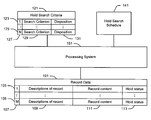
- FIG. 1 is a block diagram of a record management system with hold search criteria.
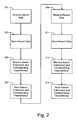
- FIG. 2 is a flow diagram of a record management method that receives and stores record data and hold search criteria.
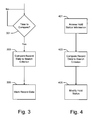
- FIG. 3 is a flow diagram of a record management method that applies hold search criteria in accordance with a pre-determined schedule.
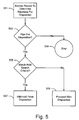
- FIG. 4 is a flow diagram of a record management system that applies hold search criteria when the hold status of a record is checked.
- FIG. 5 is a flow diagram of a record management system that applies hold search criteria when the disposition of a record is determined.
- FIG. 1 is a block diagram of a record management system with hold search criteria.
- record data 101 may include a plurality of records, such as records 103 and 105 .
- Each record may include a variety of fields, such as record id fields 107 , descriptions of record fields 109 , record content fields 111 , and hold status fields 113 .
- the record id fields 107 may each contain any type of information that identifies the record, such as a unique identifier, such as a unique number. Record ids are not necessary.
- the descriptions of record fields 109 may each be one or several separate fields that provide information about the record. They may include a textual description of the record (e.g., letter), the date of the record, the author of the record, recipients of the record, and/or a broad variety of other types of information. In general, the descriptions of record fields 109 may each describe the record and are commonly referred to as metadata.
- the record content fields 111 may each include the entire content of the record and/or a pointer to another file or set of files that contain that content.
- the content may be in text format, image format, and/or in any other format.
- the record content fields may also point to physical records, such as records that may be physically stored in boxes, file cabinets and/or folders.
- the hold status fields 113 may each contain information indicating whether the record should be withheld from a particular disposition.
- each record might be potentially subject to several dispositions, such as destruction, transfer, review and/or archiving.
- the hold status fields 113 may each indicate, not only whether a disposition of a particular record is on hold, but the identification of the particular disposition that is on hold.
- the hold status of a record may be tracked in connection with several types of dispositions by using a separate hold status tracking table (not shown).
- the records in the record data 101 may have a different number of fields than what has now been discussed, such as a smaller number of fields or a larger number of fields.
- some systems may not include the record content fields 111 .
- Other systems may not include the descriptions of record fields 109 .
- Other systems may not include the hold status fields 113 .
- Other systems may include additional fields.
- the record management system shown in FIG. 1 may include hold search criteria 121 .
- the hold search criteria 121 may include several records, such as records 123 and 125 .
- Each record may include record id fields 127 , search criterion fields 129 and disposition fields 131 .
- Record id fields 127 may each contain any type of information that identifies the record, such as a unique identifier, such as a unique number. Record ids are not necessary.
- Search criterion fields 129 may each include user-entered search criterion for locating records that should be withheld from a particular disposition.
- the search criterion fields 129 may each be in any format that is suitable for the record management system. For example, each may target the information contained within one or more of the descriptions of record fields 109 and/or the textual or image information in the record content fields 111 or the files to which the record content fields 111 point.
- the search criterion fields 129 may be in any format. They may include Boolean operators and may invoke fuzzy and/or other types of searching logic.
- the disposition fields 131 may each indicate the particular disposition from which each record matching its corresponding search criterion should be withheld.
- record 123 might include a search criterion that targets all e-mails from John Smith that are older than six years, while its corresponding disposition field might indicate that all matching records are to be withheld from the destruction disposition.
- a hold search schedule 141 may be included and may include information indicative of a pre-determined schedule that should be followed by the record management system for locating and marking records in the record data 101 that should be withheld from one or more dispositions.
- the schedule may be of any type. For example, the schedule may, specify a particular time on a particular day. The schedule may be keyed to a particular event. The schedule may call for a one-time search, several searches at different times, or an infinite series of searches.
- the hold search schedule 141 may be a periodic schedule, requiring hold searches to be performed periodically, such as every day, week or month.
- a processing system 151 may be configured to deliver, receive and evaluate the record data 101 , the hold search criteria 121 , and the hold search schedule 141 , as well as to interface with other components and information that may be in the system, such as input/output devices.
- the processing system 151 may be configured to cause data and other information to be managed within the record management system in accordance with the methods described herein.
- FIG. 2 is a flow diagram of a record management method that receives and stores record data and hold search criteria.
- a Receive Record Data step 201 signifies the receipt of record data.
- the record data may include one or more data records, such as the records 103 and 105 that are shown in FIG. 1 .
- Each data record may contain one or more fields of information, such as the fields of information described in connection with the record data 101 in FIG. 1 .
- the data for each record may include descriptions of record fields 109 and a record content field 111 .
- the record data may not include the descriptions of record fields 109 , while in other systems it may not include the record content fields 111 .
- the record content fields 111 may merely point to the record content that is received (e.g., text or image information), rather than to contain that content.
- the received record data may include the hold status fields 113 shown in FIG. 1 .
- the hold status fields may be initialized to initially indicate that there is no hold on any disposition, or it may initially indicate one or more holds on one or more dispositions.
- the record data that is received may then be stored, as indicated by a Store Record Data step 203 .
- One or more hold search criterion and associated dispositions may be received next, as indicated by a Receive Hold Search Criterion(s) and Corresponding Disposition(s) step 205 .
- This may consist of the entry by the user through an appropriate user interface of one or more sets of search criterion and corresponding dispositions in one of the forms discussed above in connection with FIG. 1 .
- a disposition corresponding to the search criterion may not be part of the received information.
- the entered hold search criterion and associated dispositions may then be stored, as reflected by a Store Hold Search Criterion(s) and Corresponding Dispositions(s) step 207 .
- Each hold search criterion and its corresponding disposition may be stored in separate, but related fields in a record, such as the records 123 and 125 that were discussed above in connection with FIG. 1 .
- a disposition corresponding to the search criterion may not be part of the stored information.
- Steps 209 and 211 may be of the same type as the steps 201 and 203 that were discussed above, respectively. One difference may be that they take place after the Receive and Store Search Criterion(s) and Corresponding Disposition(s) steps 205 and 207 .
- Steps 213 and 215 may be the same type as the steps 205 and 207 that were discussed above, respectively. One difference may be that they take place at a different time as the steps 205 and 207 , such as on a different day. They may or may not also be separated by the receipt and storage of record data, as reflected by steps 209 and 211 .
- the same or different search criterion may be entered for different corresponding dispositions, while the same or different corresponding dispositions may be entered for different search criterion.
- record data, search criterion and dispositions have each thus far been described as being received and stored on two occasions, any one of these or all of these may be received and stored on only a single occasion, on more than two occasions, and/or in any other sequence.
- record data might only be received and stored before the hold search criterion is received and stored, or only afterwards.
- FIG. 3 is a flow diagram of a record management method that applies hold search criteria in accordance with a pre-determined schedule.
- the processing system 151 in FIG. 1 may check the hold search schedule 141 in FIG. 1 to determine whether a pre-determined time has arrived for a search of the record data 101 .
- Such a search may be performed in accordance with this schedule to determine whether the record data contains any records that match any of the search criterion, such as any of the search criterion fields 129 shown in FIG. 1 .
- the schedule may consist of a single time, multiple times, times keyed to events, a periodic schedule, or any other type of schedule.
- the record data 101 may then be compared to the search criterion fields 129 , as reflected by a Compare Record Data to Search Criteria step 303 .
- the activity that may occur at this point may depend upon the format of the search criterion fields 129 and the record data 101 .
- the search criterion fields 129 may be compared against the metadata for each record, such as the descriptions of record fields 109 . All or portions of the search criterion fields 129 may in addition or instead be compared to the record content fields 111 or, if the record content fields 111 merely point to the record content, to the record content to which each field points.
- Each record in the record data 101 including the records 103 and 105 , may be compared to each of the hold search criterion 129 . Any algorithm and associated comparison technology may be used to determine when there are matches, including fuzzy logic.
- Records that match a particular search criterion may then be marked as matching records by marking the record data, such as by modifying the corresponding hold status field 113 of the record. For example, records that match a search criterion that identifies records that should be withheld from destruction may have their hold status fields 113 modified to indicate that these records should be withheld from destruction. This marking step is indicated by a mark record data step 305 .
- the comparison and marking process may continue until each record in the Record Data database 101 is compared against each of the search criterion in the hold search criteria 121 and until all of the hold status fields associated with all of the matching records are properly updated.
- the method may also include the application of hold search criteria at such time as a user makes a request for such an application.
- FIG. 4 is a flow diagram of a record management method that applies hold search criteria when the hold status of a record is checked.
- the method illustrated in FIG. 4 may not be initiated in accordance with any pre-determined schedule. Rather, and as indicated by an Access Hold Status Information step 401 , the method may be initiated at the time that the hold status field 113 of a particular record is accessed.
- the hold status field of a particular record may be accessed contemporaneously with an effort to determine whether a particular record is eligible for a particular disposition.
- the hold status field may instead or in addition be accessed when viewing other information about a record, such as information in its descriptions of record fields 109 .
- the hold status field of a particular record may be accessed instead or in addition at other times or during other occasions.
- access of the hold status field of a particular record may cause the record data of the particular record to be compared against each of the hold search criterion 129 , as reflected by a Compare Record Data to Search Criterion step 403 .
- Any matching technique or algorithm may be used, including fuzzy logic. If a match is found, the hold status information may be modified in accordance with the disposition indicated in the matching search criterion record to reflect that this particular record should be withheld from the disposition associated with the matching search criterion. This is reflected by a Modify Hold Status step 405 .
- a check of all records may be made for the purpose of determining which may be ripe for a particular disposition. This check may result in a subset of the records initially being identified as ripe for this disposition. Thereafter, the hold status criteria may be checked and compared against the subset of records to determine which records in this subset are, in fact, not ripe for the disposition. The records that are indicated by the hold status criteria not to be ripe for the disposition may then be removed from the identified subset.
- the method shown in FIG. 4 may significantly reduce the load on the processing system 151 by limiting the Compare Record Data to Search Criterion step 403 to only those records whose hold status is accessed.
- the access step 401 , the compare step 403 and the modify step 405 may all be performed within the same operating session, that is, contemporaneously with the checking of the hold status of the record.
- FIG. 5 is a flow diagram of a record management system that applies hold search criteria when the disposition of a record is determined.
- a record in the record data 101 may be accessed to determine whether it appears to be ripe for a particular disposition, as reflected by an Access Record to Determine Ripeness For Disposition step 501 . This may be done by comparing one or more of the descriptions of record fields 109 and/or all or portions of the record content fields 111 to criteria that identify records ripe for the disposition.
- the process may stop, as reflected by a Stop step 504 . If the record does appear to be ripe for the disposition, as reflected in the Yes pathway for a Ripe for Disposition decision step 503 , a check may then be made to determine whether the record matches the hold search criteria for that particular disposition, as reflected by a Match Hold Search Criteria decision step 505 . If it does, the record may be withheld from the disposition, as reflected by a Withhold From Disposition decision step 507 . If it does not, the method may proceed with the disposition, as reflected by a Proceed With Disposition Step 509 .
- the method illustrated in FIG. 5 may be repeated for one or more other records in the record data 101 and, if desired, all of the records in the record data 101 .
- the method of FIG. 5 may save processing time by only causing the comparison to the hold search criteria to be made for records that appear to be ripe for a particular disposition.
- the hold search criteria 121 , the hold search schedule 141 , and the record data 101 may be stored in one or more databases.
- the databases may be of any format, such as flat files, relational, hierarchical, or any combination of these.
- the databases may be stored at a single location or may be distributed over several locations.
- the databases may be stored in any type of storage media, including RAM, ROM, hard drives, CDs, DVDs, and tapes.
- the methods of placing holds on the disposition of records that have been discussed and illustrated are dynamic. They may not require specific direction by a user of the system on the occasions on which the holds are placed. They also may be placed on records that are entered into the record management system after the hold search criteria are specified.
Abstract
Description
Claims (31)
Priority Applications (1)
| Application Number | Priority Date | Filing Date | Title |
|---|---|---|---|
| US11/317,712 US7856436B2 (en) | 2005-12-23 | 2005-12-23 | Dynamic holds of record dispositions during record management |
Applications Claiming Priority (1)
| Application Number | Priority Date | Filing Date | Title |
|---|---|---|---|
| US11/317,712 US7856436B2 (en) | 2005-12-23 | 2005-12-23 | Dynamic holds of record dispositions during record management |
Publications (2)
| Publication Number | Publication Date |
|---|---|
| US20070150445A1 US20070150445A1 (en) | 2007-06-28 |
| US7856436B2 true US7856436B2 (en) | 2010-12-21 |
Family
ID=38195155
Family Applications (1)
| Application Number | Title | Priority Date | Filing Date |
|---|---|---|---|
| US11/317,712 Expired - Fee Related US7856436B2 (en) | 2005-12-23 | 2005-12-23 | Dynamic holds of record dispositions during record management |
Country Status (1)
| Country | Link |
|---|---|
| US (1) | US7856436B2 (en) |
Cited By (1)
| Publication number | Priority date | Publication date | Assignee | Title |
|---|---|---|---|---|
| US10496628B2 (en) | 2013-02-20 | 2019-12-03 | Oracle International Corporation | Application of retention rules to records |
Families Citing this family (15)
| Publication number | Priority date | Publication date | Assignee | Title |
|---|---|---|---|---|
| US7213022B2 (en) * | 2004-04-29 | 2007-05-01 | Filenet Corporation | Enterprise content management network-attached system |
| US20060085374A1 (en) * | 2004-10-15 | 2006-04-20 | Filenet Corporation | Automatic records management based on business process management |
| US20060085245A1 (en) * | 2004-10-19 | 2006-04-20 | Filenet Corporation | Team collaboration system with business process management and records management |
| US7970743B1 (en) | 2005-09-15 | 2011-06-28 | Emc Corporation | Retention and disposition of stored content associated with multiple stored objects |
| US10402756B2 (en) | 2005-10-19 | 2019-09-03 | International Business Machines Corporation | Capturing the result of an approval process/workflow and declaring it a record |
| US20070088736A1 (en) * | 2005-10-19 | 2007-04-19 | Filenet Corporation | Record authentication and approval transcript |
| US7594082B1 (en) * | 2006-03-07 | 2009-09-22 | Emc Corporation | Resolving retention policy conflicts |
| US7818300B1 (en) * | 2006-03-07 | 2010-10-19 | Emc Corporation | Consistent retention and disposition of managed content and associated metadata |
| US20070239715A1 (en) * | 2006-04-11 | 2007-10-11 | Filenet Corporation | Managing content objects having multiple applicable retention periods |
| US20080086463A1 (en) * | 2006-10-10 | 2008-04-10 | Filenet Corporation | Leveraging related content objects in a records management system |
| US8037029B2 (en) | 2006-10-10 | 2011-10-11 | International Business Machines Corporation | Automated records management with hold notification and automatic receipts |
| US10606901B1 (en) * | 2007-09-28 | 2020-03-31 | Emc Corporation | Data disposition services orchestrated in an information management infrastructure |
| US8554772B2 (en) * | 2010-03-05 | 2013-10-08 | International Business Machines Corporation | Deferring classification of a declared record |
| US9600183B2 (en) * | 2014-09-22 | 2017-03-21 | Intel Corporation | Apparatus, system and method for determining comparison information based on memory data |
| AU2015384779B2 (en) * | 2015-03-03 | 2019-05-02 | Axon Enterprise, Inc. | Automated integration of video evidence with data records |
Citations (75)
| Publication number | Priority date | Publication date | Assignee | Title |
|---|---|---|---|---|
| US4608679A (en) | 1984-07-11 | 1986-08-26 | Filenet Corporation | Optical storage and retrieval device |
| US4675856A (en) | 1984-07-11 | 1987-06-23 | Filenet Corporation | Optical storage and retrieval device |
| US4685095A (en) | 1984-07-11 | 1987-08-04 | Filenet Corporation | Optical storage and retrieval device |
| US5144556A (en) | 1990-06-07 | 1992-09-01 | International Business Machines Corporation | Method and system for retaining access to deleted documents in a data processing system |
| US5710921A (en) | 1994-05-26 | 1998-01-20 | Fuji Xerox Co., Ltd. | Information processing system and work flow management method therefor |
| USRE35861E (en) | 1986-03-12 | 1998-07-28 | Advanced Software, Inc. | Apparatus and method for comparing data groups |
| US5813009A (en) | 1995-07-28 | 1998-09-22 | Univirtual Corp. | Computer based records management system method |
| WO1999005632A1 (en) | 1997-07-23 | 1999-02-04 | Filenet Corporation | System for enterprise-wide work flow automation |
| US5940804A (en) | 1996-12-18 | 1999-08-17 | Turley; William N. | Computer executable workflow resource management system |
| US6061679A (en) | 1997-11-25 | 2000-05-09 | International Business Machines Corporation | Creating and searching a data structure ordered by ranges of key masks associated with the data structure |
| US6141754A (en) | 1997-11-28 | 2000-10-31 | International Business Machines Corporation | Integrated method and system for controlling information access and distribution |
| US6253369B1 (en) | 1994-11-30 | 2001-06-26 | International Business Machines Corp. | Workflow object compiler with user interrogated information incorporated into skeleton of source code for generating executable workflow objects |
| US20010013004A1 (en) | 1998-11-03 | 2001-08-09 | Jordan Haris | Brand resource management system |
| US6314437B1 (en) | 1997-09-30 | 2001-11-06 | Infraworks Corporation | Method and apparatus for real-time secure file deletion |
| US20010039542A1 (en) * | 2000-03-31 | 2001-11-08 | Atsushi Okada | Information processing apparatus and method, and storage medium |
| US6347299B1 (en) * | 1997-07-31 | 2002-02-12 | Ncr Corporation | System for navigation and editing of electronic records through speech and audio |
| US20020032689A1 (en) | 1999-12-15 | 2002-03-14 | Abbott Kenneth H. | Storing and recalling information to augment human memories |
| US6360234B2 (en) | 1997-08-14 | 2002-03-19 | Virage, Inc. | Video cataloger system with synchronized encoders |
| US20020055888A1 (en) | 1999-05-03 | 2002-05-09 | Sicommnet, Inc. | Internet-based commerce system |
| US20020137493A1 (en) | 2001-03-26 | 2002-09-26 | International Business Machines Corporation | System and method for improved mobile phone functionality |
| US6505219B1 (en) | 1999-01-27 | 2003-01-07 | Xerox Corporation | Process management system wherein process descriptions provide indices to document histories |
| US20030023736A1 (en) * | 2001-07-12 | 2003-01-30 | Kurt Abkemeier | Method and system for filtering messages |
| US20030046369A1 (en) | 2000-10-26 | 2003-03-06 | Sim Siew Yong | Method and apparatus for initializing a new node in a network |
| US6553365B1 (en) | 2000-05-02 | 2003-04-22 | Documentum Records Management Inc. | Computer readable electronic records automated classification system |
| US20030105738A1 (en) | 2001-09-27 | 2003-06-05 | Kabushiki Kaisha Onda Techno | Method and system for managing cases |
| US6581069B1 (en) * | 2000-06-01 | 2003-06-17 | Ge Medical Technology Services, Inc. | Automated activation and deactivation of operational data logging on medical imaging device |
| US20030135559A1 (en) | 2002-01-16 | 2003-07-17 | Xerox Corporation | Method and system for flexible workflow management |
| US20030182332A1 (en) | 2002-03-21 | 2003-09-25 | International Business Machines Corporation | System and method for designating and deleting expired files |
| US20030182380A1 (en) | 2000-12-01 | 2003-09-25 | Toshiyasu Yabe | Mail system, server and mail transmitting/receiving device |
| US20030187878A1 (en) * | 1999-11-16 | 2003-10-02 | Aircraft Technical Publishers | Computer aided maintenance and repair information system for equipment subject to regulatory compliance |
| US20030236788A1 (en) | 2002-06-03 | 2003-12-25 | Nick Kanellos | Life-cycle management engine |
| US6690774B1 (en) | 2001-09-17 | 2004-02-10 | Bellsouth Intellectual Property Corporation | Voice mail witness |
| US20040039646A1 (en) | 2002-08-22 | 2004-02-26 | Reynolds And Reynolds Holdings, Inc. | Automobile inventory engine |
| US20040054685A1 (en) * | 2002-07-01 | 2004-03-18 | Walgreen Co., Deerfield, Il | Pharmacy automated accounts receivable system and methods |
| US20040117358A1 (en) | 2002-03-16 | 2004-06-17 | Von Kaenel Tim A. | Method, system, and program for an improved enterprise spatial system |
| US20040128182A1 (en) | 2002-12-31 | 2004-07-01 | Pepoon Francesca Miller | Methods and structure for insurance industry workflow processing |
| US20040168058A1 (en) | 2003-02-26 | 2004-08-26 | Permabit, Inc., A Massachusetts Corporation | History preservation in a computer storage system |
| US20040187140A1 (en) | 2003-03-21 | 2004-09-23 | Werner Aigner | Application framework |
| US20040193740A1 (en) | 2000-02-14 | 2004-09-30 | Nice Systems Ltd. | Content-based storage management |
| US20040230941A1 (en) | 2003-01-17 | 2004-11-18 | Marin Mike A. | Component integrator |
| US20040249871A1 (en) | 2003-05-22 | 2004-12-09 | Mehdi Bazoon | System and method for automatically removing documents from a knowledge repository |
| US20040260769A1 (en) * | 2003-06-18 | 2004-12-23 | Junji Yamamoto | Method and apparatus for distributed cache control and network system |
| US20050027696A1 (en) | 2003-07-29 | 2005-02-03 | Kishore Swaminathan | Rapid knowledge transfer among workers |
| US20050044197A1 (en) | 2003-08-18 | 2005-02-24 | Sun Microsystems.Inc. | Structured methodology and design patterns for web services |
| US20050055519A1 (en) | 2003-09-08 | 2005-03-10 | Stuart Alan L. | Method, system, and program for implementing retention policies to archive records |
| US20050076049A1 (en) * | 2003-10-02 | 2005-04-07 | Marwan Qubti | Business workflow database and user system |
| US20050080771A1 (en) * | 2003-10-14 | 2005-04-14 | Fish Edmund J. | Search enhancement system with information from a selected source |
| US20050149365A1 (en) * | 2004-01-02 | 2005-07-07 | Johnson Timothy J. | System and method for automatic conditioning of clinically related billing |
| US20050154723A1 (en) * | 2003-12-29 | 2005-07-14 | Ping Liang | Advanced search, file system, and intelligent assistant agent |
| US20050216448A1 (en) * | 2000-03-30 | 2005-09-29 | Iqbal Talib | Methods and systems for searching an information directory |
| US20050222993A1 (en) * | 2001-03-07 | 2005-10-06 | Beacon Information Technology Inc. | Data search system and method for displaying data search results |
| US20050222984A1 (en) * | 2004-03-31 | 2005-10-06 | Guenter Radestock | Fast search with very large result set |
| US20050246276A1 (en) * | 2001-08-24 | 2005-11-03 | Via Technologies, Inc. | Method for disbursing account payable |
| US20060005157A1 (en) | 2004-06-30 | 2006-01-05 | Vivek Saxena | Engineering standard work framework method and system |
| US20060004689A1 (en) | 2004-06-30 | 2006-01-05 | Venkat Chandrasekaran | Systems and methods for managing content on a content addressable storage system |
| US20060047650A1 (en) | 2004-08-24 | 2006-03-02 | Freeman Thomas M | Trainable record searcher |
| US20060085245A1 (en) | 2004-10-19 | 2006-04-20 | Filenet Corporation | Team collaboration system with business process management and records management |
| US20060085374A1 (en) | 2004-10-15 | 2006-04-20 | Filenet Corporation | Automatic records management based on business process management |
| US20060149735A1 (en) | 2004-04-29 | 2006-07-06 | Filenet Corporation | Automated records management with enforcement of a mandatory minimum retention record |
| US7080066B1 (en) | 2001-08-09 | 2006-07-18 | Ncr Corporation | Systems and methods for refining a decision-making process via executable sequences |
| US20060179061A1 (en) | 2005-02-07 | 2006-08-10 | D Souza Roy P | Multi-dimensional surrogates for data management |
| US20060230044A1 (en) | 2005-04-06 | 2006-10-12 | Tom Utiger | Records management federation |
| US20060282292A1 (en) | 2005-05-10 | 2006-12-14 | Healthmark Multimedia, Llc | Healthcare informed consent system and methods |
| US7159178B2 (en) | 2001-02-20 | 2007-01-02 | Communispace Corp. | System for supporting a virtual community |
| US20070088715A1 (en) | 2005-10-05 | 2007-04-19 | Richard Slackman | Statistical methods and apparatus for records management |
| US20070088585A1 (en) | 2005-10-19 | 2007-04-19 | Filenet Corporation | Capturing the result of an approval process/workflow and declaring it a record |
| US20070088736A1 (en) | 2005-10-19 | 2007-04-19 | Filenet Corporation | Record authentication and approval transcript |
| US7237184B2 (en) | 2003-12-18 | 2007-06-26 | Microsoft Corporation | Data property promotion system and method |
| US20070168315A1 (en) | 2006-01-03 | 2007-07-19 | Eastman Kodak Company | System and method for generating a work of communication with supplemental context |
| US20070192423A1 (en) | 2006-02-04 | 2007-08-16 | Karlson Bruce L | Document reminder system |
| US20070239715A1 (en) | 2006-04-11 | 2007-10-11 | Filenet Corporation | Managing content objects having multiple applicable retention periods |
| US20070271308A1 (en) | 2006-05-22 | 2007-11-22 | Iron Mountain Incorporated | Methods and apparatus for managing retention of information assets |
| US20070271517A1 (en) | 2006-05-19 | 2007-11-22 | Navigant Consulting, Inc. | System and method for providing a web portal for managing litigation activities |
| US7401057B2 (en) | 2002-12-10 | 2008-07-15 | Asset Trust, Inc. | Entity centric computer system |
| US7428724B2 (en) | 2004-06-30 | 2008-09-23 | United Technologies Corporation | Interactive interface for engineering standard work |
-
2005
- 2005-12-23 US US11/317,712 patent/US7856436B2/en not_active Expired - Fee Related
Patent Citations (82)
| Publication number | Priority date | Publication date | Assignee | Title |
|---|---|---|---|---|
| US4675856A (en) | 1984-07-11 | 1987-06-23 | Filenet Corporation | Optical storage and retrieval device |
| US4685095A (en) | 1984-07-11 | 1987-08-04 | Filenet Corporation | Optical storage and retrieval device |
| US4608679A (en) | 1984-07-11 | 1986-08-26 | Filenet Corporation | Optical storage and retrieval device |
| USRE35861E (en) | 1986-03-12 | 1998-07-28 | Advanced Software, Inc. | Apparatus and method for comparing data groups |
| US5144556A (en) | 1990-06-07 | 1992-09-01 | International Business Machines Corporation | Method and system for retaining access to deleted documents in a data processing system |
| US5710921A (en) | 1994-05-26 | 1998-01-20 | Fuji Xerox Co., Ltd. | Information processing system and work flow management method therefor |
| US6253369B1 (en) | 1994-11-30 | 2001-06-26 | International Business Machines Corp. | Workflow object compiler with user interrogated information incorporated into skeleton of source code for generating executable workflow objects |
| US5813009A (en) | 1995-07-28 | 1998-09-22 | Univirtual Corp. | Computer based records management system method |
| US5940804A (en) | 1996-12-18 | 1999-08-17 | Turley; William N. | Computer executable workflow resource management system |
| US7010602B2 (en) | 1997-07-23 | 2006-03-07 | Filenet Corporation | Multilevel queuing system for distributing tasks in an enterprise-wide work flow automation |
| US20020059466A1 (en) | 1997-07-23 | 2002-05-16 | Filenet Corporation | System for enterprise-wide work flow automation |
| WO1999005632A1 (en) | 1997-07-23 | 1999-02-04 | Filenet Corporation | System for enterprise-wide work flow automation |
| US6338074B1 (en) | 1997-07-23 | 2002-01-08 | Filenet Corporation | System for enterprise-wide work flow automation |
| US20030093458A1 (en) | 1997-07-23 | 2003-05-15 | Poindexter Luen Kimball | System for enterprise-wide work flow automation |
| US6347299B1 (en) * | 1997-07-31 | 2002-02-12 | Ncr Corporation | System for navigation and editing of electronic records through speech and audio |
| US6360234B2 (en) | 1997-08-14 | 2002-03-19 | Virage, Inc. | Video cataloger system with synchronized encoders |
| US6314437B1 (en) | 1997-09-30 | 2001-11-06 | Infraworks Corporation | Method and apparatus for real-time secure file deletion |
| US6061679A (en) | 1997-11-25 | 2000-05-09 | International Business Machines Corporation | Creating and searching a data structure ordered by ranges of key masks associated with the data structure |
| US6141754A (en) | 1997-11-28 | 2000-10-31 | International Business Machines Corporation | Integrated method and system for controlling information access and distribution |
| US20010013004A1 (en) | 1998-11-03 | 2001-08-09 | Jordan Haris | Brand resource management system |
| US6505219B1 (en) | 1999-01-27 | 2003-01-07 | Xerox Corporation | Process management system wherein process descriptions provide indices to document histories |
| US20020055888A1 (en) | 1999-05-03 | 2002-05-09 | Sicommnet, Inc. | Internet-based commerce system |
| US20030187878A1 (en) * | 1999-11-16 | 2003-10-02 | Aircraft Technical Publishers | Computer aided maintenance and repair information system for equipment subject to regulatory compliance |
| US20020032689A1 (en) | 1999-12-15 | 2002-03-14 | Abbott Kenneth H. | Storing and recalling information to augment human memories |
| US20040193740A1 (en) | 2000-02-14 | 2004-09-30 | Nice Systems Ltd. | Content-based storage management |
| US20050216448A1 (en) * | 2000-03-30 | 2005-09-29 | Iqbal Talib | Methods and systems for searching an information directory |
| US20010039542A1 (en) * | 2000-03-31 | 2001-11-08 | Atsushi Okada | Information processing apparatus and method, and storage medium |
| US6553365B1 (en) | 2000-05-02 | 2003-04-22 | Documentum Records Management Inc. | Computer readable electronic records automated classification system |
| US6581069B1 (en) * | 2000-06-01 | 2003-06-17 | Ge Medical Technology Services, Inc. | Automated activation and deactivation of operational data logging on medical imaging device |
| US20030046369A1 (en) | 2000-10-26 | 2003-03-06 | Sim Siew Yong | Method and apparatus for initializing a new node in a network |
| US20030182380A1 (en) | 2000-12-01 | 2003-09-25 | Toshiyasu Yabe | Mail system, server and mail transmitting/receiving device |
| US7159178B2 (en) | 2001-02-20 | 2007-01-02 | Communispace Corp. | System for supporting a virtual community |
| US20050222993A1 (en) * | 2001-03-07 | 2005-10-06 | Beacon Information Technology Inc. | Data search system and method for displaying data search results |
| US20020137493A1 (en) | 2001-03-26 | 2002-09-26 | International Business Machines Corporation | System and method for improved mobile phone functionality |
| US20030023736A1 (en) * | 2001-07-12 | 2003-01-30 | Kurt Abkemeier | Method and system for filtering messages |
| US7080066B1 (en) | 2001-08-09 | 2006-07-18 | Ncr Corporation | Systems and methods for refining a decision-making process via executable sequences |
| US20050246276A1 (en) * | 2001-08-24 | 2005-11-03 | Via Technologies, Inc. | Method for disbursing account payable |
| US6690774B1 (en) | 2001-09-17 | 2004-02-10 | Bellsouth Intellectual Property Corporation | Voice mail witness |
| US20030105738A1 (en) | 2001-09-27 | 2003-06-05 | Kabushiki Kaisha Onda Techno | Method and system for managing cases |
| US20030135559A1 (en) | 2002-01-16 | 2003-07-17 | Xerox Corporation | Method and system for flexible workflow management |
| US20040117358A1 (en) | 2002-03-16 | 2004-06-17 | Von Kaenel Tim A. | Method, system, and program for an improved enterprise spatial system |
| US20030182332A1 (en) | 2002-03-21 | 2003-09-25 | International Business Machines Corporation | System and method for designating and deleting expired files |
| US20030236788A1 (en) | 2002-06-03 | 2003-12-25 | Nick Kanellos | Life-cycle management engine |
| US20040054685A1 (en) * | 2002-07-01 | 2004-03-18 | Walgreen Co., Deerfield, Il | Pharmacy automated accounts receivable system and methods |
| US20040039646A1 (en) | 2002-08-22 | 2004-02-26 | Reynolds And Reynolds Holdings, Inc. | Automobile inventory engine |
| US7401057B2 (en) | 2002-12-10 | 2008-07-15 | Asset Trust, Inc. | Entity centric computer system |
| US20040128182A1 (en) | 2002-12-31 | 2004-07-01 | Pepoon Francesca Miller | Methods and structure for insurance industry workflow processing |
| US20040230941A1 (en) | 2003-01-17 | 2004-11-18 | Marin Mike A. | Component integrator |
| US20040168058A1 (en) | 2003-02-26 | 2004-08-26 | Permabit, Inc., A Massachusetts Corporation | History preservation in a computer storage system |
| US20040187140A1 (en) | 2003-03-21 | 2004-09-23 | Werner Aigner | Application framework |
| US20040249871A1 (en) | 2003-05-22 | 2004-12-09 | Mehdi Bazoon | System and method for automatically removing documents from a knowledge repository |
| US20040260769A1 (en) * | 2003-06-18 | 2004-12-23 | Junji Yamamoto | Method and apparatus for distributed cache control and network system |
| US7321886B2 (en) | 2003-07-29 | 2008-01-22 | Accenture Global Services Gmbh | Rapid knowledge transfer among workers |
| US20050027696A1 (en) | 2003-07-29 | 2005-02-03 | Kishore Swaminathan | Rapid knowledge transfer among workers |
| US20050044197A1 (en) | 2003-08-18 | 2005-02-24 | Sun Microsystems.Inc. | Structured methodology and design patterns for web services |
| US20050055519A1 (en) | 2003-09-08 | 2005-03-10 | Stuart Alan L. | Method, system, and program for implementing retention policies to archive records |
| US20050076049A1 (en) * | 2003-10-02 | 2005-04-07 | Marwan Qubti | Business workflow database and user system |
| US20050080771A1 (en) * | 2003-10-14 | 2005-04-14 | Fish Edmund J. | Search enhancement system with information from a selected source |
| US7237184B2 (en) | 2003-12-18 | 2007-06-26 | Microsoft Corporation | Data property promotion system and method |
| US20050154723A1 (en) * | 2003-12-29 | 2005-07-14 | Ping Liang | Advanced search, file system, and intelligent assistant agent |
| US20050149365A1 (en) * | 2004-01-02 | 2005-07-07 | Johnson Timothy J. | System and method for automatic conditioning of clinically related billing |
| US20050222984A1 (en) * | 2004-03-31 | 2005-10-06 | Guenter Radestock | Fast search with very large result set |
| US20060149735A1 (en) | 2004-04-29 | 2006-07-06 | Filenet Corporation | Automated records management with enforcement of a mandatory minimum retention record |
| US20070260619A1 (en) | 2004-04-29 | 2007-11-08 | Filenet Corporation | Enterprise content management network-attached system |
| US7213022B2 (en) | 2004-04-29 | 2007-05-01 | Filenet Corporation | Enterprise content management network-attached system |
| US7428724B2 (en) | 2004-06-30 | 2008-09-23 | United Technologies Corporation | Interactive interface for engineering standard work |
| US20060004689A1 (en) | 2004-06-30 | 2006-01-05 | Venkat Chandrasekaran | Systems and methods for managing content on a content addressable storage system |
| US20060005157A1 (en) | 2004-06-30 | 2006-01-05 | Vivek Saxena | Engineering standard work framework method and system |
| US20060047650A1 (en) | 2004-08-24 | 2006-03-02 | Freeman Thomas M | Trainable record searcher |
| US20060085374A1 (en) | 2004-10-15 | 2006-04-20 | Filenet Corporation | Automatic records management based on business process management |
| US20060085245A1 (en) | 2004-10-19 | 2006-04-20 | Filenet Corporation | Team collaboration system with business process management and records management |
| US20060179061A1 (en) | 2005-02-07 | 2006-08-10 | D Souza Roy P | Multi-dimensional surrogates for data management |
| US20060230044A1 (en) | 2005-04-06 | 2006-10-12 | Tom Utiger | Records management federation |
| US20060282292A1 (en) | 2005-05-10 | 2006-12-14 | Healthmark Multimedia, Llc | Healthcare informed consent system and methods |
| US20070088715A1 (en) | 2005-10-05 | 2007-04-19 | Richard Slackman | Statistical methods and apparatus for records management |
| US20070088736A1 (en) | 2005-10-19 | 2007-04-19 | Filenet Corporation | Record authentication and approval transcript |
| US20070088585A1 (en) | 2005-10-19 | 2007-04-19 | Filenet Corporation | Capturing the result of an approval process/workflow and declaring it a record |
| US20070168315A1 (en) | 2006-01-03 | 2007-07-19 | Eastman Kodak Company | System and method for generating a work of communication with supplemental context |
| US20070192423A1 (en) | 2006-02-04 | 2007-08-16 | Karlson Bruce L | Document reminder system |
| US20070239715A1 (en) | 2006-04-11 | 2007-10-11 | Filenet Corporation | Managing content objects having multiple applicable retention periods |
| US20070271517A1 (en) | 2006-05-19 | 2007-11-22 | Navigant Consulting, Inc. | System and method for providing a web portal for managing litigation activities |
| US20070271308A1 (en) | 2006-05-22 | 2007-11-22 | Iron Mountain Incorporated | Methods and apparatus for managing retention of information assets |
Non-Patent Citations (31)
| Title |
|---|
| AIIM-The ECM Association, "FilNet Minimizes Burden of Records Management Decisions with FileNet Records Manager", [online], 2005. [Retrieved on Jan. 2, 2008]. Retrieved from the Internet at , 5 pp. |
| AIIM—The ECM Association, "FilNet Minimizes Burden of Records Management Decisions with FileNet Records Manager", [online], 2005. [Retrieved on Jan. 2, 2008]. Retrieved from the Internet at <URL: http:www.aiim.org/article-docrep.asp?ID=28516>, 5 pp. |
| Compulink Management Center, Inc., "Laserfiche 7: Records Management Edition", revised Oct. 31, 2005, 7 pp. |
| Compulink Management Center, Inc., "LaserFiche Records Management Edition Training Guide", Aug. 31, 2004, 65 pp. |
| Compulink Management Center, Inc., "LaserFiche Workflow Suite Reviewer's Guide", Version 5, Jun. 22, 2001, 26 pp. |
| Compulink Management Center, Inc., "Requirements of a Records Management Application", [online], 2004, [retrieved on Jun. 13, 2007], retrieved from the Internet at <URL: http://web.archive.org/web/055608/http://www.laserfiche.com/resources/recordsmanagerguide/requirements.html>, 6 pp. |
| Eddin, A.S., "How to Write to Centera Storage Appliances", [online] Oct. 25, 2007, [retrieved on Aug. 15, 2008], retrieved from the Internet at , 26 pp. |
| Eddin, A.S., "How to Write to Centera Storage Appliances", [online] Oct. 25, 2007, [retrieved on Aug. 15, 2008], retrieved from the Internet at <URL: http://www.codeproject.com/KB/winsdk/CenteraStorageAppliances.aspx?display=Print>, 26 pp. |
| Elmasri, R. and S.B. Navathe, "Fundamentals of Database Systems", Sep. 30, 1999, 3rd Ed., Addison-Wesley, Reading, MA, 8 pp. |
| EMC Corp., "EMC Centera Family", [online] © 2008, [retrieved on Aug. 19, 2008], retrieved from the Internet at , 2 pp. |
| EMC Corp., "EMC Centera Family", [online] © 2008, [retrieved on Aug. 19, 2008], retrieved from the Internet at <URL: http://www.emc.com/products/family/emc-centera-family.htm>, 2 pp. |
| FileNet Corp., "Business Process Manager", © 2003, 6 pp. |
| FileNet Corp., "Content Manager", © 2003, 6 pp. |
| FileNet Corp., "FileNet Business Process Manager", Technical White Paper, Aug. 2003, 48 pp. |
| FileNet Corp., "FileNet Content Manager Architecture", An Architecture White Paper, Feb. 2003, 47 pp. |
| FileNet Corp., "FileNet P8 Workplace", © 2003, 4 pp. |
| FileNet, "FileNet Records Manager Business White Paper", [online], May 2004. Retrieved from the Internet at , 13 pp. |
| FileNet, "FileNet Records Manager Business White Paper", [online], May 2004. Retrieved from the Internet at <URL: http://www.documentaccess.net/download/rm—whitepaper.pdf>, 13 pp. |
| International Preliminary Report, Mar. 5, 2009, for International Application No. PCT/US2005/013588, 10 pp. |
| International Search Report and Written Opinion, May 21, 2008, for PCT/US05/13588, 14 pp. |
| NetApp, "NearStore on FAS", [online] © 2008, [retrieved on Aug. 19, 2008], retrieved from the Internet at , 1 pp. |
| NetApp, "NearStore on FAS", [online] © 2008, [retrieved on Aug. 19, 2008], retrieved from the Internet at <URL: http://www.netapp.com/us/products/storage-systems/nearstore-fas/>, 1 pp. |
| NetApp, "SnapLock Compliance and SnapLock Enterprise Software", [online] © 2008, [retrieved on Aug. 15, 2008], retrieved from the Internet at , 3 pp. |
| NetApp, "SnapLock Compliance and SnapLock Enterprise Software", [online] © 2008, [retrieved on Aug. 15, 2008], retrieved from the Internet at <URL: http://www.netapp.com/us/products/protection-software/snaplock.html>, 3 pp. |
| Notification Concerning Availability of the Publication of the International Application, Apr. 2, 2009, for International Application No. PCT/US2005/013588, 1 p. |
| Paul Dourish; Extending Document Management Systems with User-Specific Active Properties; 200;ACM; vol. 18, Issue 2; pp. 140-170. * |
| Shegda, K. "FileNet P8 Enterprise Content Management Solutions", Jun. 11, 2003 Product Report, Gartner, 13 pp. |
| Wikipedia, "Hierarchical Storage Management", [online], [retrieved on Feb. 7, 2008]. Retrieved from the Internet at , 3 pp. |
| Wikipedia, "Hierarchical Storage Management", [online], [retrieved on Feb. 7, 2008]. Retrieved from the Internet at <URL: http://en.wikipedia.org/wiki/Hierarchial—storage—management>, 3 pp. |
| Wikipedia, "Information Lifecycle Management", [online], [retrieved on Feb. 7, 2008]. Retrieved from the Internet at , 5 pp. |
| Wikipedia, "Information Lifecycle Management", [online], [retrieved on Feb. 7, 2008]. Retrieved from the Internet at <URL: http://en.wikipedia.org/wiki/Information—Lifecycle—Management>, 5 pp. |
Cited By (1)
| Publication number | Priority date | Publication date | Assignee | Title |
|---|---|---|---|---|
| US10496628B2 (en) | 2013-02-20 | 2019-12-03 | Oracle International Corporation | Application of retention rules to records |
Also Published As
| Publication number | Publication date |
|---|---|
| US20070150445A1 (en) | 2007-06-28 |
Similar Documents
| Publication | Publication Date | Title |
|---|---|---|
| US7856436B2 (en) | Dynamic holds of record dispositions during record management | |
| US20240111812A1 (en) | System and methods for metadata management in content addressable storage | |
| US7765215B2 (en) | System and method for providing a trustworthy inverted index to enable searching of records | |
| US7487178B2 (en) | System and method for providing an object to support data structures in worm storage | |
| US9158835B2 (en) | Method and system for offline indexing of content and classifying stored data | |
| US8046366B1 (en) | Orchestrating indexing | |
| US9641334B2 (en) | Method and apparatus for ascertaining data access permission of groups of users to groups of data elements | |
| US7698516B2 (en) | Methods and apparatus for managing deletion of data | |
| US6772177B2 (en) | System and method for parallelizing file archival and retrieval | |
| US8682859B2 (en) | Transferring records between tables using a change transaction log | |
| US10417265B2 (en) | High performance parallel indexing for forensics and electronic discovery | |
| US20070061359A1 (en) | Organizing managed content for efficient storage and management | |
| US20090182755A1 (en) | Method and system for discovery and modification of data cluster and synonyms | |
| US7054887B2 (en) | Method and system for object replication in a content management system | |
| US8280917B1 (en) | Batching content management operations to facilitate efficient database interactions | |
| US20090063410A1 (en) | Method for Performing Parallel Data Indexing Within a Data Storage System | |
| US20080021865A1 (en) | Method, system, and computer program product for dynamically determining data placement | |
| JP4903386B2 (en) | Searchable information content for pre-selected data | |
| US9177034B2 (en) | Searchable data in an object storage system | |
| US7136861B1 (en) | Method and system for multiple function database indexing | |
| WO2004066086A2 (en) | Identifying similarities and history of modification within large collections of unstructured data | |
| US8909681B2 (en) | Gap detection in a temporally unique index in a relational database | |
| US8386503B2 (en) | Method and apparatus for entity removal from a content management solution implementing time-based flagging for certainty in a relational database environment | |
| US20090037455A1 (en) | Handling Column Renaming as Part of Schema Evolution in a Data Archiving Tool | |
| US7127448B1 (en) | Reforming queries to selectively audit accesses to rows within a relational database |
Legal Events
| Date | Code | Title | Description |
|---|---|---|---|
| AS | Assignment |
Owner name: FILENET CORPORATION, CALIFORNIA Free format text: ASSIGNMENT OF ASSIGNORS INTEREST;ASSIGNOR:DEBIE, TOD;REEL/FRAME:017476/0639 Effective date: 20051222 |
|
| AS | Assignment |
Owner name: INTERNATIONAL BUSINESS MACHINES CORPORATION, NEW Y Free format text: ASSIGNMENT OF ASSIGNORS INTEREST;ASSIGNOR:FILENET CORPORATION;REEL/FRAME:020166/0855 Effective date: 20070823 Owner name: INTERNATIONAL BUSINESS MACHINES CORPORATION,NEW YO Free format text: ASSIGNMENT OF ASSIGNORS INTEREST;ASSIGNOR:FILENET CORPORATION;REEL/FRAME:020166/0855 Effective date: 20070823 |
|
| REMI | Maintenance fee reminder mailed | ||
| FPAY | Fee payment |
Year of fee payment: 4 |
|
| SULP | Surcharge for late payment | ||
| AS | Assignment |
Owner name: LINKEDIN CORPORATION, CALIFORNIA Free format text: ASSIGNMENT OF ASSIGNORS INTEREST;ASSIGNOR:INTERNATIONAL BUSINESS MACHINES CORPORATION;REEL/FRAME:035201/0479 Effective date: 20140331 |
|
| FEPP | Fee payment procedure |
Free format text: MAINTENANCE FEE REMINDER MAILED (ORIGINAL EVENT CODE: REM.) |
|
| LAPS | Lapse for failure to pay maintenance fees |
Free format text: PATENT EXPIRED FOR FAILURE TO PAY MAINTENANCE FEES (ORIGINAL EVENT CODE: EXP.); ENTITY STATUS OF PATENT OWNER: LARGE ENTITY |
|
| STCH | Information on status: patent discontinuation |
Free format text: PATENT EXPIRED DUE TO NONPAYMENT OF MAINTENANCE FEES UNDER 37 CFR 1.362 |
|
| FP | Lapsed due to failure to pay maintenance fee |
Effective date: 20181221 |